


Intranasal 17β-Estradiol Modulates Spatial Learning and Memory in a Rat Model of Surgical Menopause
- PMID: 33348722
- PMCID: PMC7766209
- DOI: 10.3390/pharmaceutics12121225
Intranasal 17β-Estradiol Modulates Spatial Learning and Memory in a Rat Model of Surgical Menopause
Abstract
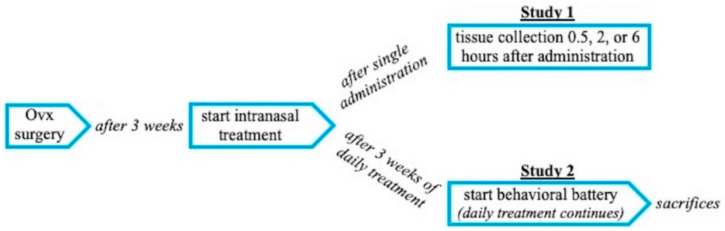
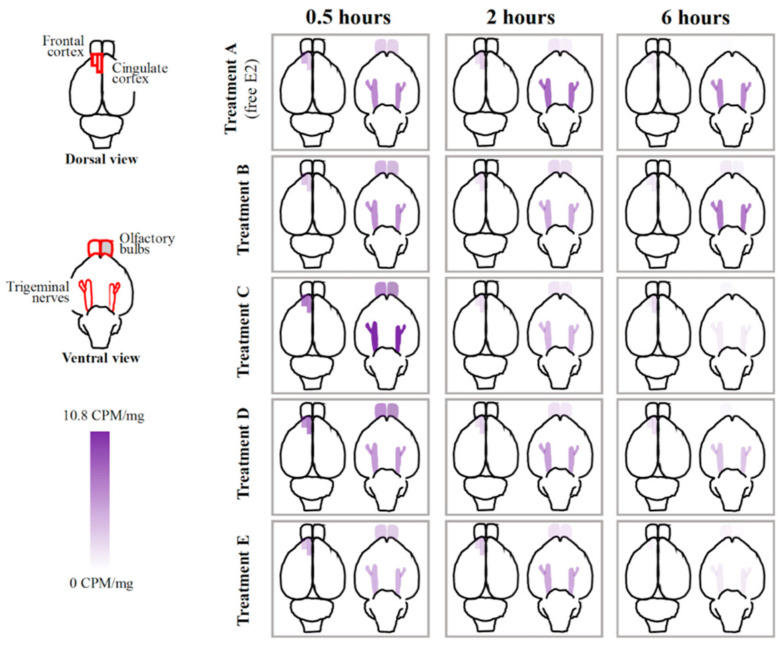
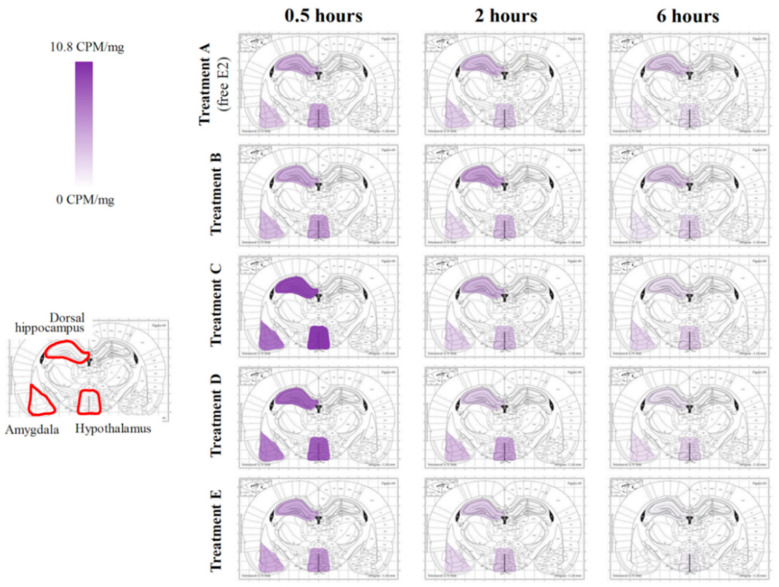
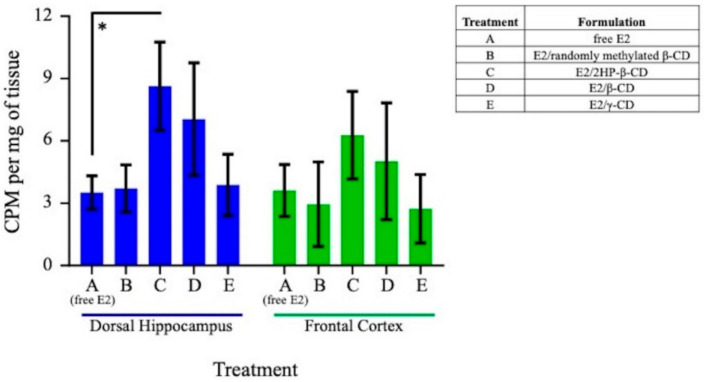
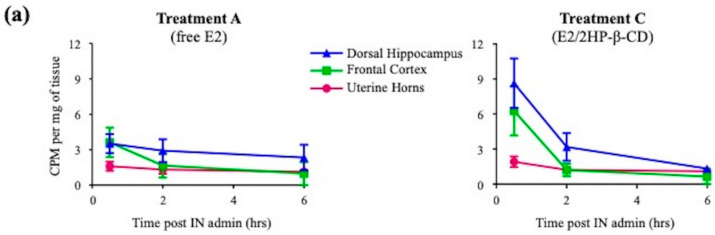
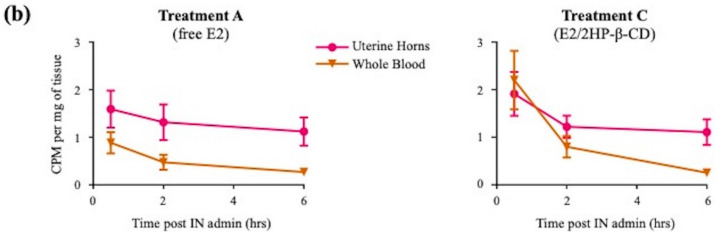
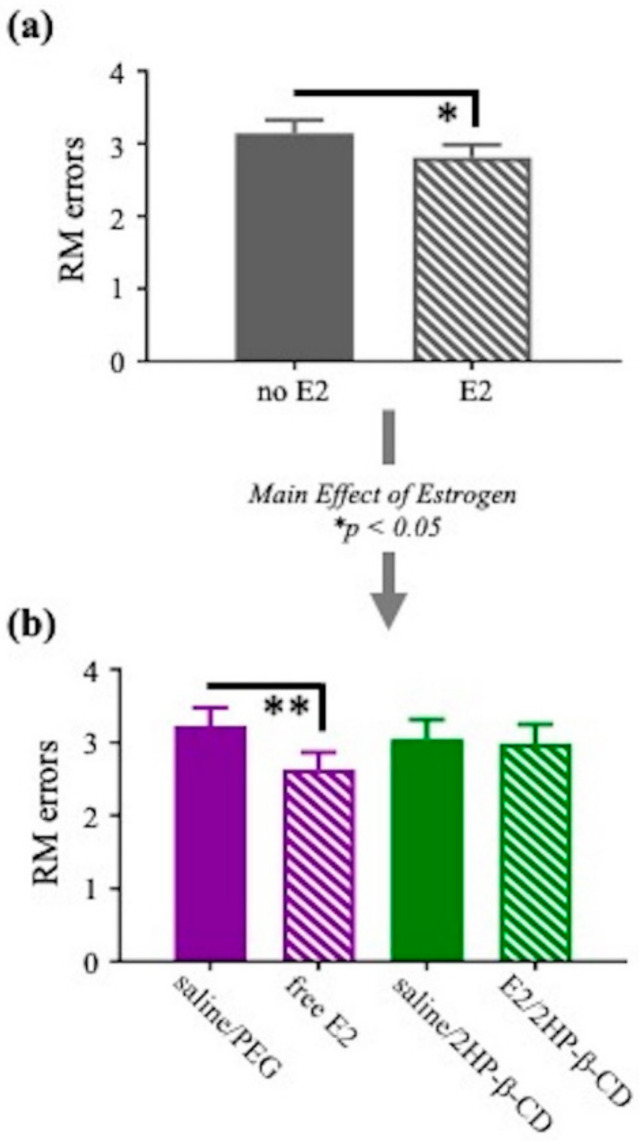
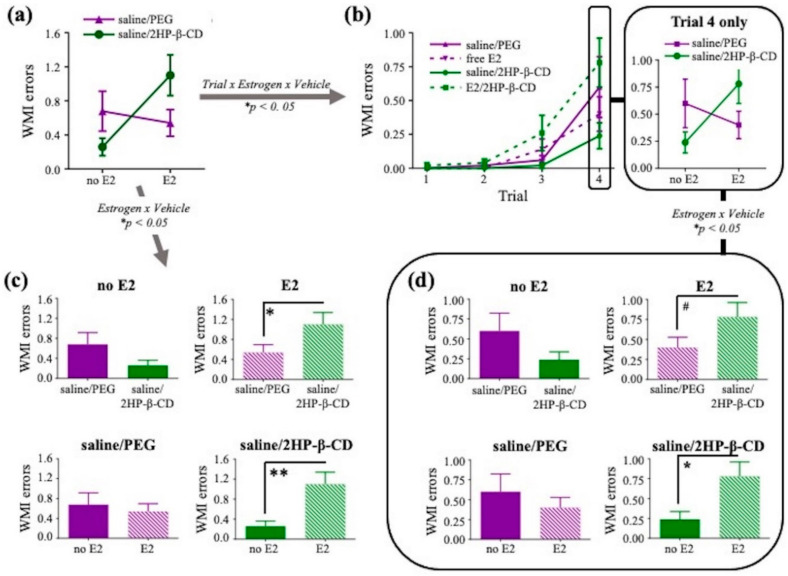
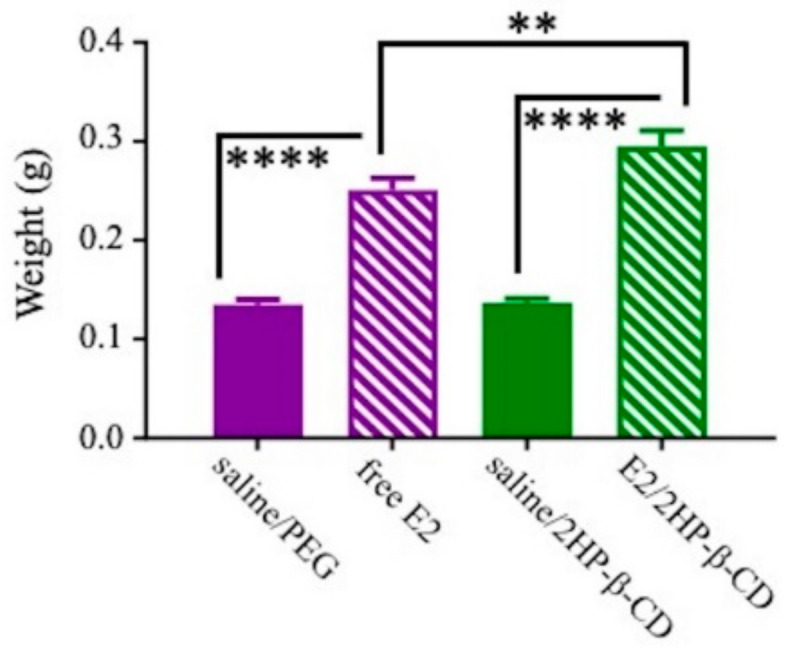
Exogenously administered 17β-estradiol (E2) can improve spatial learning and memory, although E2 also exerts undesired effects on peripheral organs. Clinically, E2 has been solubilized in cyclodextrin for intranasal administration, which enhances brain-specific delivery. Prior work shows that the cyclodextrin structure impacts region-specific brain distribution of intranasally administered small molecules. Here, we investigated (1) cyclodextrin type-specific modulation of intranasal E2 brain distribution, and (2) cognitive and peripheral tissue effects of intranasal E2 in middle-aged ovariectomized rats. First, brain and peripheral organ distribution of intranasally administered, tritiated E2 was measured for E2 solubilized freely or in one of four cyclodextrin formulations. The E2-cyclodextrin formulation with greatest E2 uptake in cognitive brain regions versus uterine horns was then compared to free E2 on learning, memory, and uterine measures. Free E2 improved spatial reference memory, whereas E2-cyclodextrin impaired spatial working memory compared to their respective controls. Both E2 formulations increased uterine horn weights relative to controls, with E2-cyclodextrin resulting in the greatest uterine horn weight, suggesting increased uterine stimulation. Thus, intranasal administration of freely solubilized E2 is a strategic delivery tool that can yield a cognitively beneficial impact of the hormone alongside decreased peripheral effects compared to intranasal administration of cyclodextrin solubilized E2.
Keywords: cyclodextrin; delivery; estrogen; intranasal; learning; memory; menopause.
Conflict of interest statement
The authors declare no conflict of interest. The funders had no role in the design of the study; in the collection, analyses, or interpretation of data; in the writing of the manuscript, or in the decision to publish the results.
Figures
References
-
- NAMS . Menopause Practice: A Clinician’s Guide. 5th ed. The North American Menopause Society (NAMS); Mayfield Heights, OH, USA: 2014.
-
- NAMS The 2017 hormone therapy position statement of the North American Menopause Society. Menopause J. N. Am. Menopause Soc. 2017;24:1–26. - PubMed
-
- Prakapenka A.V., Pena V., Bimonte-Nelson H.A. Estrogens and Memory: Basic Research and Clinical Implications. Oxford University Press; New York, NY, USA: 2020. Ovarian hormones, cognition, and reproductive aging: Applications and implications for translating preclinical endocrine brain research to the clinic.
Grants and funding
LinkOut - more resources
Full Text Sources
