. 2020 Dec 22;324(24):2521-2535.
doi: 10.1001/jama.2020.23130.

Association of First Primary Cancer With Risk of Subsequent Primary Cancer Among Survivors of Adult-Onset Cancers in the United States

Affiliations

Association of First Primary Cancer With Risk of Subsequent Primary Cancer Among Survivors of Adult-Onset Cancers in the United States

Hyuna Sung et al. JAMA. .

Erratum in

  • Incorrect Figure Data.
    [No authors listed] [No authors listed] JAMA. 2021 May 18;325(19):2020. doi: 10.1001/jama.2021.6322. JAMA. 2021. PMID: 33861308 Free PMC article. No abstract available.

Abstract

Importance: The number of cancer survivors who develop new cancers is projected to increase, but comprehensive data on the risk of subsequent primary cancers (SPCs) among survivors of adult-onset cancers are limited.

Objective: To quantify the overall and cancer type-specific risks of SPCs among adult-onset cancer survivors by first primary cancer (FPC) types and sex.

Design, setting, and participants: A retrospective cohort study from 12 Surveillance, Epidemiology, and End Results registries in the United States, that included 1 537 101 persons aged 20 to 84 years diagnosed with FPCs from 1992-2011 (followed up until December 31, 2017) and who survived at least 5 years.

Exposures: First primary cancer.

Main outcomes and measures: Incidence and mortality of SPCs per 10 000 person-years; standardized incidence ratio (SIR) and standardized mortality ratio (SMR) compared with those expected in the general population.

Results: Among 1 537 101 survivors (mean age, 60.4 years; 48.8% women), 156 442 SPC cases and 88 818 SPC deaths occurred during 11 197 890 person-years of follow-up (mean, 7.3 years). Among men, the overall risk of developing any SPCs was statistically significantly higher for 18 of the 30 FPC types, and risk of dying from any SPCs was statistically significantly higher for 27 of 30 FPC types as compared with risks in the general population. Among women, the overall risk of developing any SPCs was statistically significantly higher for 21 of the 31 FPC types, and risk of dying from any SPCs was statistically significantly higher for 28 of 31 FPC types as compared with risks in the general population. The highest overall SIR and SMR were estimated among survivors of laryngeal cancer (SIR, 1.75 [95% CI, 1.68-1.83]; incidence, 373 per 10 000 person-years) and gallbladder cancer (SMR, 3.82 [95% CI, 3.31-4.39]; mortality, 341 per 10 000 person-years) among men, and among survivors of laryngeal cancer (SIR, 2.48 [95% CI, 2.27-2.72]; incidence, 336 per 10 000 person-years; SMR, 4.56 [95% CI, 4.11-5.06]; mortality, 268 per 10 000 person-years) among women. Substantial variation existed in the associations of specific types of FPCs with specific types of SPC risk; however, only a few smoking- or obesity-associated SPCs, such as lung, urinary bladder, oral cavity/pharynx, colorectal, pancreatic, uterine corpus, and liver cancers constituted considerable proportions of the total incidence and mortality, with lung cancer alone accounting for 31% to 33% of mortality from all SPCs.

Conclusions and relevance: Among survivors of adult-onset cancers in the United States, several types of primary cancer were significantly associated with greater risk of developing and dying from an SPC, compared with the general population. Cancers associated with smoking or obesity comprised substantial proportions of overall SPC incidence and mortality among all survivors and highlight the importance of ongoing surveillance and efforts to prevent new cancers among survivors.


Conflict of interest statement

Conflict of Interest Disclosures: None reported.

Figures

Figure 1.
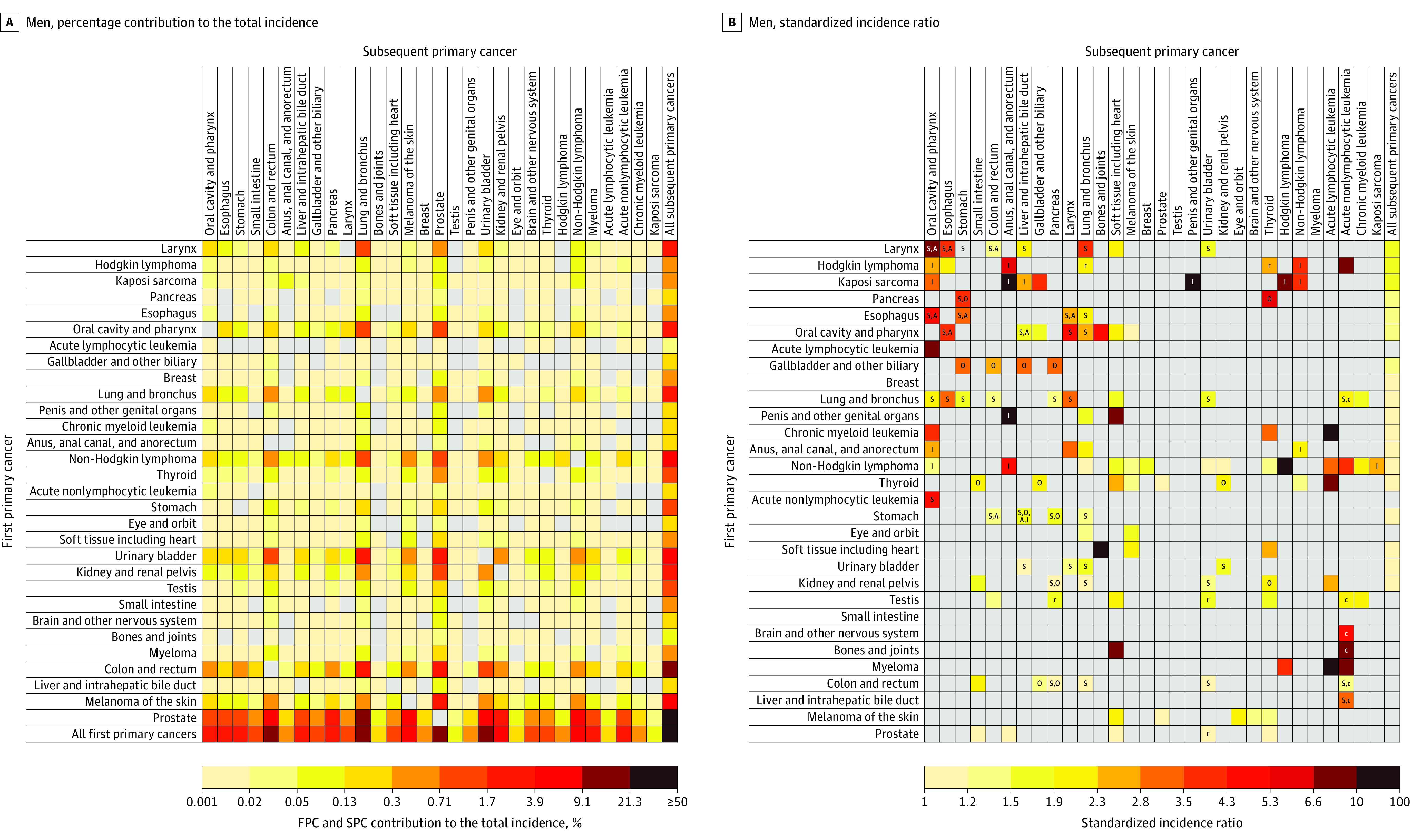
Figure 1.. Risk of Developing Subsequent Primary Cancers Among 5-Year Male Cancer Survivors
A, Calculated by dividing the observed number of SPC cases of each cell by the total number of observed SPCs. B, Standardized incidence ratios (SIRs) were calculated as the ratio of the observed number of SPCs to the expected number of SPCs in the general population. Letters inside cells indicate major shared risk factors (A, alcohol-associated cancer; I, infection-associated cancer; O, obesity-associated cancer; S, smoking-associated cancer) or treatment-related SPCs (c, chemotherapy; r, radiotherapy),,, when there was a statistically significant association between the first primary cancer (FPC) and the SPC. Logarithmic color gradients indicate SIRs with statistically significantly higher than expected values based on eligible statistical tests (observed number of SPCs ≥5). Gray cells indicate statistically nonsignificant SIRs or associations not tested due to small number of observed SPCs. The risk of developing SPCs cannot be entirely attributable to risk factors annotated, and additional known and unknown factors may be in play. See Supplement 1 for point estimates and excess absolute incidences.
Figure 2.
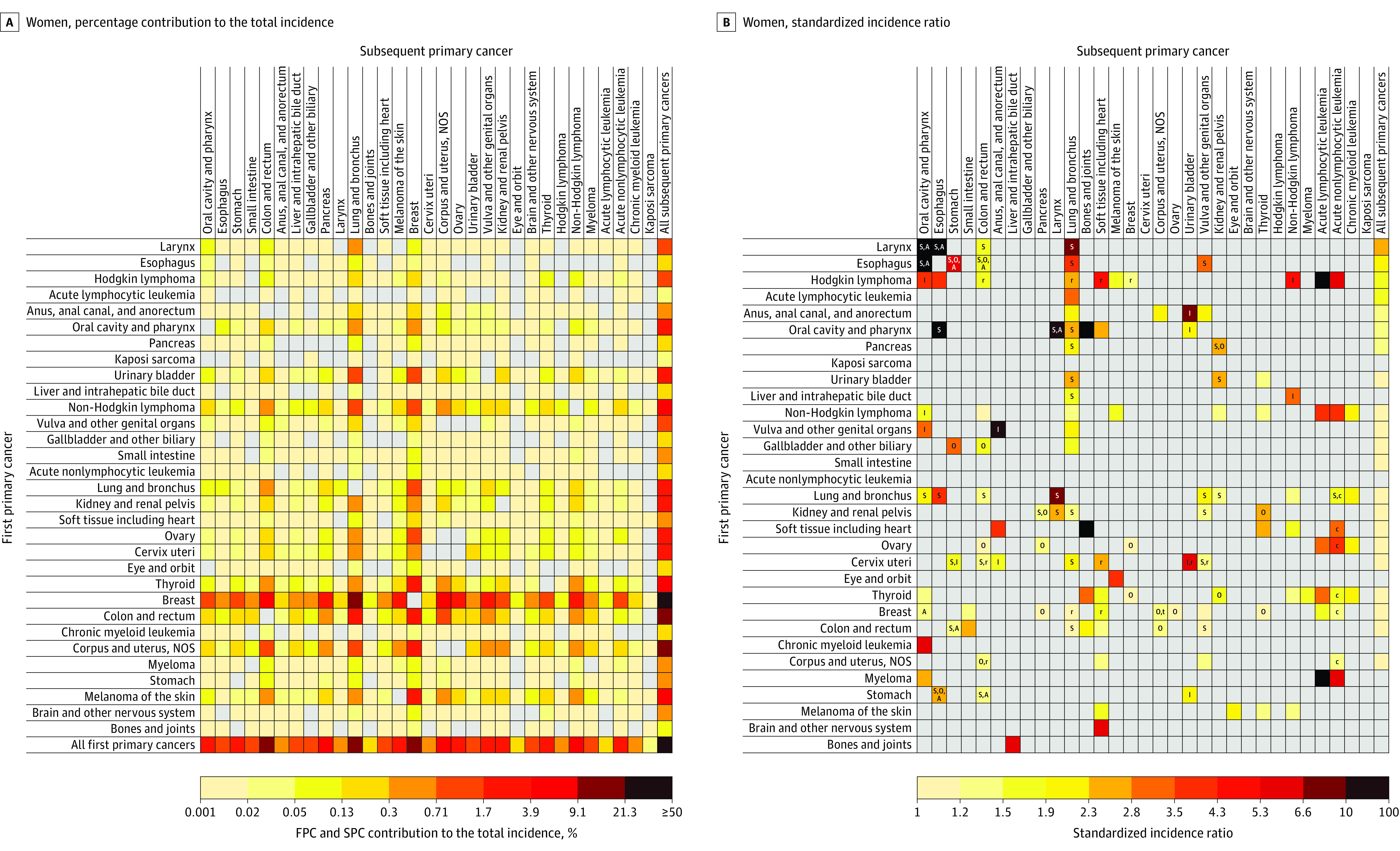
Figure 2.. Risk of Developing Subsequent Primary Cancers Among 5-Year Female Cancer Survivors
See the legend to Figure 1 for a description of the methods used to calculate the contribution of each cell to total incidence of subsequent primary cancer (A) and the standardized incidence ratios (B) as well as definitions of abbreviations. See Supplement 1 for point estimates and excess absolute incidences. NOS indicates not otherwise specified; t indicates tamoxifen.
Figure 3.
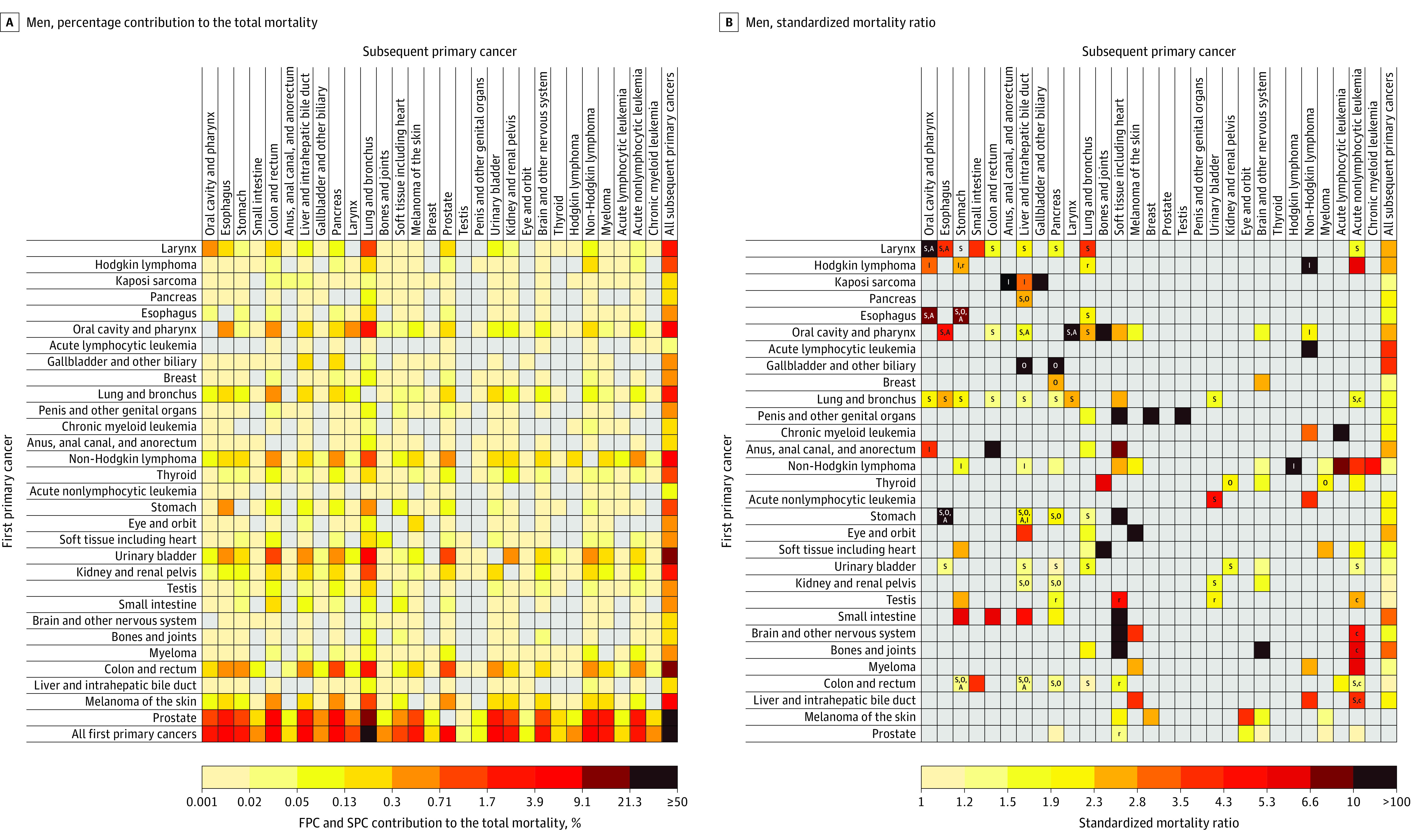
Figure 3.. Risk of Dying From a Subsequent Primary Cancer Among 5-Year Male Cancer Survivors
A, Calculated by dividing the observed number of SPC deaths of each cell by the total number of observed SPC deaths. B, Standardized mortality ratios (SMRs) were calculated as the ratio of the observed number of SPC deaths to the expected number of cancer deaths in the general population. Letters inside cells indicate major shared risk factors (A, alcohol-associated cancer; I, infection-associated cancer; O, obesity-associated cancer; S, smoking-associated cancer) or treatment-related SPCs (c, chemotherapy; r, radiotherapy),,, when there was a statistically significant association between the first primary cancer (FPC) and the SPC. Logarithmic color gradients indicate SIRs with statistically significantly higher than expected values based on eligible statistical tests (observed number of SPCs ≥5). Gray cells indicate statistically nonsignificant SIRs or associations not tested due to small number of observed SPCs. The risk of developing SPCs cannot be entirely attributable to risk factors annotated, and additional known and unknown factors may be in play. See Supplement 1 for point estimates and excess absolute incidences.
Figure 4.
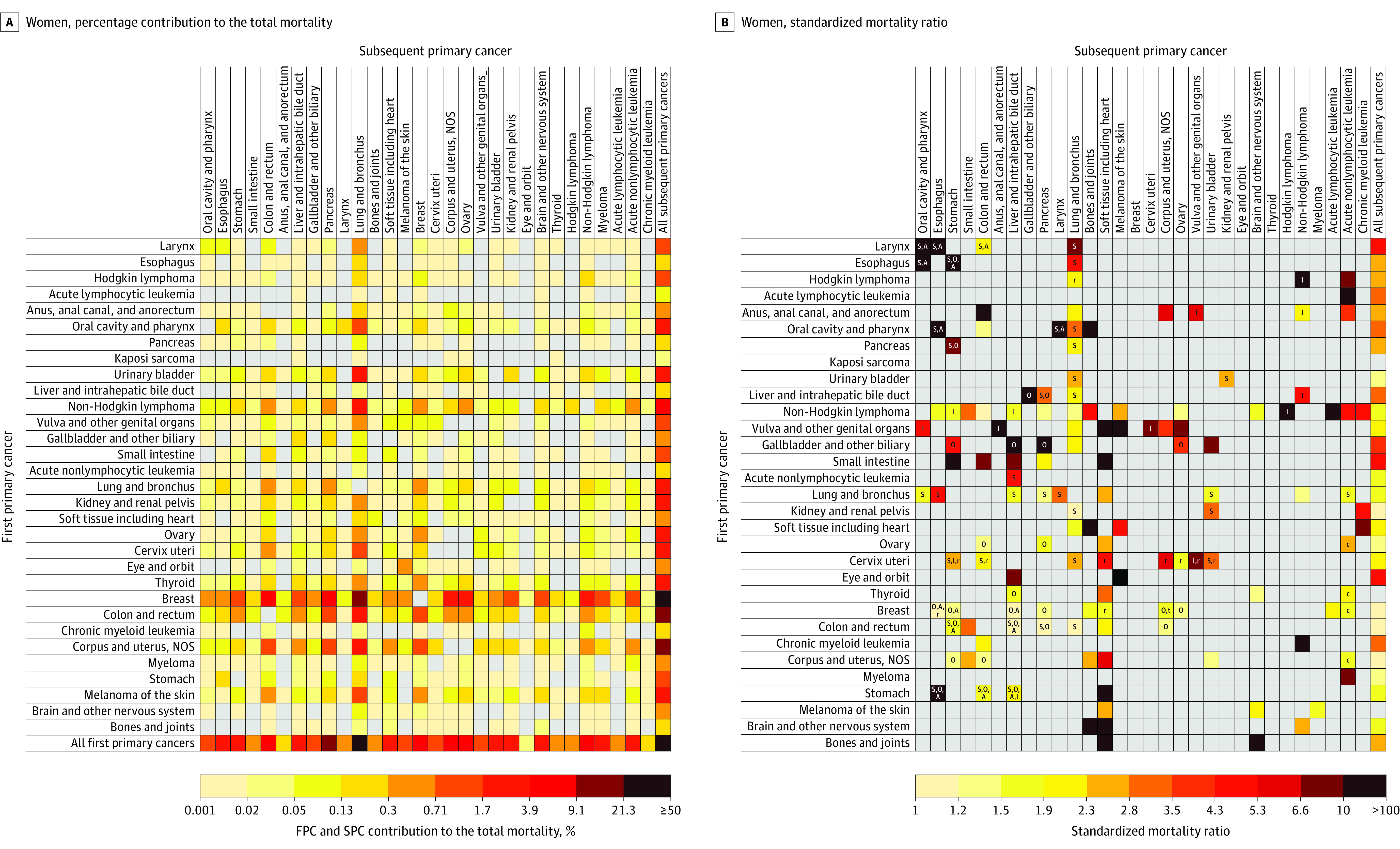
Figure 4.. Risk of Dying From a Subsequent Primary Cancer Among 5-Year Female Cancer Survivors
See the legend to Figure 3 for a description of the methods used to calculate the contribution of each cell to the total number of subsequent primary cancer deaths (A) and the standardized mortality ratios (B) as well as definitions of abbreviations. Kaposi sarcoma was not shown as an SPC because mortality data do not specify it as a cause of death. See Supplement 1 for point estimates and excess absolute mortalities. NOS indicates not otherwise specified.
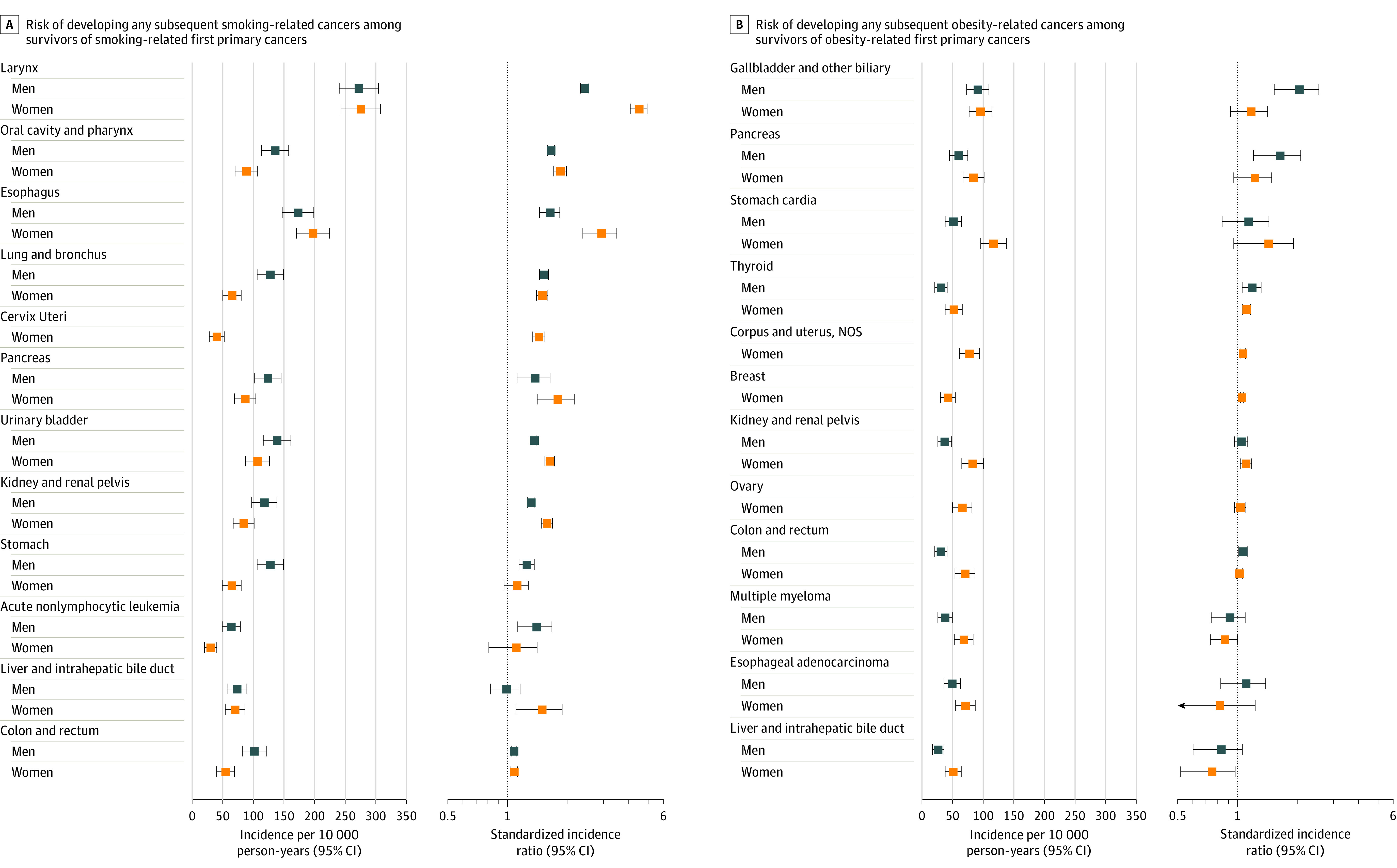
Figure 5.
Figure 5.. Risk of Developing Any Smoking- or Obesity-Related Subsequent Primary Cancers Among Survivors of Prior Smoking- or Obesity-Related Cancers
Among each group of survivors of 12 smoking-related cancers, incidence per 10 000 person-years and standardized incidence ratios (SIRs) were estimated to quantify the risk of developing any smoking-related subsequent primary cancers (SPCs) (except for SPCs that occurred at the same site as the first primary cancer [FPC]). This was also calculated for 12 obesity-related cancers. The risk of developing subsequent smoking- or obesity-related cancer after each FPC cannot be entirely attributable to smoking or obesity because of other risk factors. See Supplement 1 for detailed data.

Comment in

References

    1. Miller KD, Nogueira L, Mariotto AB, et al. Cancer treatment and survivorship statistics, 2019. CA Cancer J Clin. 2019;69(5):363-385. doi: 10.3322/caac.21565 - DOI - PubMed
    1. Bluethmann SM, Mariotto AB, Rowland JH. Anticipating the “Silver Tsunami”: prevalence trajectories and comorbidity burden among older cancer survivors in the United States. Cancer Epidemiol Biomarkers Prev. 2016;25(7):1029-1036. doi: 10.1158/1055-9965.EPI-16-0133 - DOI - PMC - PubMed
    1. El-Shami K, Oeffinger KC, Erb NL, et al. American Cancer Society Colorectal Cancer Survivorship Care Guidelines. CA Cancer J Clin. 2015;65(6):428-455. doi: 10.3322/caac.21286 - DOI - PMC - PubMed
    1. Curtis RE, Freedman DM, Ron E, et al. , eds. New Malignancies Among Cancer Survivors: SEER Cancer Registries, 1973-2000. National Cancer Institute; 2006. NIH publication 05-5302.
    1. Murphy CC, Gerber DE, Pruitt SL. Prevalence of prior cancer among persons newly diagnosed with cancer: an initial report from the Surveillance, Epidemiology, and End Results Program. JAMA Oncol. 2018;4(6):832-836. doi: 10.1001/jamaoncol.2017.3605 - DOI - PMC - PubMed

Publication types