. 2020 Dec 18;10(12):1693.
doi: 10.3390/biom10121693.

Role of Ferrous Sulfate (FeSO4) in Resistance to Cadmium Stress in Two Rice (Oryza sativa L.) Genotypes

Affiliations

Role of Ferrous Sulfate (FeSO4) in Resistance to Cadmium Stress in Two Rice (Oryza sativa L.) Genotypes

Javaria Afzal et al. Biomolecules. .

Abstract

The impact of heavy metal, i.e., cadmium (Cd), on the growth, photosynthetic pigments, gas exchange characteristics, oxidative stress biomarkers, and antioxidants machinery (enzymatic and non-enzymatic antioxidants), ions uptake, organic acids exudation, and ultra-structure of membranous bounded organelles of two rice (Oryza sativa L.) genotypes (Shan 63 and Lu 9803) were investigated with and without the exogenous application of ferrous sulfate (FeSO4). Two O. sativa genotypes were grown under different levels of CdCl2 [0 (no Cd), 50 and 100 µM] and then treated with exogenously supplemented ferrous sulfate (FeSO4) [0 (no Fe), 50 and 100 µM] for 21 days. The results revealed that Cd stress significantly (p < 0.05) affected plant growth and biomass, photosynthetic pigments, gas exchange characteristics, affected antioxidant machinery, sugar contents, and ions uptake/accumulation, and destroy the ultra-structure of many membranous bounded organelles. The findings also showed that Cd toxicity induces oxidative stress biomarkers, i.e., malondialdehyde (MDA) contents, hydrogen peroxide (H2O2) initiation, and electrolyte leakage (%), which was also manifested by increasing the enzymatic antioxidants, i.e., superoxidase dismutase (SOD), peroxidase (POD), catalase (CAT) and ascorbate peroxidase (APX) and non-enzymatic antioxidant compounds (phenolics, flavonoids, ascorbic acid, and anthocyanin) and organic acids exudation pattern in both O. sativa genotypes. At the same time, the results also elucidated that the O. sativa genotypes Lu 9803 are more tolerant to Cd stress than Shan 63. Although, results also illustrated that the exogenous application of ferrous sulfate (FeSO4) also decreased Cd toxicity in both O. sativa genotypes by increasing antioxidant capacity and thus improved the plant growth and biomass, photosynthetic pigments, gas exchange characteristics, and decrease oxidative stress in the roots and shoots of O. sativa genotypes. Here, we conclude that the exogenous supplementation of FeSO4 under short-term exposure of Cd stress significantly improved plant growth and biomass, photosynthetic pigments, gas exchange characteristics, regulate antioxidant defense system, and essential nutrients uptake and maintained the ultra-structure of membranous bounded organelles in O. sativa genotypes.

Keywords: antioxidants; defense mechanism; heavy metals; iron; organic acids exudation.


Conflict of interest statement

The authors declare that there is no conflict of interest.

Figures
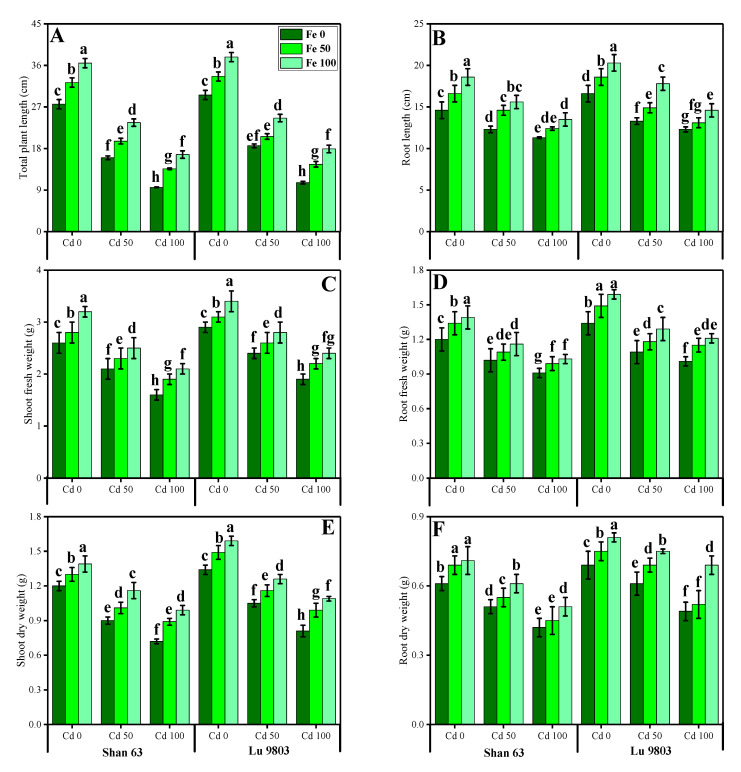
Figure 1
Figure 1
Effect of different concentrations of exogenous application of FeSO4 (0, 50, and 100 µM) on morphological attributes, i.e., total plant length (A), root length (B), shoot fresh weight (C), root fresh weight (D), shoot dry weight (E) and root dry weight (F) of Oryza sativa (cultivars) grown under different levels of Cd stress (0, 50 and 100 µM). Bars sharing different letter(s) for each parameter are significantly different from each other according to Duncan’s multiple range test (p < 0.05). All the data represented are the average of four replications (n = 4). Error bars represent the standard deviation (SD) of four replicates.
Figure 2
Figure 2
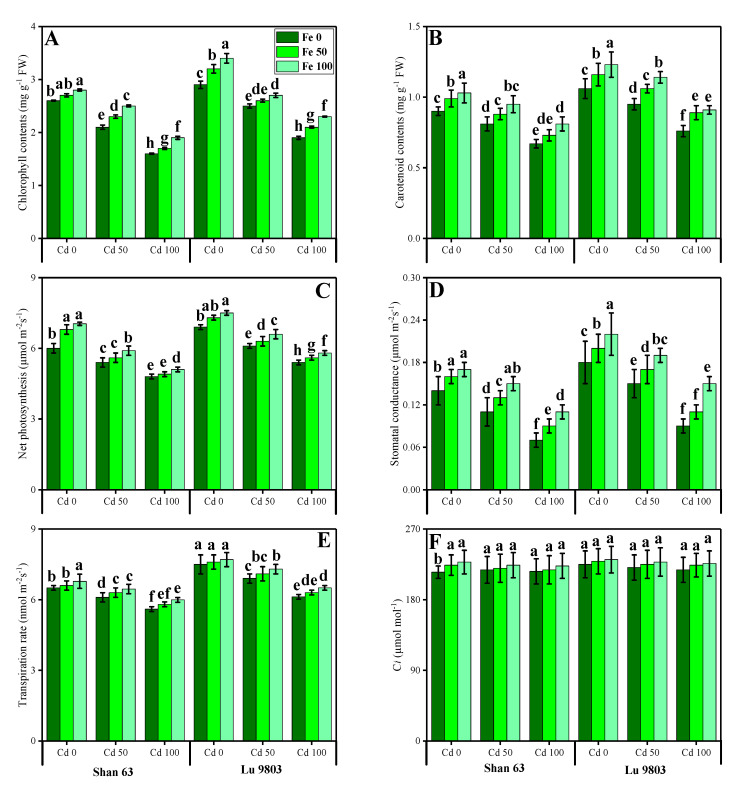
Effect of different concentrations of exogenous application of FeSO4 (0, 50, and 100 µM) on photosynthetic pigments and gaseous exchange attributes, i.e., total chlorophyll contents (A), carotenoid contents (B), net photosynthesis (C) stomatal conductance (D), transpiration rate (E) and intercellular CO2 (F) of Oryza sativa (cultivars) grown under different levels of Cd stress (0, 50 and 100 µM). Bars sharing different letter(s) for each parameter are significantly different from each other according to Duncan’s multiple range test (p < 0.05). All the data represented are the average of four replications (n = 4). Error bars represent the standard deviation (SD) of four replicates.
Figure 3
Figure 3
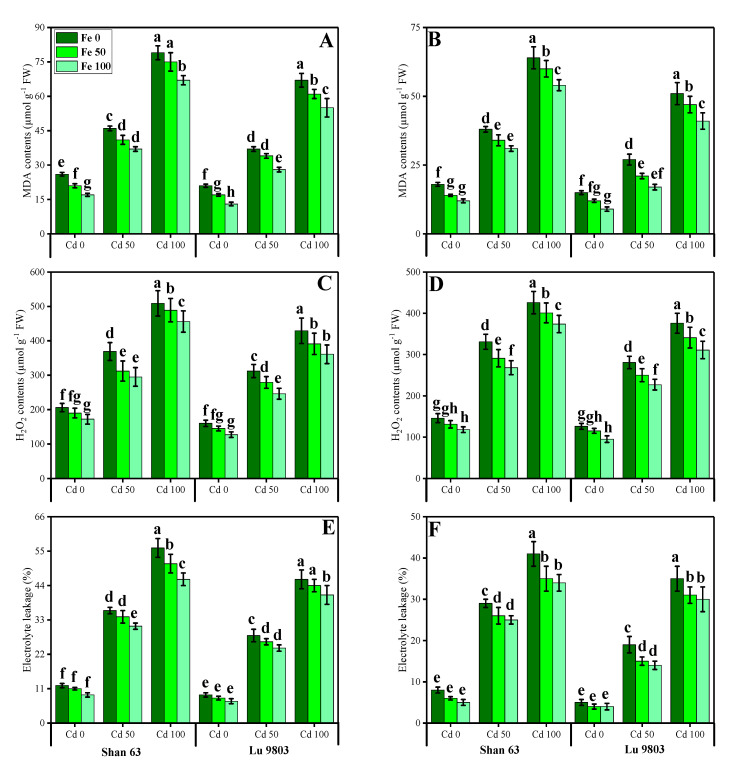
Effect of different concentrations of exogenous application of FeSO4 (0, 50, and 100 µM) on oxidative stress indicators, i.e., MDA contents in the roots (A), MDA contents in the leaves (B), H2O2 contents in the roots (C), H2O2 contents in the leaves (D), EL percentage in the roots (E) and EL percentage in the leaves (F) of Oryza sativa (cultivars) grown under different levels of Cd stress (0, 50 and 100 µM). Bars sharing different letter(s) for each parameter are significantly different from each other according to Duncan’s multiple range test (p < 0.05). All the data represented are the average of four replications (n = 4). Error bars represent the standard deviation (SD) of four replicates.
Figure 4
Figure 4
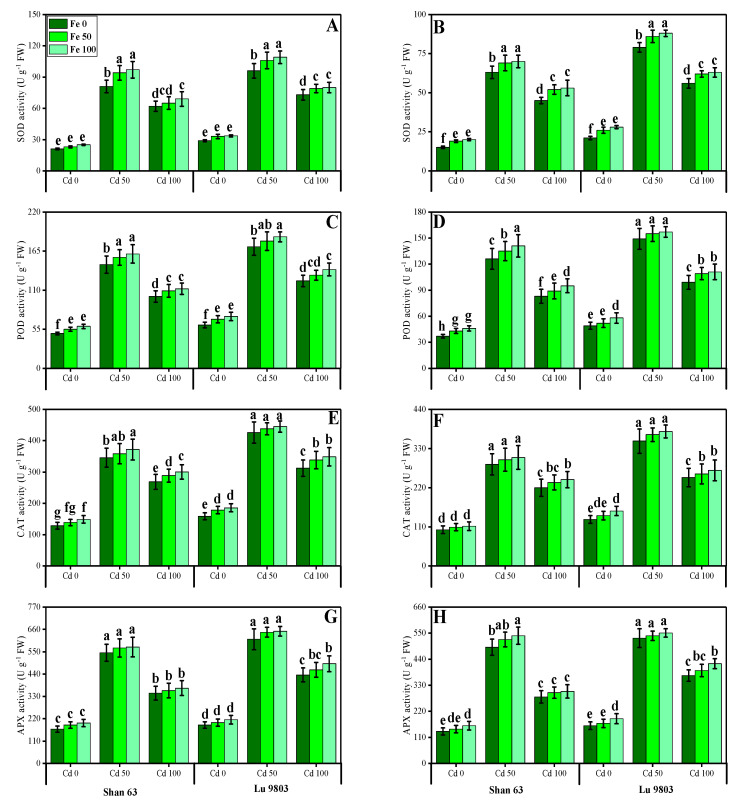
Effect of different concentrations of exogenous application of FeSO4 (0, 50, and 100 µM) on antioxidant activities, i.e., SOD activity in the roots (A), SOD activity in the leaves (B), POD activity in the roots (C), POD activity in the leaves (D) CAT activity in the roots (E), CAT activity in the leaves (F), APX activity in the roots (G) and APX activity in the leaves (H) of Oryza sativa (cultivars) grown under different levels of Cd stress (0, 50, and 100 µM). Bars sharing different letter(s) for each parameter are significantly different from each other according to Duncan’s multiple range test (p < 0.05). All the data represented are the average of four replications (n = 4). Error bars represent the standard deviation (SD) of four replicates.
Figure 5
Figure 5
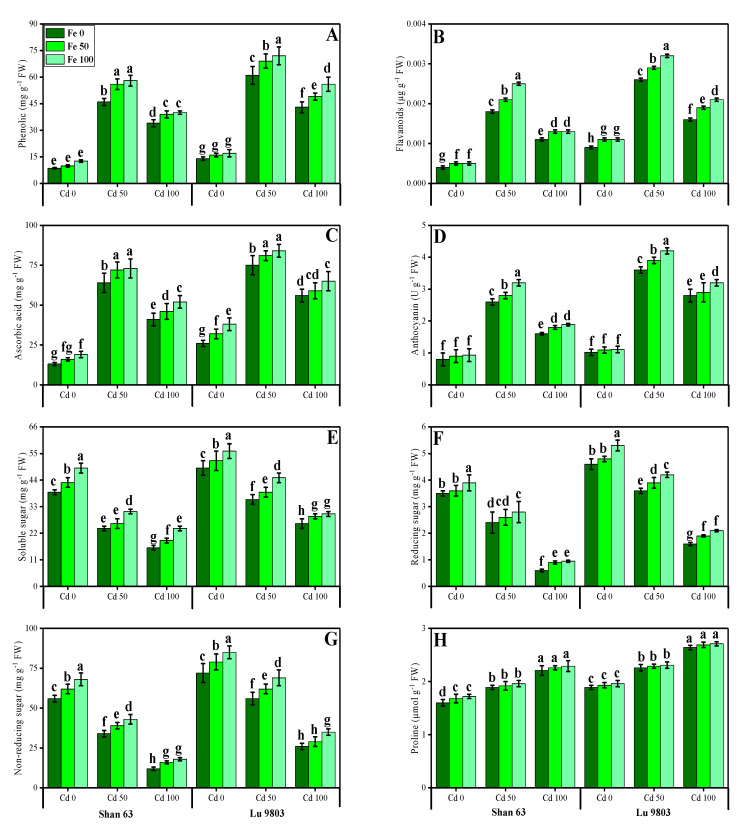
Effect of different concentrations of exogenous application of FeSO4 (0, 50, and 100 µM) on non-enzymatic antioxidants and sugars, i.e., phenolic contents (A), flavonoid contents (B), ascorbic acid contents (C), anthocyanin contents (D), soluble sugar contents (E), reducing sugar contents (F), non-reducing sugar contents (G) and proline contents (H) in the leaves of Oryza sativa (cultivars) grown under different levels of Cd stress (0, 50, and 100 µM). Bars sharing different letter(s) for each parameter are significantly different from each other according to Duncan’s multiple range test (p < 0.05). All the data represented are the average of four replications (n = 4). Error bars represent the standard deviation (SD) of four replicates.
Figure 6
Figure 6
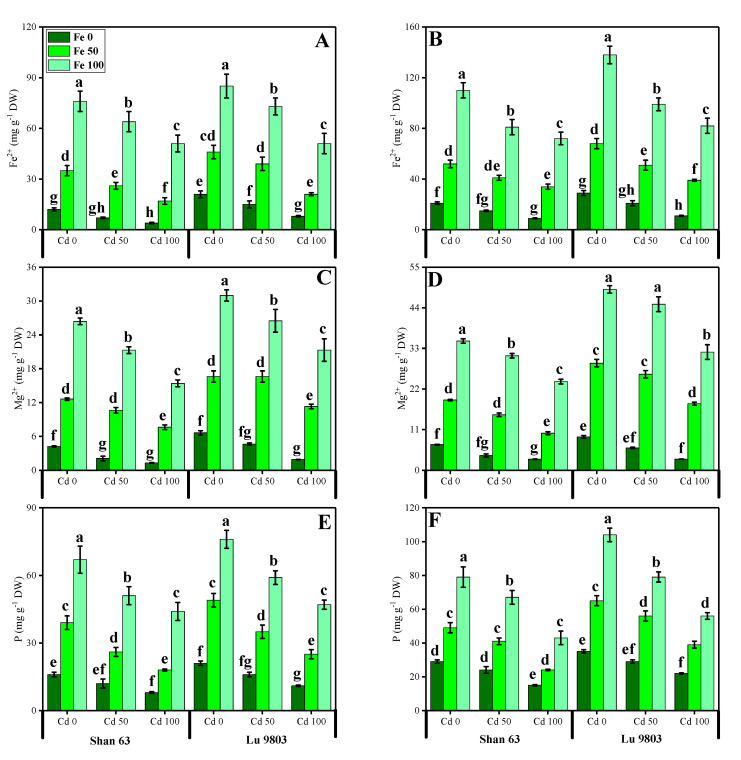
Effect of different concentrations of exogenous application of FeSO4 (0, 50, and 100 µM) on ion uptake, i.e., iron contents in the roots (E), iron contents in the shoots (F), calcium contents in the roots (G), and calcium contents in the leaves (H), magnesium contents in the roots (A), magnesium contents in the shoots (B), phosphorus contents in the roots (C) and phosphorus contents in the shoots (D) of Oryza sativa (cultivars) grown under different levels of Cd stress (0, 50 and 100 µM). Bars sharing different letter(s) for each parameter are significantly different from each other according to Duncan’s multiple range test (p < 0.05). All the data represented are the average of four replications (n = 4). Error bars represent the standard deviation (SD) of four replicates.
Figure 7
Figure 7
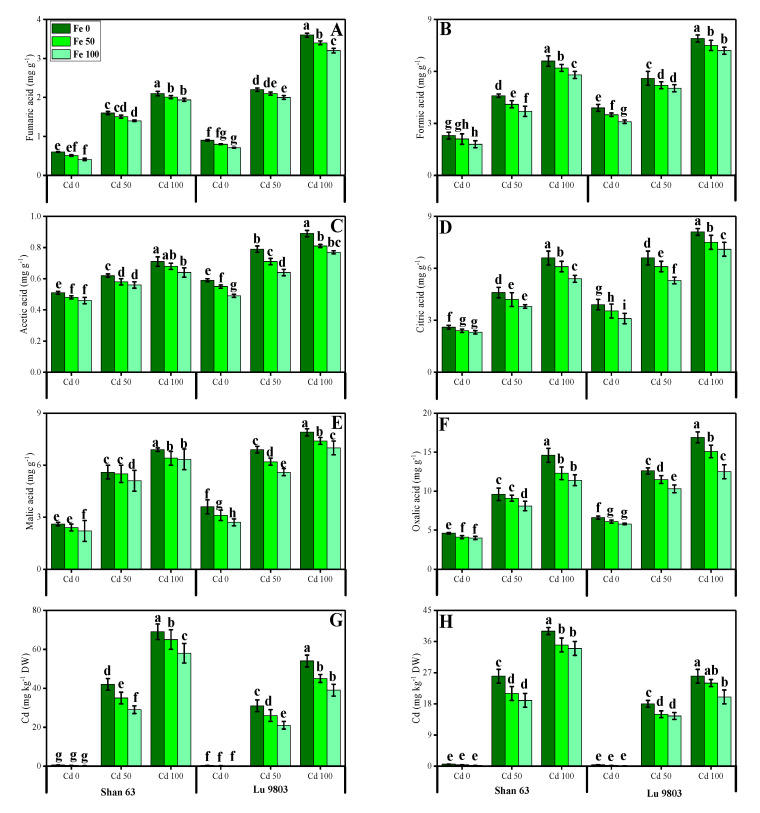
Effect of different concentrations of exogenous application of FeSO4 (0, 50, and 100 µM) on fumaric acid contents (A), formic acid contents (B), acetic acid contents (C), citric acid contents (D), malic acid contents (E), oxalic acid contents (F) in the roots and Cd concentration in the roots (G) and Cd concentration in the shoots (H) of Oryza sativa (cultivars) grown under different levels of Cd stress (0, 50 and 100 µM). Bars sharing different letter(s) for each parameter are significantly different from each other according to Duncan’s multiple range test (p < 0.05). All the data represented are the average of four replications (n = 4). Error bars represent the standard deviation (SD) of four replicates.
Figure 8
Figure 8
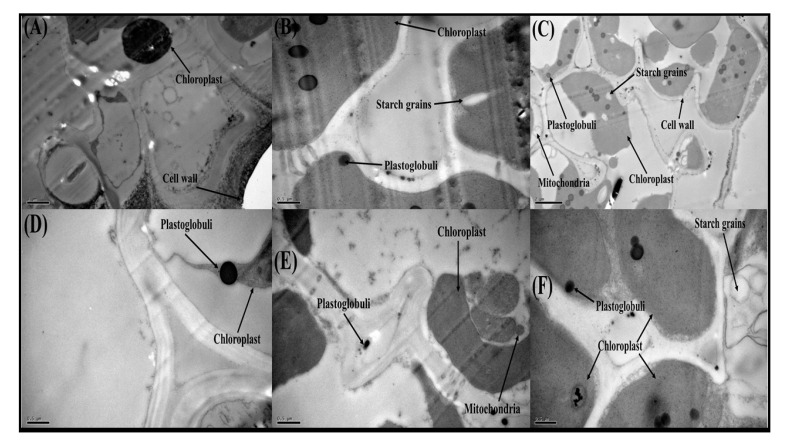
Transmission electron microscopy (TEM) analysis of Oryza sativa (cultivars) leaf structure after treated with Cd and Fe concentration in the nutrient solution. (A) Shan 63 (5000) with Cd 100 + Fe 0, (B) Shan 63 (2500) with Cd 100 + Fe 50, (C) Shan 63 (10,000) with Cd 100 + Fe 100, (D) Lu 9803 (2500) Cd 100 + Fe 0, (E) Lu 9803 (2500) Cd 100 + Fe 50 and (F) Lu 9803 (2500) Cd 100 + Fe 100.
Figure 9
Figure 9
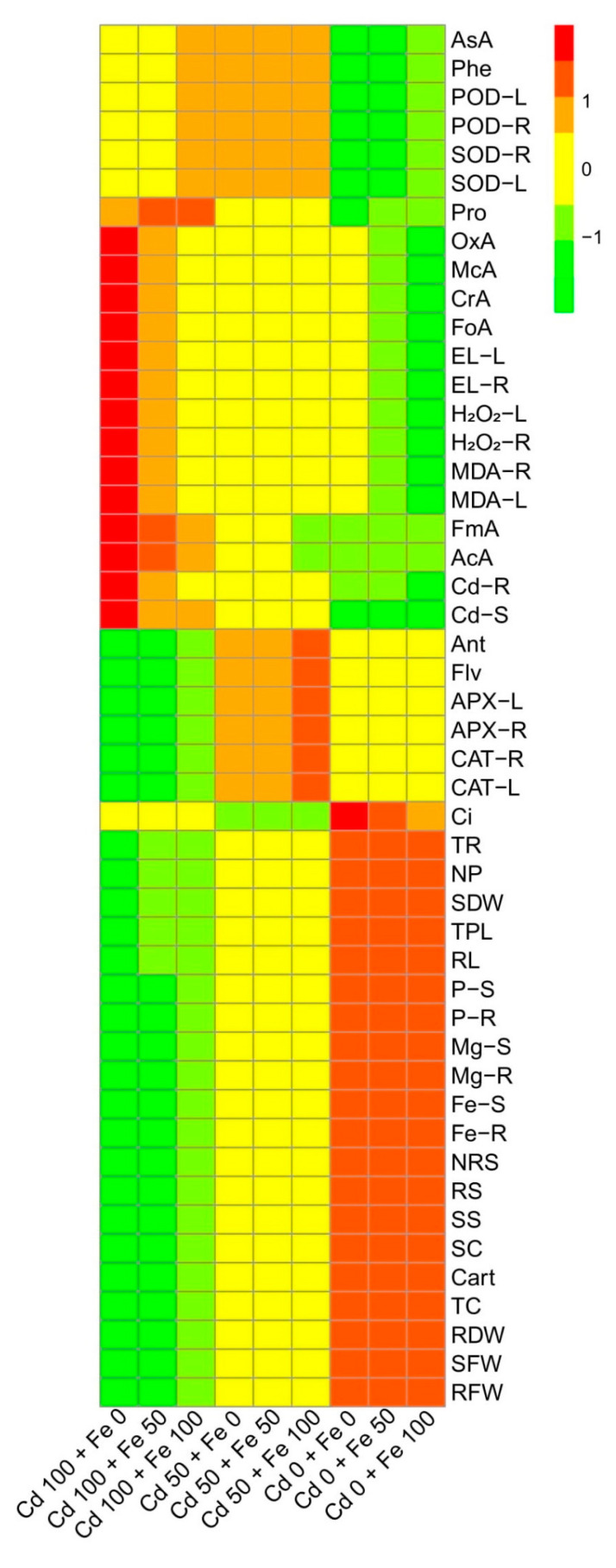
Heatmap histogram correlation between Cd uptake/accumulation with different morpho-physio-biochemical attributes of Oryza sativa grown under different levels of Cd stress (0, 50, and 100 µM) with different concentrations of exogenous application of FeSO4 (0, 50, and 100 µM). Different abbreviations used are as follow: Ci (intercellular CO2), P-S (phosphorus contents in the shoots), P-R (phosphorus contents in the roots), Mg-S (magnesium contents in the shoots), Mg-R (magnesium contents in the roots), Ca-S (calcium contents in the shoots), Ca-R (calcium contents in the roots), Fe-S (iron contents in the shoots), Fe-R (iron contents in the roots), NRS (non-reducing sugars), RS (reducing sugars), SS (soluble sugars), TR (transpiration rate), SC (stomatal conductance), NP (net photosynthesis), Carot (carotenoid contents), TC (total chlorophyll), RDW (root dry weight), SDW (shoot dry weight), RFW (root fresh weight), SFW (shoot fresh weight), TPL (total plant length), RL (root length), Ant (anthocyanin contents), AsA (ascorbic acid contents), Flv (flavonoid contents), Phe (phenolic contents), APX-L (ascorbate peroxidase activity in the leaves), APX-R (ascorbate peroxidase activity in the roots), CAT-L (catalase activity in the leaves), CAT-R (catalase activity in the roots), POD-R (peroxidase activity in the roots), POD-L (peroxidase activity in the leaves), SOD-R (superoxidase dismutase activity in the roots), SOD-L (superoxidase dismutase activity in the leaves), Pro (proline contents), OxA (oxalic acid contents), McA (melic acid contents), CrA (citric acid contents), AcA (acetic acid contents), FoA (formic acid contents), FmA (fumaric acid contents), EL-L (electrolyte leakage in the leaves), EL-R (electrolyte leakage in the roots), H2O2-L (hydrogen peroxide initiation in the leaves), H2O2-R (hydrogen peroxide initiation in the roots), MDA-R (malondialdehyde contents in the roots), MDA-L (malondialdehyde contents in the leaves), Cd-R (Cd concentration in the roots), and Cd-S (Cd concentration in the shoots).

References

    1. Zahoor A., Ahmad F., Hameed M., Basra S.M.A. Structural and functional aspects of photosynthetic response in Eichhornia crassipes (Mart.) Solms under cadmium stress. Pak. J. Bot. 2018;50:489–493.
    1. Javed M.T., Saleem M.H., Aslam S., Rehman M., Iqbal N., Begum R., Ali S., Alsahli A.A., Alyemeni M.N., Wijaya L. Elucidating silicon-mediated distinct morpho-physio-biochemical attributes and organic acid exudation patterns of cadmium stressed Ajwain (Trachyspermum ammi L.) Plant Physiol. Biochem. 2020;157:23–37. doi: 10.1016/j.plaphy.2020.10.010. - DOI - PubMed
    1. Parveen A., Saleem M.H., Kamran M., Haider M.Z., Chen J.-T., Malik Z., Rana M.S., Hassan A., Hur G., Javed M.T. Effect of Citric Acid on Growth, Ecophysiology, Chloroplast Ultrastructure, and Phytoremediation Potential of Jute (Corchorus capsularis L.) Seedlings Exposed to Copper Stress. Biomolecules. 2020;10:592. doi: 10.3390/biom10040592. - DOI - PMC - PubMed
    1. Saleem M., Ali S., Rehman M., Rana M., Rizwan M., Kamran M., Imran M., Riaz M., Hussein M., Elkelish A., et al. Influence of phosphorus on copper phytoextraction via modulating cellular organelles in two jute (Corchorus capsularis L.) varieties grown in a copper mining soil of Hubei Province, China. Chemosphere. 2020;248:126032. doi: 10.1016/j.chemosphere.2020.126032. - DOI - PubMed
    1. Rehman M., Saleem M.H., Fahad S., Maqbool Z., Peng D., Deng G., Liu L. Medium nitrogen optimized Boehmeria nivea L. growth in copper contaminated soil. Chemosphere. 2020:128972. doi: 10.1016/j.chemosphere.2020.128972. - DOI - PubMed

Publication types

LinkOut - more resources