


Circulating Melanoma-Derived Extracellular Vesicles: Impact on Melanoma Diagnosis, Progression Monitoring, and Treatment Response
- PMID: 33353043
- PMCID: PMC7766072
- DOI: 10.3390/ph13120475
Circulating Melanoma-Derived Extracellular Vesicles: Impact on Melanoma Diagnosis, Progression Monitoring, and Treatment Response
Abstract
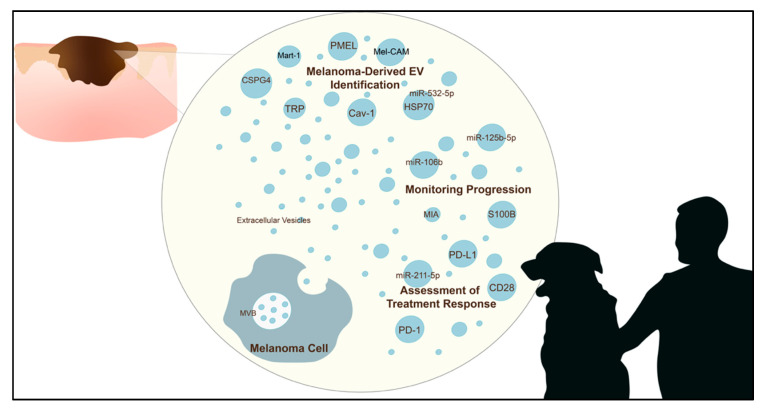
Malignant melanoma, one of the most aggressive human malignancies, is responsible for 80% of skin cancer deaths. Whilst early detection of disease progression or metastasis can improve patient survival, this remains a challenge due to the lack of reliable biomarkers. Importantly, these clinical challenges are not unique to humans, as melanoma affects many other species, including companion animals, such as the dog and horse. Extracellular vesicles (EVs) are tiny nanoparticles involved in cell-to-cell communication. Several protein and genomic EV markers have been described in the literature, as well as a wide variety of methods for isolating EVs from body fluids. As such, they may be valuable biomarkers in cancer and may address some clinical challenges in the management melanoma. This review aimed to explore the translational applications of EVs as biomarkers in melanoma, as well as their role in the clinical setting in humans and animals. A summary of melanoma-specific protein and genomic EV markers is presented, followed by a discussion of the role EVs in monitoring disease progression and treatment response. Finally, herein, we reviewed the advantages and disadvantages of methods utilised to isolate EVs from bodily fluids in melanoma patients (human and animals) and describe some of the challenges that will need to be addressed before EVs can be introduced in the clinical setting.
Keywords: biomarker; comparative oncology; exosomes; extracellular vesicle; melanoma.
Conflict of interest statement
The authors declare no conflict of interest. The funders had no role in the writing of this manuscript.
Figures
References
-
- Gershenwald J.E., Scolyer R.A., Hess K.R., Sondak V.K., Long G.V., Ross M.I., Lazar A.J., Faries M.B., Kirkwood J.M., McArthur G.A., et al. Melanoma staging: Evidence-based changes in the American Joint Committee on Cancer eighth edition cancer staging manual. CA Cancer J. Clin. 2017;67:472–492. doi: 10.3322/caac.21409. - DOI - PMC - PubMed
Publication types
Grants and funding
LinkOut - more resources
Full Text Sources
Research Materials
