


DElayed COloRectal cancer care during COVID-19 Pandemic (DECOR-19): Global perspective from an international survey
- PMID: 33353731
- PMCID: PMC7670903
- DOI: 10.1016/j.surg.2020.11.008
DElayed COloRectal cancer care during COVID-19 Pandemic (DECOR-19): Global perspective from an international survey
Abstract
Background: The widespread nature of coronavirus disease 2019 (COVID-19) has been unprecedented. We sought to analyze its global impact with a survey on colorectal cancer care during the pandemic.
Methods: The impact of coronavirus disease 2019 on preoperative assessment, elective surgery, and postoperative management of colorectal cancer patients was explored by a 35-item survey, which was distributed worldwide to members of surgical societies with an interest in colorectal cancer care. Respondents were divided into 2 comparator groups: (1) "delay" group: colorectal cancer care affected by the pandemic and (2) "no delay" group: unaltered colorectal cancer practice.
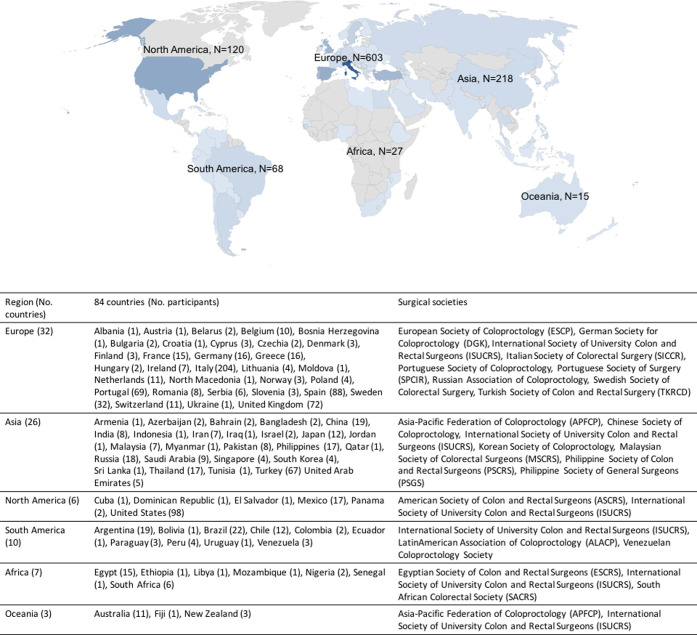
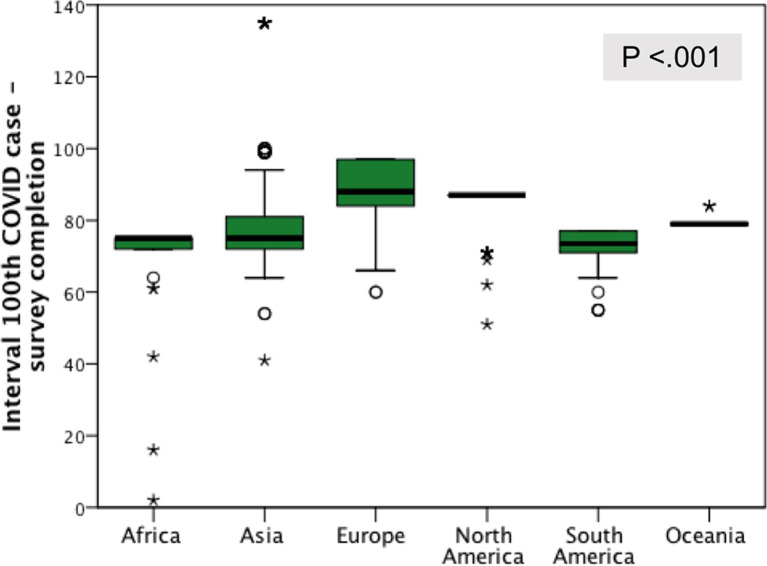
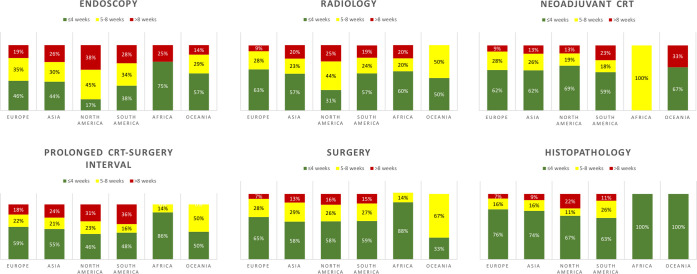
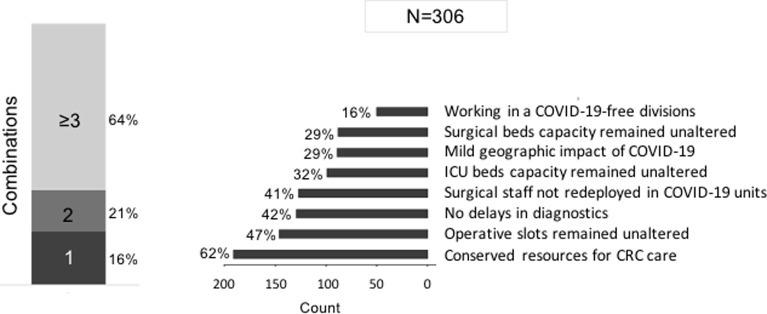
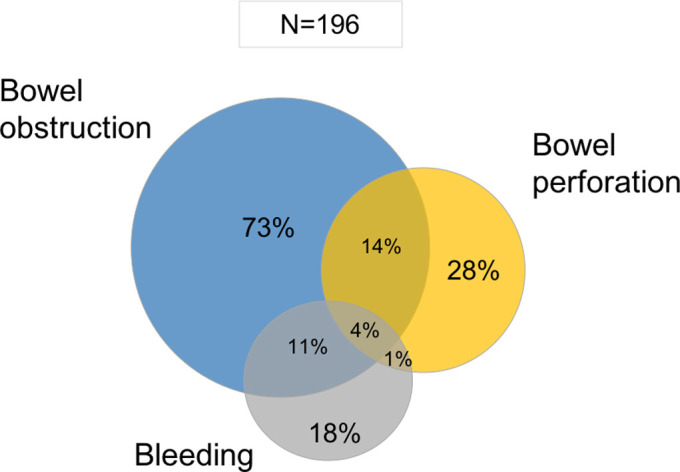
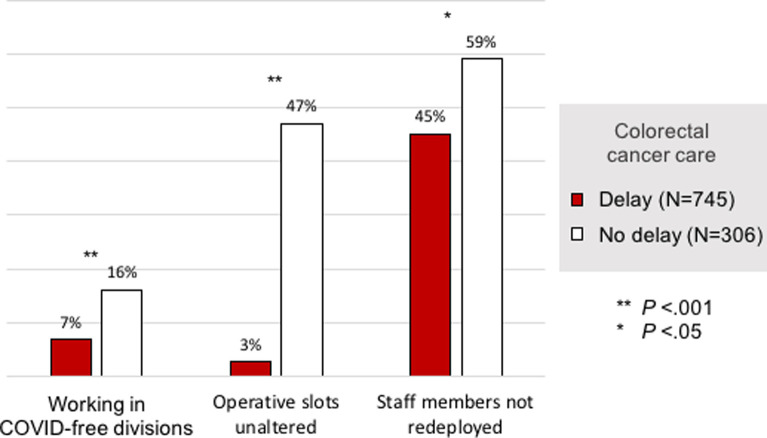
Results: A total of 1,051 respondents from 84 countries completed the survey. No substantial differences in demographics were found between the delay (745, 70.9%) and no delay (306, 29.1%) groups. Suspension of multidisciplinary team meetings, staff members quarantined or relocated to coronavirus disease 2019 units, units fully dedicated to coronavirus disease 2019 care, and personal protective equipment not readily available were factors significantly associated to delays in endoscopy, radiology, surgery, histopathology, and prolonged chemoradiation therapy-to-surgery intervals. In the delay group, 48.9% of respondents reported a change in the initial surgical plan, and 26.3% reported a shift from elective to urgent operations. Recovery of colorectal cancer care was associated with the status of the outbreak. Practicing in coronavirus disease-free units, no change in operative slots and staff members not relocated to coronavirus disease 2019 units were statistically associated with unaltered colorectal cancer care in the no delay group, while the geographic distribution was not.
Conclusion: Global changes in diagnostic and therapeutic colorectal cancer practices were evident. Changes were associated with differences in health care delivery systems, hospital's preparedness, resource availability, and local coronavirus disease 2019 prevalence rather than geographic factors. Strategic planning is required to optimize colorectal cancer care.
Copyright © 2020 Elsevier Inc. All rights reserved.
Figures
References
-
- World Health Organization (WHO) Coronavirus disease (COVID-19) pandemic. 2020. https://www.who.int/emergencies/diseases/novel-coronavirus-2019
MeSH terms
LinkOut - more resources
Full Text Sources
Other Literature Sources
Medical
