


Sciatic Nerve Variants and the Piriformis Muscle: A Systematic Review and Meta-Analysis
- PMID: 33354475
- PMCID: PMC7746330
- DOI: 10.7759/cureus.11531
Sciatic Nerve Variants and the Piriformis Muscle: A Systematic Review and Meta-Analysis
Abstract
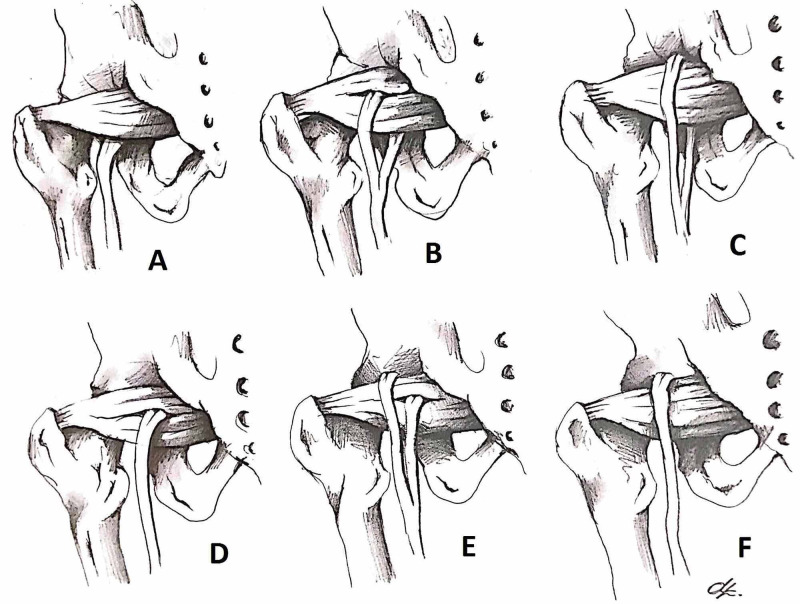
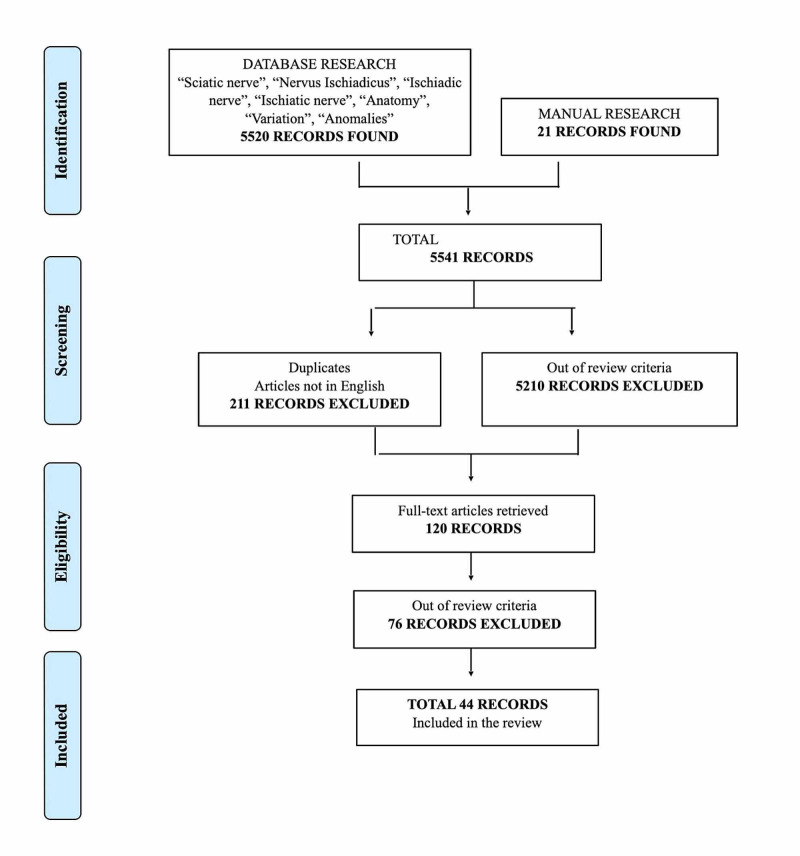
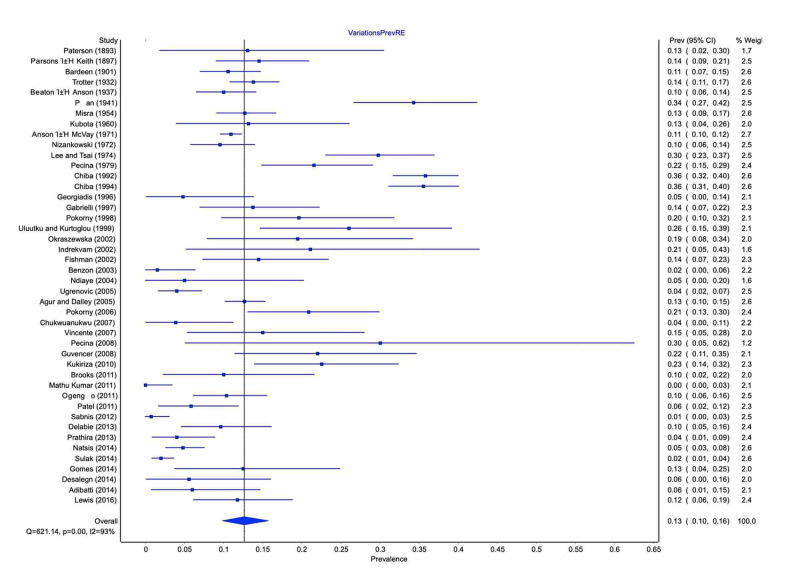
The present systematic review and meta-analysis provides a comprehensive assessment of the sciatic nerve (SN) variants relative to the piriformis muscle (PM) and compares those variants' prevalence among different geographical populations with respect to gender and laterality. A database search was conducted to identify cadaveric studies pertinent to SN variants relative to the PM. A total of 44 articles were included. The typical morphological pattern (type A, with the SN passing undivided below the PM) was found to be the most common variant, with 90% pooled prevalence. SN variants were more common among East Asians, with a 31% pooled prevalence of total variants. No significant differences were established with respect to gender and laterality. In greater than 10% of the population, the SN coursed through or above piriformis. Patients' epidemiological characteristics may predispose them to certain variants. The common peroneal nerve (CPN) is more susceptible to injury during a total hip arthroplasty or a hip arthroscopy where anomalies are encountered. As anatomical variants are commonly associated with piriformis syndrome, they should always be considered during diagnosis and treatment.
Keywords: abnormality; anatomy; anomaly; piriformis muscle; sciatic nerve; variation.
Copyright © 2020, Poutoglidou et al.
Conflict of interest statement
The authors have declared that no competing interests exist.
Figures
References
-
- Microanatomical structure of the human sciatic nerve. Sladjana UZ, Ivan JD, Bratislav SD. Surg Radiol Anat. 2008;30:619–626. - PubMed
-
- Keibel F, Mall FP. Philadelphia, PA: J. B. Lippincott Company; 1910. Manual of Human Embryology.
-
- The relation of the sciatic nerve and of its subdivisions to the piriformis muscle. Beaton LE, Anson BJ. Anat Rec. 2005;70:1–5.
-
- Piriformis syndrome and low back pain: a new classification and review of the literature. Papadopoulos EC, Khan SN. Orthop Clin North Am. 2004;35:65–71. - PubMed
Publication types
LinkOut - more resources
Full Text Sources
Research Materials