Associations Between Fetal Growth Trajectories and the Development of Myopia by 20 Years of Age
- PMID: 33355605
- PMCID: PMC7774062
- DOI: 10.1167/iovs.61.14.26
Associations Between Fetal Growth Trajectories and the Development of Myopia by 20 Years of Age
Abstract
Purpose: To evaluate the contribution of genetic and early life environmental factors, as reflected by fetal anthropometric growth trajectories, toward the development of myopia during childhood and adolescence.
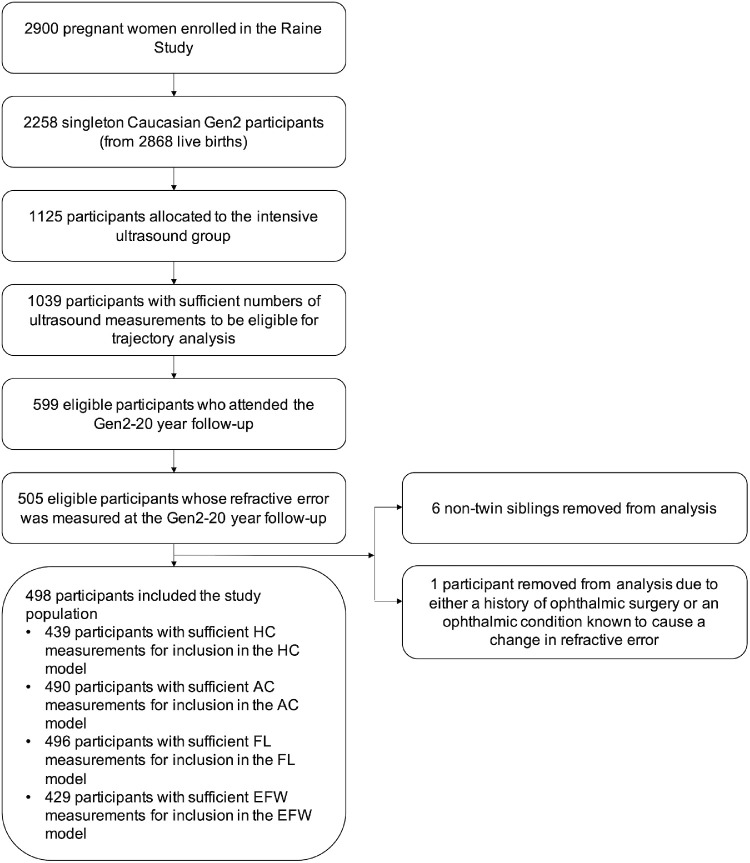
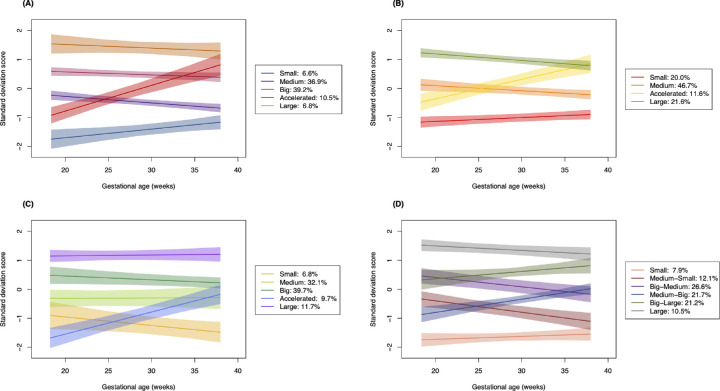
Methods: This analysis included 498 singleton Caucasian participants from the Raine Study, a pregnancy cohort study based in Western Australia. Serial fetal biometric measurements of these participants were collected via ultrasound scans performed at 18, 24, 28, 34, and 38 weeks' gestation. At a 20-year follow-up, the participants underwent a comprehensive ophthalmic examination, including cycloplegic autorefraction and ocular biometry measurements. Using a group-based trajectory modeling approach, we identified groups of participants with similar growth trajectories based on measurements of fetal head circumference (HC), abdominal circumference, femur length (FL), and estimated fetal weight (EFW). Differences between trajectory groups with respect to prevalence of myopia, axial length (AL), and corneal radius of curvature measured at the 20-year follow-up were evaluated via logistic regression and analysis of variance.
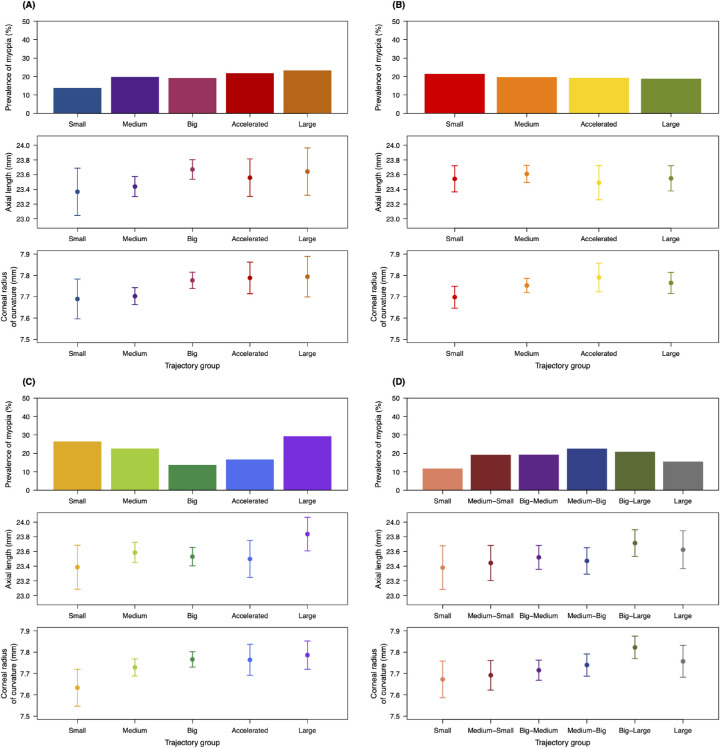
Results: Prevalence of myopia was highest among participants with consistently short or consistently long FLs (P = 0.04). There was also a trend toward increased prevalence with larger HC in late gestation, although not at a statistically significant level. Trajectory groups reflecting faster HC, FL, or EFW growth correlated with significantly flatter corneas (P = 0.03, P = 0.04, and P = 0.01, respectively) and a general, but not statistically significant, increase in AL.
Conclusions: Environmental or genetic factors influencing intrauterine skeletal growth may concurrently affect ocular development, with effects persisting into adulthood.
Conflict of interest statement
Disclosure:
Figures
References
-
- Achiron R, Kreiser D, Achiron A. Axial growth of the fetal eye and evaluation of the hyaloid artery: in utero ultrasonographic study. Prenat Diagn. 2000; 20(11): 894–899. - PubMed
-
- Denis D, Righini M, Scheiner C, et al.. Ocular growth in the fetus: 1. Comparative study of axial length and biometric parameters in the fetus. Ophthalmologica. 1993; 207(3): 117–124. - PubMed
-
- Fledelius HC, Christensen AS, Fledelius C. Juvenile eye growth, when completed? An evaluation based on IOL-Master axial length data, cross-sectional and longitudinal. Acta Ophthalmol. 2014; 92(3): 259–264. - PubMed
-
- Vecino E, Acera A. Development and programed cell death in the mammalian eye. Int J Dev Biol. 2015; 59(1–3): 63–71. - PubMed
Publication types
MeSH terms
LinkOut - more resources
Full Text Sources
Medical