


High frequency of cerebrospinal fluid autoantibodies in COVID-19 patients with neurological symptoms
- PMID: 33359380
- PMCID: PMC7834471
- DOI: 10.1016/j.bbi.2020.12.022
High frequency of cerebrospinal fluid autoantibodies in COVID-19 patients with neurological symptoms
Abstract
Background: COVID-19 intensive care patients can present with neurological syndromes, usually in the absence of SARS-CoV-2 in cerebrospinal fluid (CSF). The recent finding of some virus-neutralizing antibodies cross-reacting with brain tissue suggests the possible involvement of specific autoimmunity.
Design: Blood and CSF samples from eleven critically ill COVID-19 patients presenting with unexplained neurological symptoms including myoclonus, oculomotor disturbance, delirium, dystonia and epileptic seizures, were analyzed for anti-neuronal and anti-glial autoantibodies.
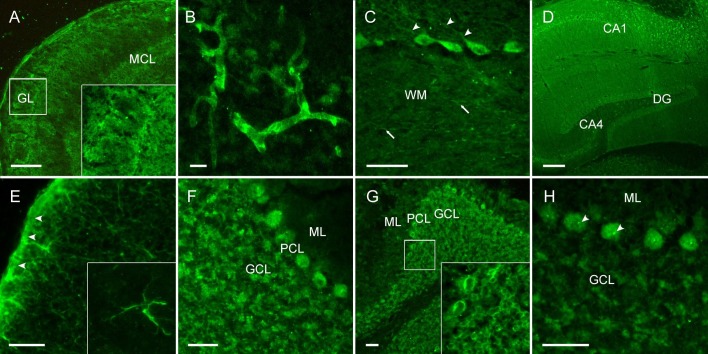
Results: Using cell-based assays and indirect immunofluorescence on unfixed murine brain sections, all patients showed anti-neuronal autoantibodies in serum or CSF. Antigens included intracellular and neuronal surface proteins, such as Yo or NMDA receptor, but also various specific undetermined epitopes, reminiscent of the brain tissue binding observed with certain human monoclonal SARS-CoV-2 antibodies. These included vessel endothelium, astrocytic proteins and neuropil of basal ganglia, hippocampus or olfactory bulb.
Conclusion: The high frequency of autoantibodies targeting the brain in the absence of other explanations suggests a causal relationship to clinical symptoms, in particular to hyperexcitability (myoclonus, seizures). Several underlying autoantigens and their potential molecular mimicry with SARS-CoV-2 still await identification. However, autoantibodies may already now explain some aspects of multi-organ disease in COVID-19 and can guide immunotherapy in selected cases.
Keywords: Autoantibody; Autoimmunity; COVID-19; CSF; Encephalitis; Neurology; Viral-triggered.
Copyright © 2020 The Author(s). Published by Elsevier Inc. All rights reserved.
Figures
Comment in
-
Indirect immunofluorescence for detecting anti-neuronal autoimmunity in CSF after COVID-19 - Possibilities and pitfalls.Brain Behav Immun. 2021 May;94:473-474. doi: 10.1016/j.bbi.2021.02.013. Epub 2021 Feb 23. Brain Behav Immun. 2021. PMID: 33631284 Free PMC article. No abstract available.
References
-
- Armangue T., Spatola M., Vlagea A., Mattozzi S., Carceles-Cordon M., Martinez-Heras E., Llufriu S., Muchart J., Erro M.E., Abraira L., Moris G., Monros-Gimenez L., Corral-Corral I., Montejo C., Toledo M., Bataller L., Secondi G., Arino H., Martinez-Hernandez E., Juan M., Marcos M.A., Alsina L., Saiz A., Rosenfeld M.R., Graus F., Dalmau J., Spanish Herpes Simplex Encephalitis Study G. Frequency, symptoms, risk factors, and outcomes of autoimmune encephalitis after herpes simplex encephalitis: a prospective observational study and retrospective analysis. Lancet Neurol. 2018;17:760–772. - PMC - PubMed
-
- Delamarre L., Gollion C., Grouteau G., Rousset D., Jimena G., Roustan J., Gaussiat F., Aldigé E., Gaffard C., Duplantier J., Martin C., Fourcade O., Bost C., Fortenfant F., Delobel P., Martin-Blondel G., Pariente J., Bonneville F., Geeraerts T. COVID-19–associated acute necrotising encephalopathy successfully treated with steroids and polyvalent immunoglobulin with unusual IgG targeting the cerebral fibre network. J. Neurol. Neurosurg. Psychiatry. 2020;91(9):1004–1006. doi: 10.1136/jnnp-2020-323678. - DOI - PMC - PubMed
-
- Eden A., Kanberg N., Gostner J., Fuchs D., Hagberg L., Andersson L.M., Lindh M., Price R.W., Zetterberg H., Gisslen M. CSF biomarkers in patients with COVID-19 and neurological symptoms: a case series. Neurology. 2020 - PubMed
MeSH terms
Substances
LinkOut - more resources
Full Text Sources
Other Literature Sources
Medical
Miscellaneous
