


Sex-specific associations between cerebrospinal fluid inflammatory marker levels and cognitive function in antiretroviral treated people living with HIV in rural Uganda
- PMID: 33359628
- PMCID: PMC8023502
- DOI: 10.1016/j.bbi.2020.12.021
Sex-specific associations between cerebrospinal fluid inflammatory marker levels and cognitive function in antiretroviral treated people living with HIV in rural Uganda
Abstract
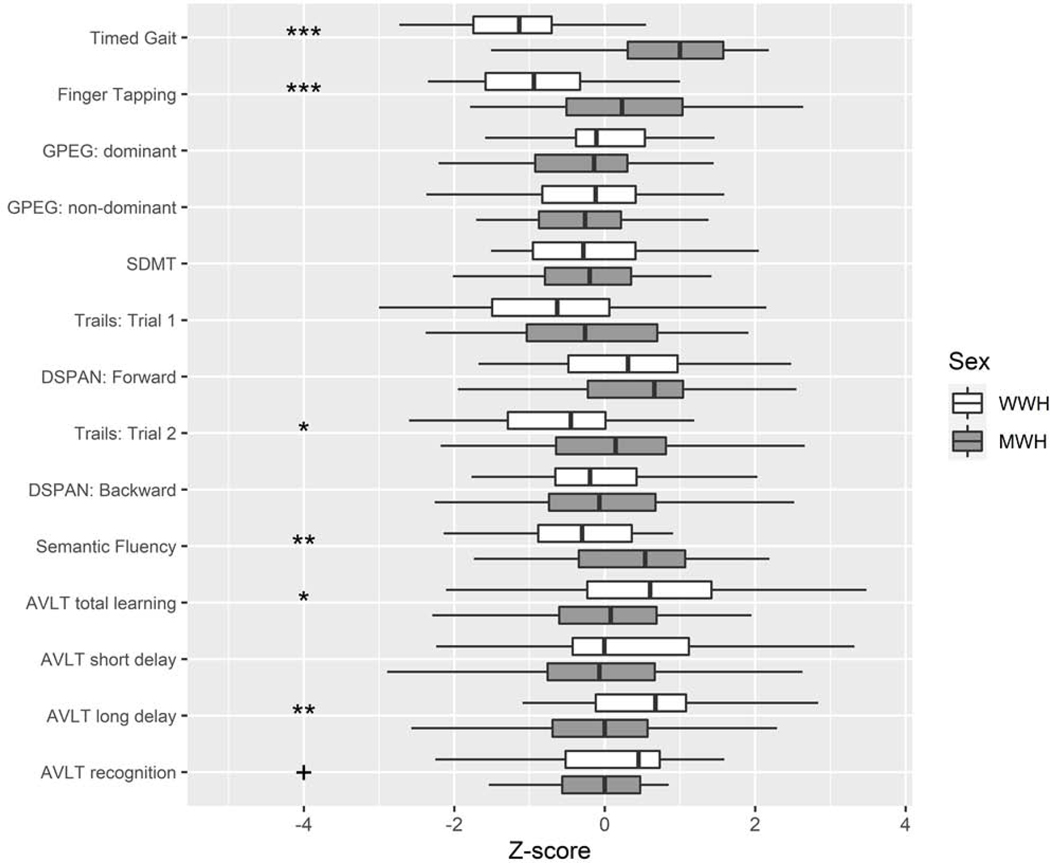
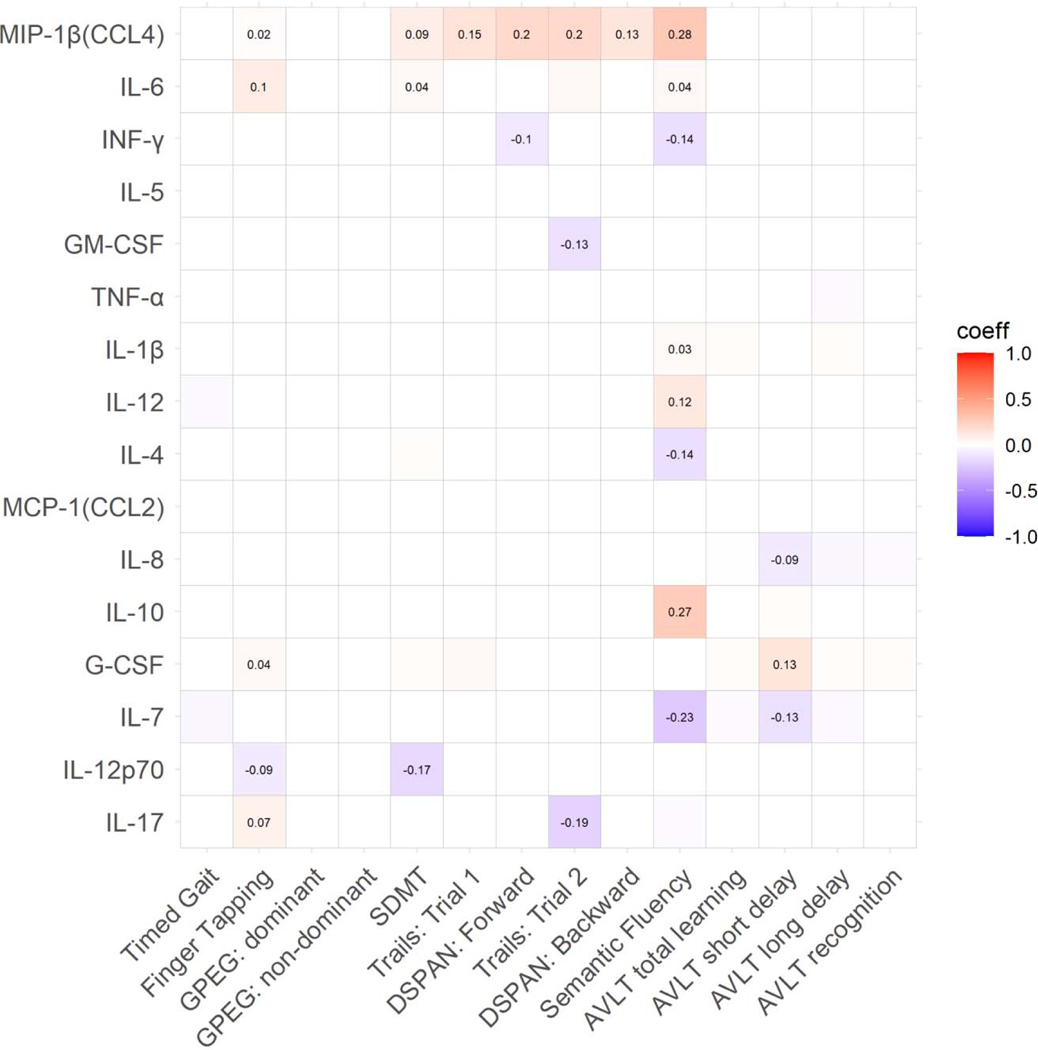
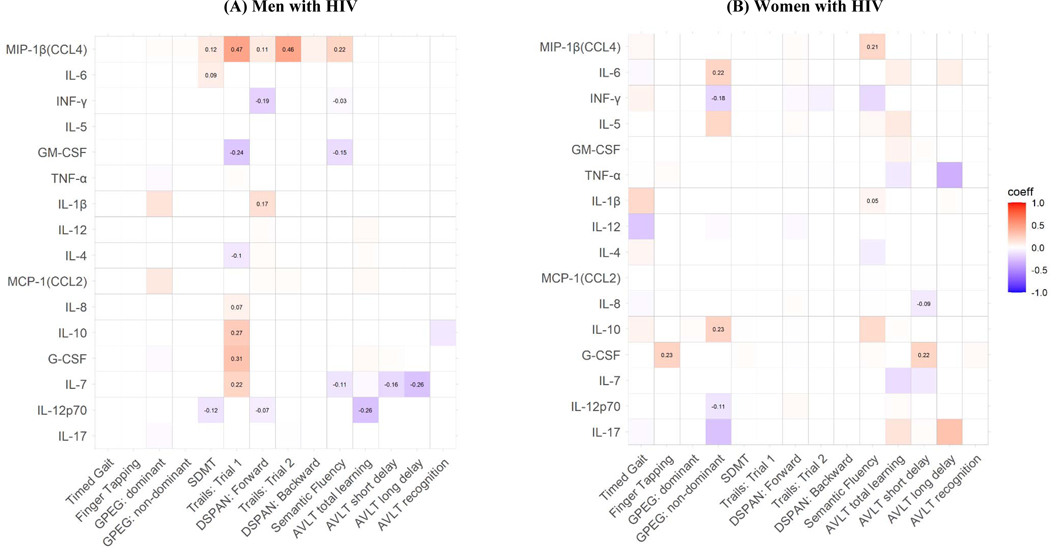
People with HIV (PWH) taking antiretroviral therapy (ART) have persistent cognitive impairment. The prevalence of cognitive impairment is higher in women with HIV (WWH) compared to men with HIV (MWH), possibly due to sex differences in immune function. Here we report sex differences in cerebrospinal fluid (CSF) immune markers in relation to cognitive performance. A subset of 83 PWH on ART (52% WWH; mean age = 37.6 years, SD = 7.9) from the Rakai community cohort study Cohort and Rakai Health Sciences Program supported clinics in rural Uganda completed a neuropsychological (NP) assessment and a lumbar puncture. CSF was used to measure 16 cytokines/chemokines. Individual NP test z-scores were generated based on local normative data. A series of least absolute shrinkage and selection operator (lasso) regressions examined associations between CSF inflammatory markers and NP outcomes. Overall, there were no sex differences in CSF inflammatory marker levels. However, MWH displayed more associations between inflammatory markers and cognitive performance than WWH. Among MWH, inflammatory markers were associated with a number of cognitive domains, including attention, processing speed, fluency, executive function, learning and memory. MIP-1β, INF-γ, GM-CSF, IL-7 and IL-12p70 were associated with multiple domains. Among WWH, few inflammatory markers were associated cognition. Degree of associations between CSF inflammatory biomarkers and cognitive performance varied by sex in this young, ART-treated, Ugandan cohort. Further investigation into sex-specific inflammatory mechanisms of cognitive impairment among PWH is warranted to inform sex-specific management strategies.
Keywords: Cognition; Global health; HIV; Inflammation; Sex.
Copyright © 2020 Elsevier Inc. All rights reserved.
Conflict of interest statement
Conflicts of interest
All coauthors have nothing to disclose.
Figures

References
-
- Airoldi M, Bandera A, Trabattoni D, Tagliabue B, Arosio B, Soria A, Rainone V, Lapadula G, Annoni G, Clerici M, Gori A, 2012. Neurocognitive impairment in HIV-infected naive patients with advanced disease: the role of virus and intrathecal immune activation. Clinical & developmental immunology 2012, 467154. - PMC - PubMed
- amfAR, 2020. Statistics: Women and HIV/AIDS. amfAR.
-
- de Frias CM, Nilsson LG, Herlitz A, 2006. Sex differences in cognition are stable over a 10-year period in adulthood and old age. Neuropsychology, development, and cognition. Section B, Aging, neuropsychology and cognition 13, 574–587. - PubMed
Publication types
MeSH terms
Substances
Grants and funding
LinkOut - more resources
Full Text Sources
Other Literature Sources
Medical
Miscellaneous
