


Beyond calorie restriction: aging as a biological target for nutrient therapies
- PMID: 33360494
- PMCID: PMC8219814
- DOI: 10.1016/j.copbio.2020.11.008
Beyond calorie restriction: aging as a biological target for nutrient therapies
Abstract
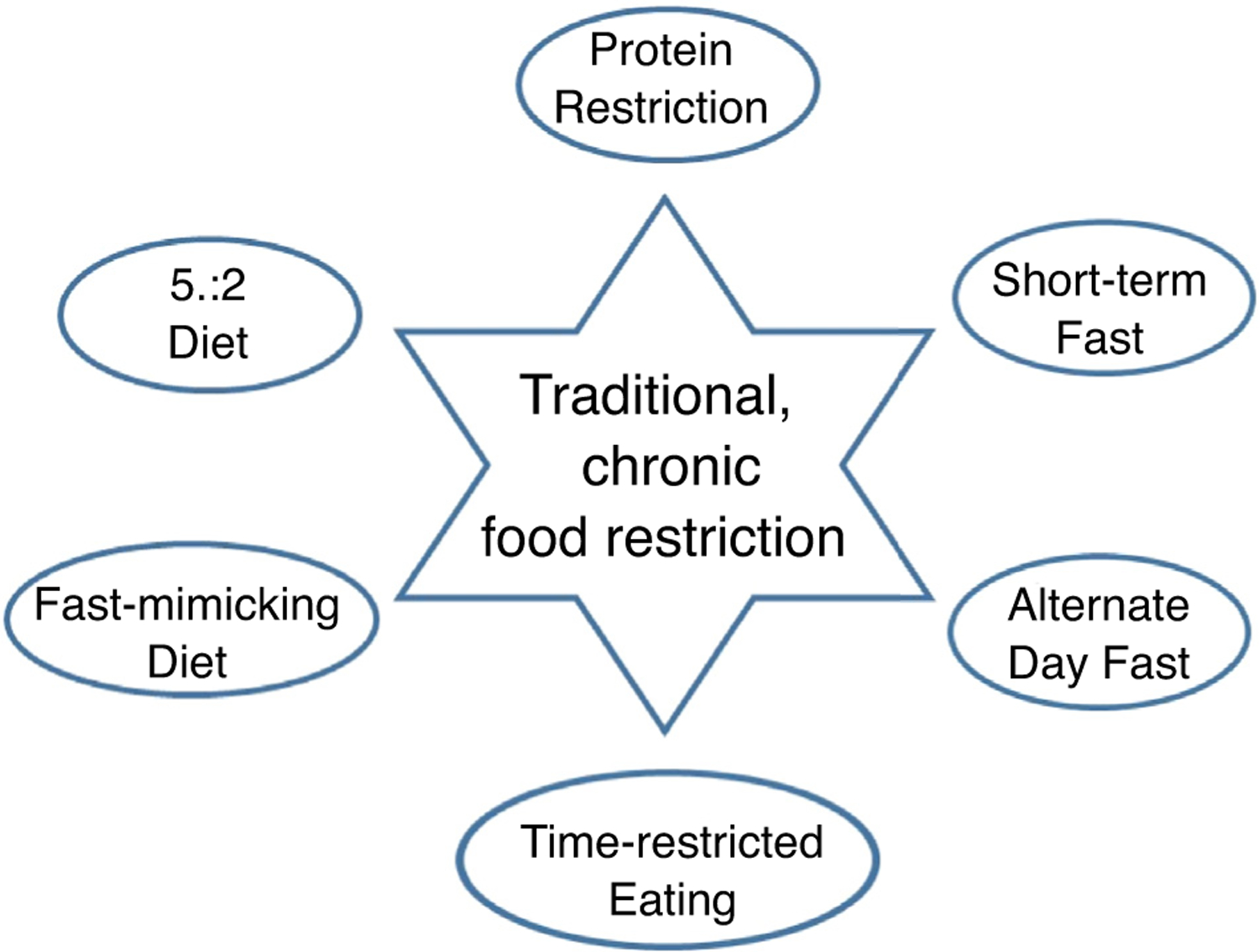
Arguably, the most important discovery in the biology of aging to date was that simply reducing food intake extended life and improved many aspects of health in a diversity of animal species. The conventional wisdom that emerged from first 50 years of rodent food restriction studies included (1) that the longevity impact of restriction was greater the longer restriction was imposed, and (2) that restricting calories rather than any specific macronutrient was critical to its health and longevity benefits. However these assumptions began to crumble as more and more restriction research was performed on other species besides laboratory rodents. Recent investigations of flies, rodents, monkeys, and increasingly humans, has begun to parse how calorie restriction, protein restriction, intermittent fasting, and the temporal pattern of eating all impact the health benefits of food restriction. Fly research continues to inform, as it has repeatedly shown that genotype, age, sex, duration, and tempo restriction all affect the health impact. Ultimately, optimizing human diets will require a personalized approach using omics approaches.
Copyright © 2020 Elsevier Ltd. All rights reserved.
Conflict of interest statement
Conflict of interest statement
Nothing declared.
Figures
References
-
- Weindruch R, Walford RL: The Retardation of Aging and Disease by Dietary Restriction. Springfield, IL: Charles C. Thomas; 1988.
-
- McCay CM, Crowell MF, Maynard LA: The effect of retarded growth upon the length of the life span and upon ultimate body size. J Nutr 1935, 13:669–679. - PubMed
-
- Masoro EJ: Overview of caloric restriction and ageing. Mech Ageing Dev 2005, 126:913–922. - PubMed
-
- Austad SN, Kristan DM: Are mice calorically restricted in nature? Aging Cell 2003, 2:201–207. - PubMed
Publication types
MeSH terms
Grants and funding
LinkOut - more resources
Full Text Sources
Other Literature Sources
Medical
