. 2020 Dec 24;8(2):e933.
doi: 10.1212/NXI.0000000000000933. Print 2021 Mar.

Aryl Hydrocarbon Receptor Plasma Agonist Activity Correlates With Disease Activity in Progressive MS

Affiliations

Aryl Hydrocarbon Receptor Plasma Agonist Activity Correlates With Disease Activity in Progressive MS

Thanos Tsaktanis et al. Neurol Neuroimmunol Neuroinflamm. .

Abstract

Objective: The relationship between serum aryl hydrocarbon receptor (AHR) agonistic activity levels with disease severity, its modulation over the course of relapsing-remitting MS (RRMS), and its regulation in progressive MS (PMS) are unknown. Here, we report the analysis of AHR agonistic activity levels in cross-sectional and longitudinal serum samples of patients with RRMS and PMS.

Methods: In a cross-sectional investigation, a total of 36 control patients diagnosed with noninflammatory diseases, 84 patients with RRMS, 35 patients with secondary progressive MS (SPMS), and 41 patients with primary progressive MS (PPMS) were included in this study. AHR activity was measured in a cell-based luciferase assay and correlated with age, sex, the presence of disease-modifying therapies, Expanded Disability Status Scale scores, and disease duration. In a second longitudinal investigation, we analyzed AHR activity in 13 patients diagnosed with RRMS over a period from 4 to 10 years and correlated AHR agonistic activity with white matter atrophy and lesion load volume changes.

Results: In RRMS, AHR ligand levels were globally decreased and associated with disease duration and neurologic disability. In SPMS and PPMS, serum AHR agonistic activity was decreased and correlated with disease severity. Finally, in longitudinal serum samples of patients with RRMS, decreased AHR agonistic activity was linked to progressive CNS atrophy and increased lesion load.

Conclusions: These findings suggest that serum AHR agonist levels negatively correlate with disability in RRMS and PMS and decrease longitudinally in correlation with MRI markers of disease progression. Thus, serum AHR agonistic activity may serve as novel biomarker for disability progression in MS.


Figures

Figure 1
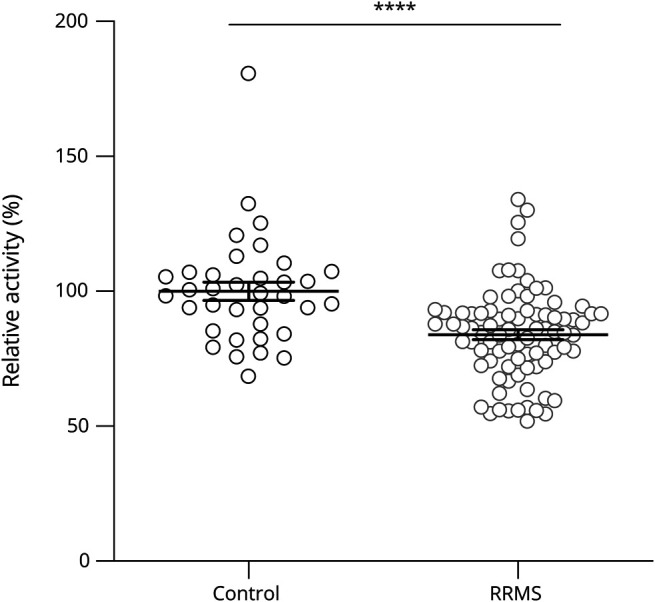
Figure 1. AHR Agonistic Activity Is Decreased in Patients With RRMS
Human embryonic kidney cells (HEK293) were transfected with pGud-Luc and pTK-Renilla plasmids. One day after transfection, cells were incubated with human healthy control serums (control; n = 36) or serum from patients with relapsing-remitting MS (RRMS; n = 84). Luciferase activity was assessed after 24 hours. Values are means of technical duplicate measurements. Lines represent mean and error bars SEM. ****p < 0.0001 by the Student t test. AHR = aryl hydrocarbon receptor.
Figure 2
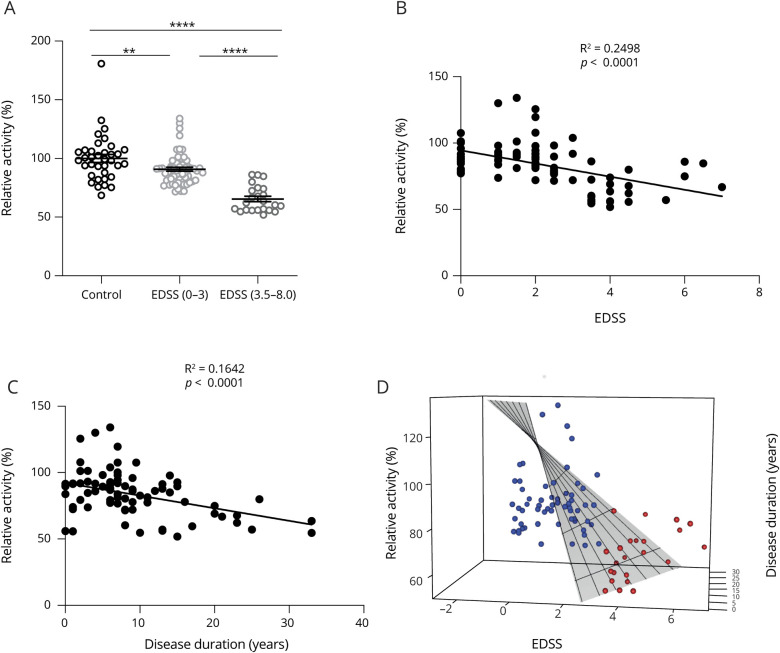
Figure 2. AHR Ligand Levels Correlate With Disease Severity and Duration in Patients With RRMS
(A) HEK293 cells were transfected with AHR reporter and control plasmid (pGud-Luc and pTK-Renilla). One day after transfection, cells were incubated with human serum from healthy controls (control; n = 36) or serum from patients with relapse-remitting MS (RRMS; n = 84) with different disability levels as determined by Expanded Disability Status Scale (EDSS), where higher scores indicate increased disease severity. Luciferase activity was assessed after 24 hours. Values are means of technical duplicate measurements. Lines represent mean and error bars SEM. **p < 0.01, and ****p < 0.0001 by the Student t test. (B) Solid line shows linear regression with correlation of AHR agonistic activity and disease severity as determined by EDSS in patients with RRMS (RRMS; n = 84). Values are means of technical duplicate measurements. Numbers indicated R2 and p value of linear regression analysis. p < 0.05 is considered significant. (C) Solid line shows linear regression correlating agonistic activity with disease duration in patients with RRMS (RRMS; n = 84). Values are means of technical duplicate measurements. p < 0.05 is considered significant. (D) 3D plot analyses of EDSS scores (x-axis), disease duration (y-axis), and AHR ligand levels (z-axis) in patients with RRMS. AHR = aryl hydrocarbon receptor.
Figure 3
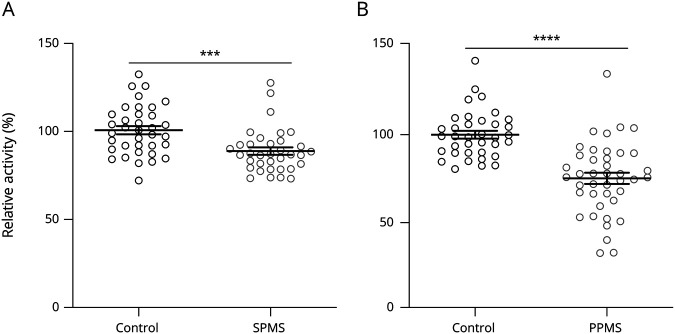
Figure 3. AHR Agonistic Activity Is Decreased in the Progressive Form of MS
(A) AHR agonistic activity in serum samples of healthy controls (control; n = 36) and patients with secondary progressive MS (SPMS; n = 35) was assessed in duplicates using AHR ligand–sensitive luciferase assay. (B) AHR agonistic activity in serum samples of healthy controls (control; n = 36) and patients with primary progressive MS (PPMS; n = 41) was assessed in technical duplicates using an AHR ligand–sensitive luciferase assay. Values are means of technical duplicate measurements. Lines represent mean and error bars SEM. Significance levels were determined by the Student t test. ***p < 0.001 and ****p < 0.0001. AHR = aryl hydrocarbon receptor.
Figure 4
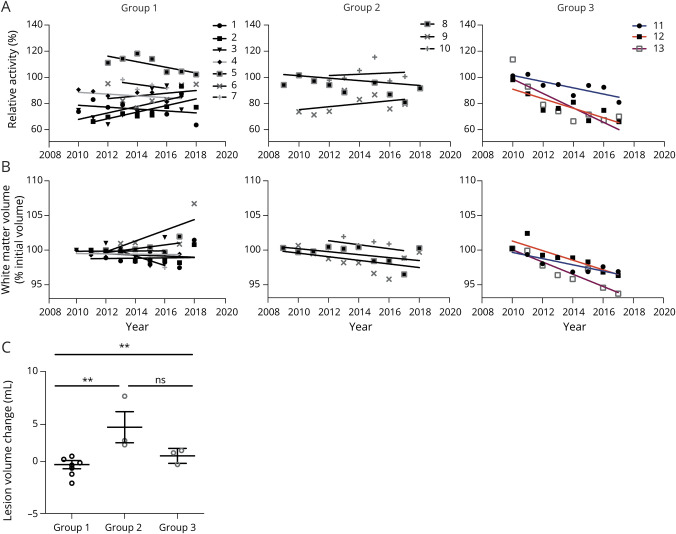
Figure 4. Longitudinal Reduction of AHR Agonistic Activity Correlates With Increasing White Matter Atrophy and Lesion Load Volume in Individual Patients With RRMS
(A) Analysis of AHR agonistic activity in 13 individual patients in serial measurements. Solid line shows correlation of sample drawing year with AHR agonistic activity. (B) Analysis of white matter volume in 13 individual patients in serial cerebral MRIs. Solid line shows correlation of drawing year with relative white matter volume in each individual patient. (C) Analysis of lesion load volume change in 13 individual patients in serial cerebral MRIs. Group 1 (7 patients) and group 2 (3 patients) consist of patients with a stable AHR activity course and were compared with group 3 consisting of 3 patients with a decreasing AHR activity course over the years. Lines represent mean and error bars SEM. **p < 0.01 by 1-way analysis of variance followed by the Tukey post hoc test. AHR = aryl hydrocarbon receptor; ns = not significant; RRMS = relapsing-remitting MS.

References

    1. International Multiple Sclerosis Genetics Consortium; Wellcome Trust Case Control Consortium 2; Sawcer S, et al. . Genetic risk and a primary role for cell-mediated immune mechanisms in multiple sclerosis. Nature 2011;476:214–219. - PMC - PubMed
    1. Rothhammer V, Quintana FJ. Environmental control of autoimmune inflammation in the central nervous system. Curr Opin Immunol 2016;43:46–53. - PMC - PubMed
    1. Quintana FJ. The aryl hydrocarbon receptor: a molecular pathway for the environmental control of the immune response. Immunology 2013;138:183–189. - PMC - PubMed
    1. Mascanfroni ID, Takenaka MC, Yeste A, et al. . Metabolic control of type 1 regulatory T cell differentiation by AHR and HIF1-alpha. Nat Med 2015;21:638–646. - PMC - PubMed
    1. Quintana FJ, Murugaiyan G, Farez MF, et al. . An endogenous aryl hydrocarbon receptor ligand acts on dendritic cells and T cells to suppress experimental autoimmune encephalomyelitis. Proc Natl Acad Sci USA 2010;107:20768–20773. - PMC - PubMed

Publication types

MeSH terms

Substances