


Job Demands and Resources among Healthcare Professionals during Virus Pandemics: A Review and Examination of Fluctuations in Mental Health Strain during COVID-19
- PMID: 33362329
- PMCID: PMC7753503
- DOI: 10.1111/apps.12304
Job Demands and Resources among Healthcare Professionals during Virus Pandemics: A Review and Examination of Fluctuations in Mental Health Strain during COVID-19
Abstract
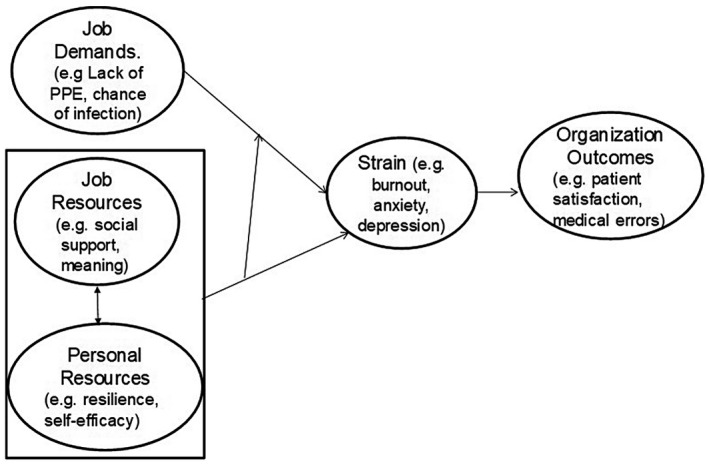
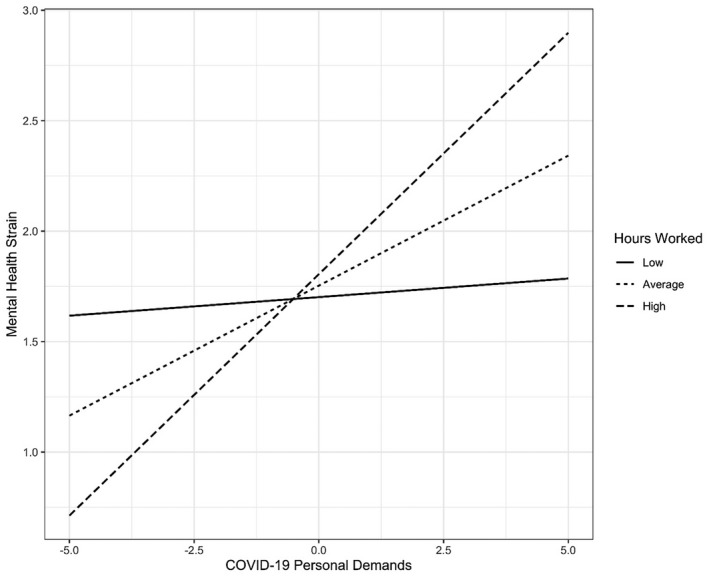
The present article examines how job demands and resources are related to indices of strain among healthcare professionals during virus pandemics. The article also presents the results of a study examining the relationships between COVID-19 demands (e.g., lack of personal protective equipment, concerns about infecting family members), resources (meaningful work, social support), and mental health strain within a sample of emergency medicine personnel over six consecutive weeks. COVID-19-related demands and hours worked were hypothesized to be positively related to mental health strain, whereas meaningful work and social support were hypothesized to be negatively related to mental health strain. Hours worked the prior week were hypothesized to exacerbate the positive relationships between COVID-19 demands and mental health strain, whereas the resources of meaningful work and social support were expected to buffer the relationships. Multilevel models controlling for mental health strain the prior week revealed that COVID-19 demands, along with hours worked, were each related to higher mental health strain during the week. Hours worked magnified the within-person relationship between personal COVID-19 demands and mental health strain. In contrast to the hypotheses, social support and meaningful work were not related to mental health strain. Discussion focuses on the implications of the findings for healthcare professionals.
© 2020 International Association of Applied Psychology.
Figures
References
-
- Aguinis, H. , Gottfredson, R.K. , & Culpepper, S.A. (2013). Best‐practice recommendations for estimating cross‐level interaction effects using multilevel modeling. Journal of Management, 39(6), 1490–1528.
-
- Bakker, A.B. , & Demerouti, E. (2007). The job demands–resources model: State of the art. Journal of Managerial Psychology, 22, 309–328. 10.1108/02683940710733115 - DOI
-
- Bakker, A.B. , & Demerouti, E. (2017). Job demands‐resources theory: Taking stock and looking forward. Journal of Occupational Health Psychology, 22(3), 273–285. - PubMed
-
- Beal, D.J. , & Weiss, H.M. (2003). Methods of ecological momentary assessment in organizational research. Organizational Research Methods, 6(4), 440–464. 10.1177/1094428103257361 - DOI
-
- Belfroid, E. , van Steenbergen, J. , Timen, A. , Ellerbroek, P. , Huis, A. , & Hulscher, M. (2018). Preparedness and the importance of meeting the needs of healthcare workers: A qualitative study on Ebola. The Journal of Hospital Infection, 98(2), 212–218. 10.1016/j.jhin.2017.07.001 - DOI - PMC - PubMed
LinkOut - more resources
Full Text Sources
Other Literature Sources