


Food consumption behavior during the COVID-19 pandemic
- PMID: 33362340
- PMCID: PMC7753758
- DOI: 10.1002/agr.21679
Food consumption behavior during the COVID-19 pandemic
Abstract
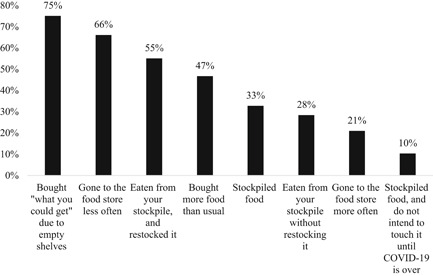
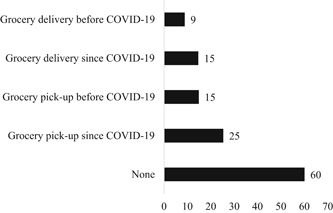
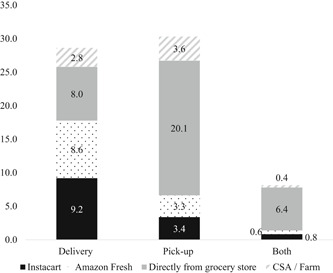
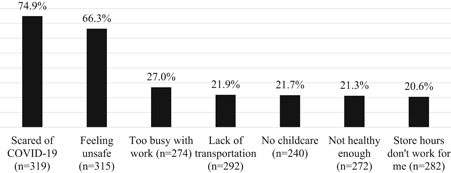
We conducted an online consumer survey in May 2020 in two major metropolitan areas in the United States to investigate food shopping behaviors and consumption during the pandemic lockdown caused by COVID-19. The results of this study parallel many of the headlines in the popular press at the time. We found that about three-quarters of respondents were simply buying the food they could get due to out of stock situations and about half the participants bought more food than usual. As a result of foodservice closures, consumers indicated purchasing more groceries than normal. Consumers attempted to avoid shopping in stores, relying heavily on grocery delivery and pick-up services during the beginning of the pandemic when no clear rules were in place. Results show a 255% increase in the number of households that use grocery pickup as a shopping method and a 158% increase in households that utilize grocery delivery services. The spike in pickup and delivery program participation can be explained by consumers fearing COVID-19 and feeling unsafe. Food consumption patterns for major food groups seemed to stay the same for the majority of participants, but a large share indicated that they had been snacking more since the beginning of the pandemic which was offset by a sharp decline in fast food consumption.
Keywords: coronavirus; delivery; food consumption; grocery shopping; pandemic; pick‐up.
© 2020 Wiley Periodicals LLC.
Figures
References
-
- American Psychiatric Association . (1985). Diagnostic and statistical manual of mental disorders. American Psychiatric Association.
-
- AZDHS . (2020). Data dashboard. https://www.azdhs.gov/preparedness/epidemiology-disease-control/infectio...
-
- Chenarides, L. , & Jaenicke, E. C. (2017). Store choice and consumer behavior in food deserts: An empirical application of the distance metric method. Allied Social Science Association (ASSA) Annual Meeting, January 6–8, 2017, Chicago, IL, no. 250118.
-
- Daniels, J . (2017). Online grocery sales set to surge, grabbing 20 percent of market by 2025. CNBC. https://www.cnbc.com/2017/01/30/online-grocery-sales-set-surgegrabbing-2.... Accessed August 26, 2017.
-
- DecaData . (2020). COVID‐19 index April 08: Emergency related product sales. https://safegraphCOVID19.slack.com/archives/C01080G2TD0/p158680375916570...
LinkOut - more resources
Full Text Sources
Research Materials