. 2020 Dec 9:8:582191.
doi: 10.3389/fpubh.2020.582191. eCollection 2020.

Effect of Face Masks on Interpersonal Communication During the COVID-19 Pandemic

Affiliations

Effect of Face Masks on Interpersonal Communication During the COVID-19 Pandemic

Nour Mheidly et al. Front Public Health. .

Abstract

Interpersonal communication has been severely affected during the COVID-19 pandemic. Protective measures, such as social distancing and face masks, are essential to mitigate efforts against the virus, but pose challenges on daily face-to-face communication. Face masks, particularly, muffle sounds and cover facial expressions that ease comprehension during live communication. Here, we explore the role of facial expressions in communication and we highlight how the face mask can hinder interpersonal connection. In addition, we offer coping strategies and skills that can ease communication with face masks as we navigate the current and any future pandemic.

Keywords: SARS-CoV-2; communication; coronavirus; pandemic; pandemic (COVID-19); social distancing.


Conflict of interest statement

The authors declare that the research was conducted in the absence of any commercial or financial relationships that could be construed as a potential conflict of interest.

Figures
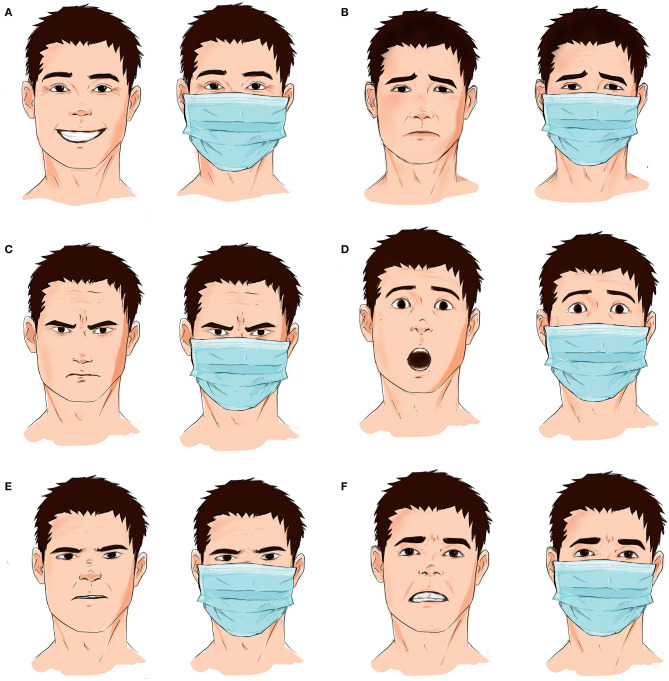
Figure 1
Figure 1
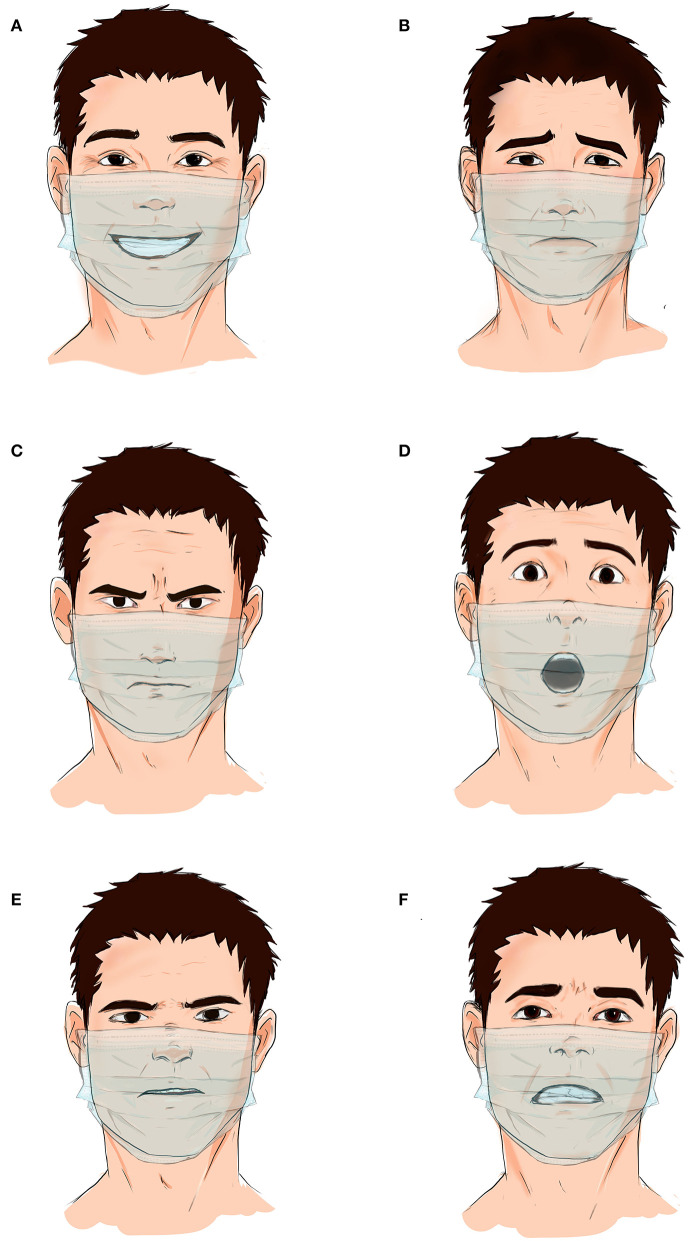
Face masks cover the middle and the lower portions of the face. As such, facial expressions involving the mouth, lips, teeth, and nose are masked during interpersonal communication. (A) Happiness is usually perceived when the corners of the lips rise upward. With face masks, happiness can be caught on the face by focusing on the wrinkles at the edge of the eyes. (B) Sadness involves movement of the eyebrows, the nasolabial folds, and the corners of the lips; however, the last two are masked by face masks. (C) Facial expression of anger emphasizes the downward and central movement of eyebrows, the glaring eyes, and narrowing of the corners of the lips, with the latter getting covered by face masks. (D) Expressions of surprise and shock are usually formed of elevated eyebrows and a raised upper lip; only the latter is covered by protective masks. (E) Nose wrinkling and raising of the upper lip convey feelings of disgust; however, face masks cover both expressions. (F) Feelings of guilt are usually portrayed by slightly upping eyebrows together and stretching the mouth, with the latter getting covered with a face mask.
Figure 2
Figure 2
Transparent protective face masks and face shield preserve the importance of facial expressions during interpersonal communication. Feelings of happiness (A), sadness (B), anger (C), surprise (D), disgust (E), and fear (F) can easily be noted and picked up through the individual's facial reactions and expressions.

References

    1. Aubrey A. No-Touch Greetings Take Off: People Are Getting Creative About Saying ‘Hi'. National Public Radio (2020). Available online at: https://www.npr.org/sections/health-shots/2020/03/15/814540484/no-touch-... (accessed July 6, 2020).
    1. Isaacowitz DM, Löckenhoff CE, Lane RD, Wright R, Sechrest L, Riedel R, Costa PT. Age differences in recognition of emotion in lexical stimuli and facial expressions. Psychol Aging. (2007) 22:147–59. 10.1037/0882-7974.22.1.147 - DOI - PubMed
    1. Guarnera M, Hichy Z, Cascio MI, Carrubba S. Facial expressions and ability to recognize emotions from eyes or mouth in children. Eur J Psychol. (2015) 11:183 10.5964/ejop.v11i2.890 - DOI - PMC - PubMed
    1. Ekman P, Friesen WV, Hager JC. The Facial Action Coding System: The Manual on CD-ROM & Investigator's Guide. (2002). Salt Lake City, UT: Research Nexus.
    1. Gagnon M, Gosselin P., Maassarani R. Children's ability to recognize emotions from partial and complete facial expressions. J Genet Psychol. (2014) 175:416–30. 10.1080/00221325.2014.941322 - DOI - PubMed