. 2020 Dec 14:13:1113-1124.
doi: 10.2147/JIR.S287256. eCollection 2020.

Circulating Neutrophil-Derived Microparticles Associated with the Prognosis of Patients with Sepsis

Affiliations

Circulating Neutrophil-Derived Microparticles Associated with the Prognosis of Patients with Sepsis

Hong-Peng Chen et al. J Inflamm Res. .

Abstract

Introduction: Because of its high morbidity and mortality, sepsis remains the leading cause of death in the ICU. Microparticles (MP) have been largely studied as potential diagnostic or prognostic markers in various diseases including sepsis.

Objective: The biological and clinical relevance of neutrophil-derived microparticles (NDMPs) within the MP population remains unclear. The objective of this study was to elucidate the relationship between plasma NDMPs and the prognosis of patients with sepsis and/or septic shock.

Methods: The study was designed as an observational, noninterventional clinical study. The cohort for this study included 40 sepsis and 40 septic shock patients together with 10 healthy controls admitted to the Intensive Care Unit (ICU) and the Health Surveillance Center in the Affiliated Hospital of Guangdong Medical University, Zhanjiang, Guangdong, China, from January to November 2018, respectively. The degree of critical disease for sepsis and septic shock was evaluated, with data analyses conducted from 2018 to 2019.

Results: On days 1, 3 and 5 post-admission a series of data including plasma NDMP levels, patient demographics, TNF-α levels, IL-6 levels, sTREM-1 levels, and the sepsis severity score measurements were collected. A survival curve was plotted against levels of plasma NDMPs. Levels of NDMPs were observed to be higher in the septic shock patients than in the sepsis patients on days 1, 3, and 5 post-ICU admission (p < 0.05). NDMP levels were significantly increased in sepsis and septic shock patients with a parallel increase in pro-inflammatory mediators and sepsis severity score (p < 0.05) as well as mortality.

Conclusion: Our data suggest that NDMPs may be a biomarker of sepsis severity and mortality although its implications on sepsis prognosis warrant further study.

Keywords: biomarker; cell-derived microparticles; prognosis; sepsis; septic shock.


Conflict of interest statement

The authors report no competing interests.

Figures
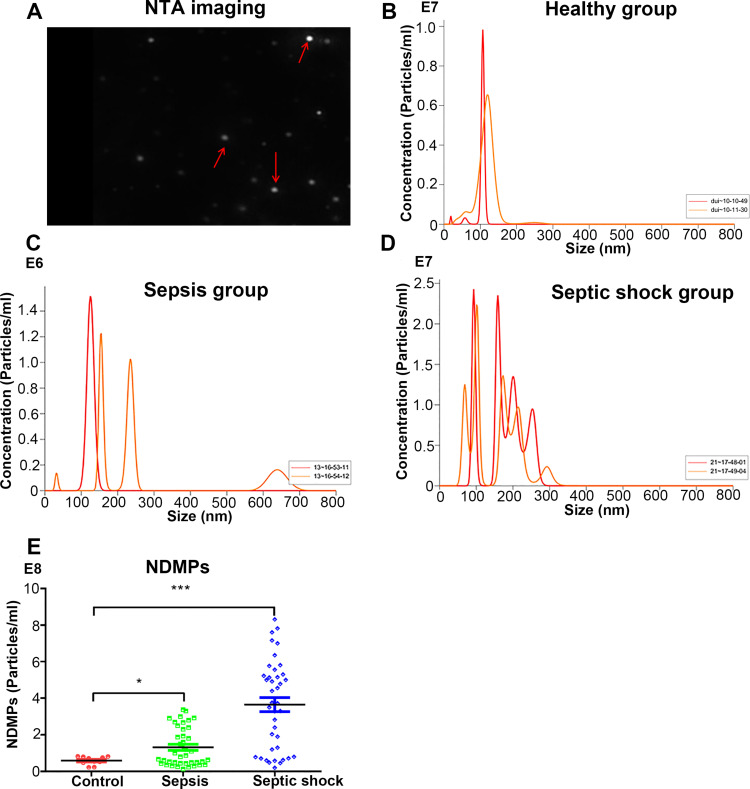
Figure 1
Figure 1
The plasma micro-particles (NDMPs) in healthy controls, sepsis and septic shock patients. (A) Nanoparticle tracking analysis imaging of NDMPs (red arrow). An example measurement trace of a healthy control group (B), sepsis (C) and septic shock patient (D). (E) Dot plot of plasma NDMPs in healthy individuals, sepsis and septic shock patients. *P<0.05 and ***P<0.001.
Figure 2
Figure 2
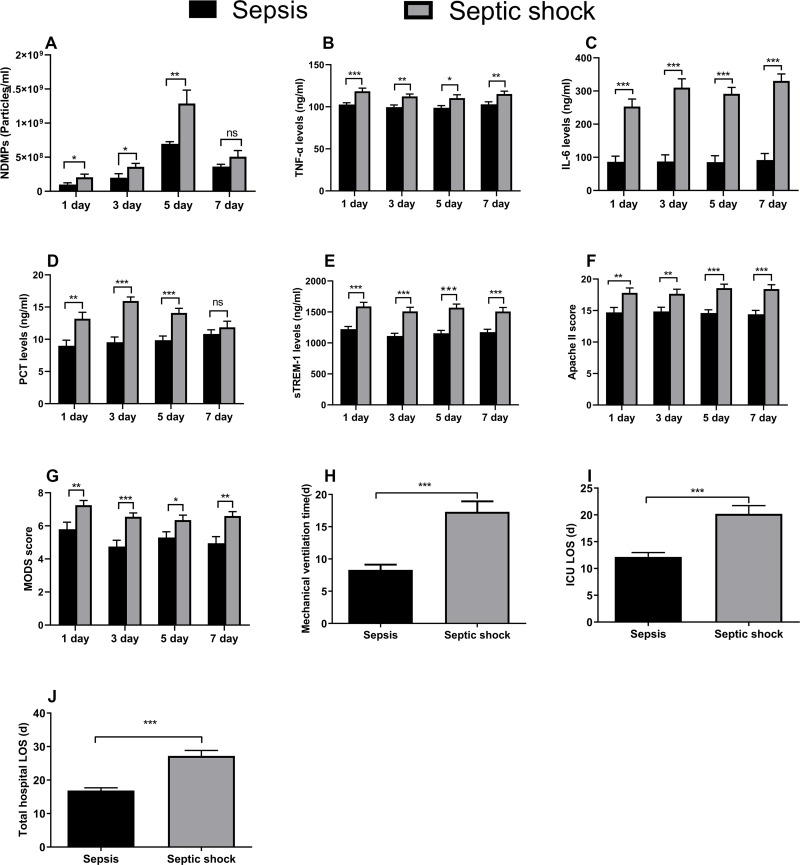
The plasma levels of all measurements and clinical outcomes. NDMPs (A), TNF-α (B), IL-6 (C), PCT (D), sTREM-1 (E), APACHE II score (F) and MODS score (G) on days 1 (40 cases in sepsis group versus 40 cases in septic shock group), 3 (38 versus 36 cases), 5 (33 versus 30 cases) and 7 (29 versus 25 cases); mechanical ventilation time (H), ICU LOS (I) and total hospital LOS (J) between sepsis and septic shock groups. Data were mean ± SD and analyzed by t-test. *p<0.05, **p<0.01, ***p<0.001.
Figure 3
Figure 3
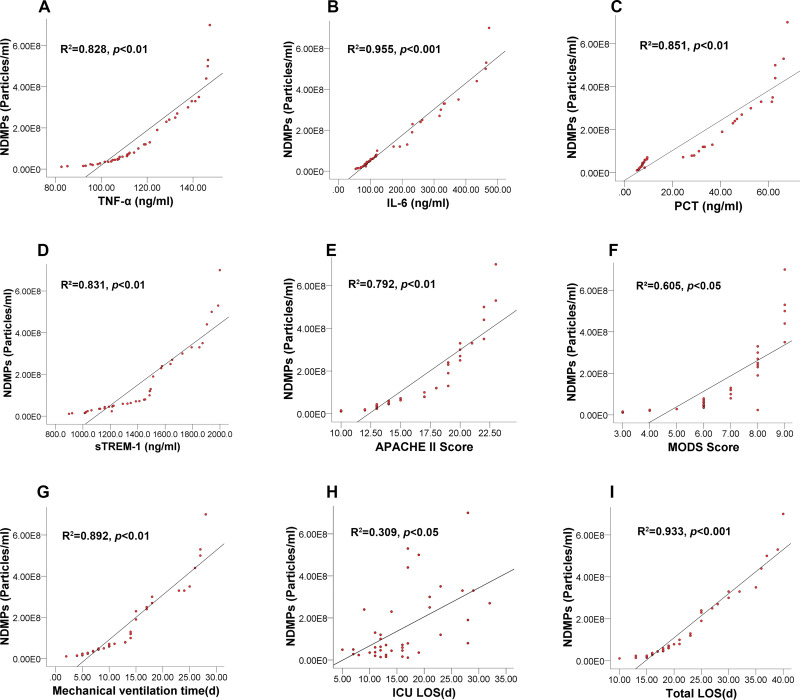
Linear correlations between plasma NDMPs concentration and the levels of all measurements and clinical outcomes. TNF-α (A), IL-6 (B), PCT (C) and sTREM-1 (D), Apache II score (E), MODS score (F), mechanical ventilation time (G), and ICU LOS (H), and total hospital LOS (I) in sepsis and septic shock patients.
Figure 4
Figure 4
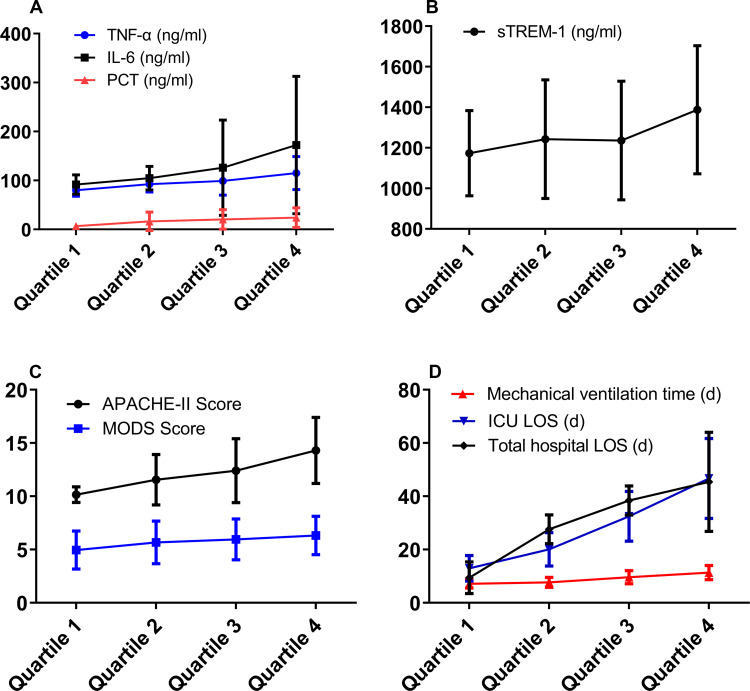
The correlation between plasma NDMPs concentration and mechanical ventilation time, ICU LOS, total hospital LOS, disease severity and inflammatory factors in sepsis and septic shock patients. After arranging the plasma NDMPs concentration of all the patients on days 1,3,5,7 by an ascending quartile method (quartiles cutoff points of NDMPs concentration 9.7×10⁷/mL, 3.55×10⁸/mL, 6.4×10⁸/mL), following the gradual increase of NDMPs concentration, the p values from statistical analysis were: (A) TNF-α p=0.0045, IL-6 p=0.0537, PCT p=0.0128, (B) sTREM-1 p=0.0403, (C) Apache II Score p<0.001, MODS Score p=0.0486, (D) Mechanical ventilation time p<0.001, ICU LOS p<0.001, Total hospital LOS p<0.001).
Figure 5
Figure 5
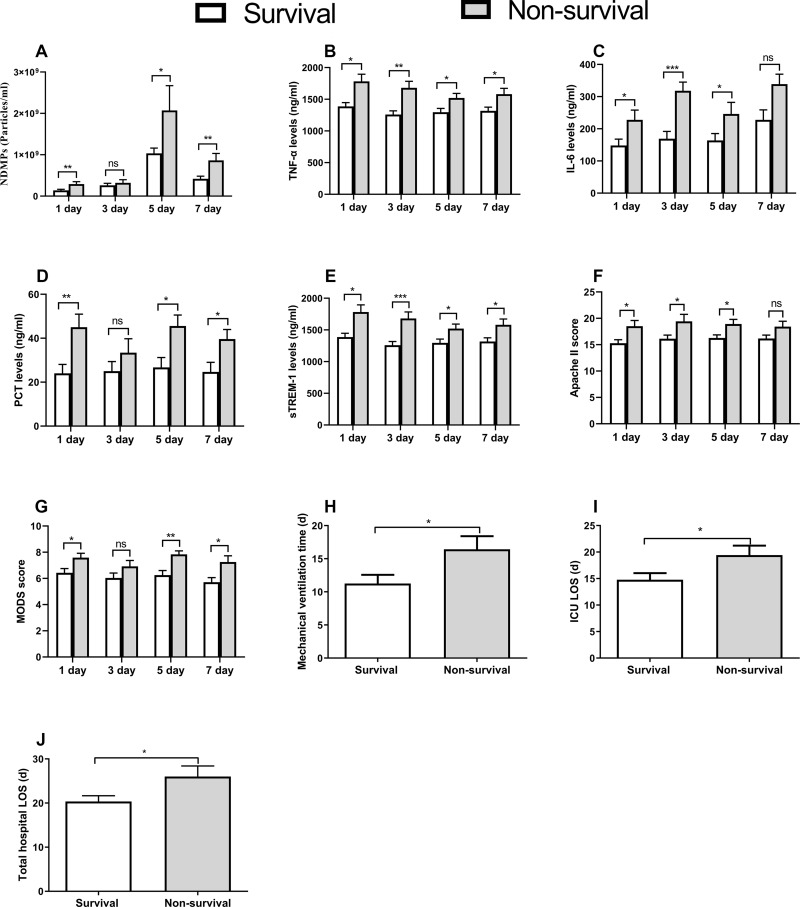
Comparisons between surviving and non-surviving patients of all measurements and clinical outcomes. Plasma concentration of NDMPs (A), TNF-α (B), IL-6 (C), PCT (D), sTREM-1 (E), Apache II score (F) and MODS score (G) on days 1 (54 cases in survival group versus 26 cases in non-survival group), 3 (52 versus 22 cases), 5 (49 versus 17 cases) and 7 (45 versus 14 cases); and mechanical ventilation time (H), and ICU LOS (I) and total hospital LOS (J) in survival and non-survival groups. Data were mean ± SD and analyzed by t-test. *p<0.05, **p<0.01, ***p<0.001 compared with sepsis group.
Figure 6
Figure 6
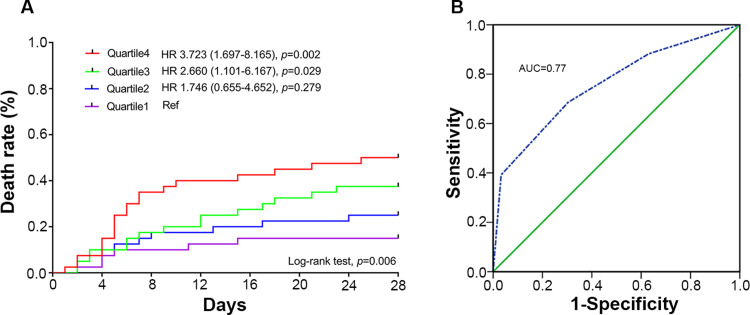
NDMPs vs survival prediction. (A) Patient death among 4 quartiles based on the plasma NDMPs concentration from low to high of all the patients on the post-admission day 1,3,5 and 7 arranged by the ascending quartile method (Quartiles cut-off points of NDMPs concentration 9.7×10⁷/mL, 3.55×10⁸/mL, 6.4×10⁸/mL), Log-rank (Mantel-Cox) test, p=0.0061. (B) ROC curve of the sensitivity and specificity of NDMP levels to predict death in patients with sepsis and septic shock.

References

    1. Timar CI, Lorincz AM, Csepanyi-Komi R, et al. Antibacterial effect of microvesicles released from human neutrophilic granulocytes. Blood. 2013;121(3):510–518. doi:10.1182/blood-2012-05-431114 - DOI - PMC - PubMed
    1. Rossaint JKK, Skupski J. Directed transport of neutrophil-derived extracellular vesicles enables platelet-mediated innate immune response. Nature commun. 2017;7:13464. - PMC - PubMed
    1. Boulanger CMAN, Tedgui A. Circulating microparticles: a potential prognostic marker for atherosclerotic vascular disease. Hypertension. 2006;48(2):180–186. doi:10.1161/01.HYP.0000231507.00962.b5 - DOI - PubMed
    1. Morel O, Toti F, Hugel B, et al. Procoagulant microparticles: disrupting the vascular homeostasis equation? Arterioscler Thromb Vasc Biol. 2006;26(12):2594–2604. doi:10.1161/01.ATV.0000246775.14471.26 - DOI - PubMed
    1. Martinez MC, Tesse A, Zobairi F, Andriantsitohaina R. Shed membrane microparticles from circulating and vascular cells in regulating vascular function. Am J Physiol Heart Circ Physiol. 2005;288(3):H1004–9. doi:10.1152/ajpheart.00842.2004 - DOI - PubMed