


Case Report: Candida dubliniensis as a Cause of Chronic Meningitis
- PMID: 33363510
- PMCID: PMC7752766
- DOI: 10.3389/fneur.2020.601242
Case Report: Candida dubliniensis as a Cause of Chronic Meningitis
Abstract
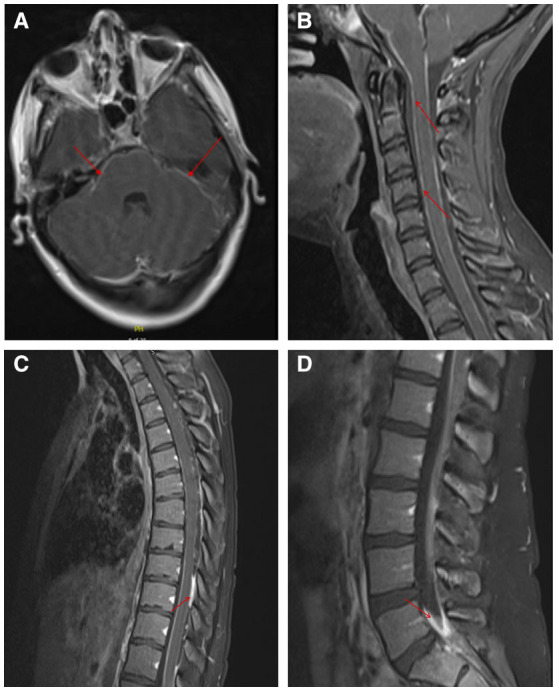
Background: Candida dubliniensis is closely related to Candida albicans and rarely isolated in clinical specimens. C. dubliniensis is increasingly recognized as a pathogen in immunocompromised hosts. We present the third known case of Candida dubliniensis meningitis in a young immunocompetent host. Case Presentation: A 27-year-old female with a history of intravenous heroin use and chronic hepatitis C presented with a 10-month history of headaches and progressive bilateral vision loss. On physical examination, visual acuity was 20/20 in her right eye and grade II papilledema was noted. Examination of her left eye revealed complete loss of vision and grade IV papilledema. An MRI with and without contrast revealed increased leptomeningeal enhancement involving the posterior fossa and spinal cord. After multiple lumbar punctures, cerebrospinal fluid fungal cultures grew Candida dubliniensis. The patient was successfully treated with a combination of liposomal amphotericin and fluconazole for 6 weeks with complete resolution of her CNS symptoms, with the exception of irreversible vision loss. Conclusion: We report a case of chronic meningitis due to Candida dubliniensis in an immunocompetent woman with hepatitis C and a history of intravenous heroin use. Additional studies are needed to confirm risk factors for Candida dubliniensis colonization, which likely predisposes individuals to invasive candidiasis.
Keywords: Candida dubliniensis; case report; chronic meningitis; fungal meningitis; hepatitis C; intravenous drug use.
Copyright © 2020 Tahir, Peseski and Jordan.
Conflict of interest statement
The authors declare that the research was conducted in the absence of any commercial or financial relationships that could be construed as a potential conflict of interest.
Figures
References
Publication types
Grants and funding
LinkOut - more resources
Full Text Sources
