


Longitudinal characterization of the tumoral microbiome during radiotherapy in HPV-associated oropharynx cancer
- PMID: 33367119
- PMCID: PMC7749292
- DOI: 10.1016/j.ctro.2020.11.007
Longitudinal characterization of the tumoral microbiome during radiotherapy in HPV-associated oropharynx cancer
Abstract
Purpose: To describe the baseline and serial tumor microbiome in HPV-associated oropharynx cancer (OPC) over the course of radiotherapy (RT).
Methods: Patients with newly diagnosed HPV-associated OPC treated with definitive radiotherapy +/- concurrent chemotherapy were enrolled in this prospective study. Using 16S rRNA gene sequencing, dynamic changes in the tumor site microbiome during RT were investigated. Surface tumor samples were obtained before RT and at week 1, 3 and 5 of RT. Radiological primary tumor response at mid-treatment was categorized as complete (CR) or partial (PR).
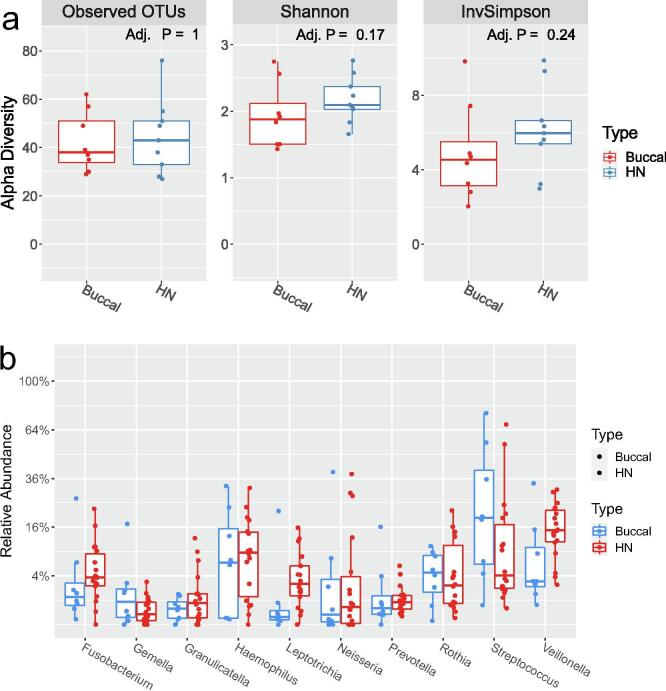
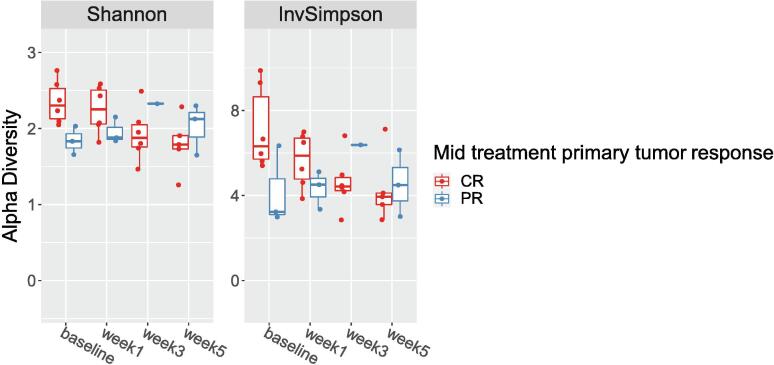
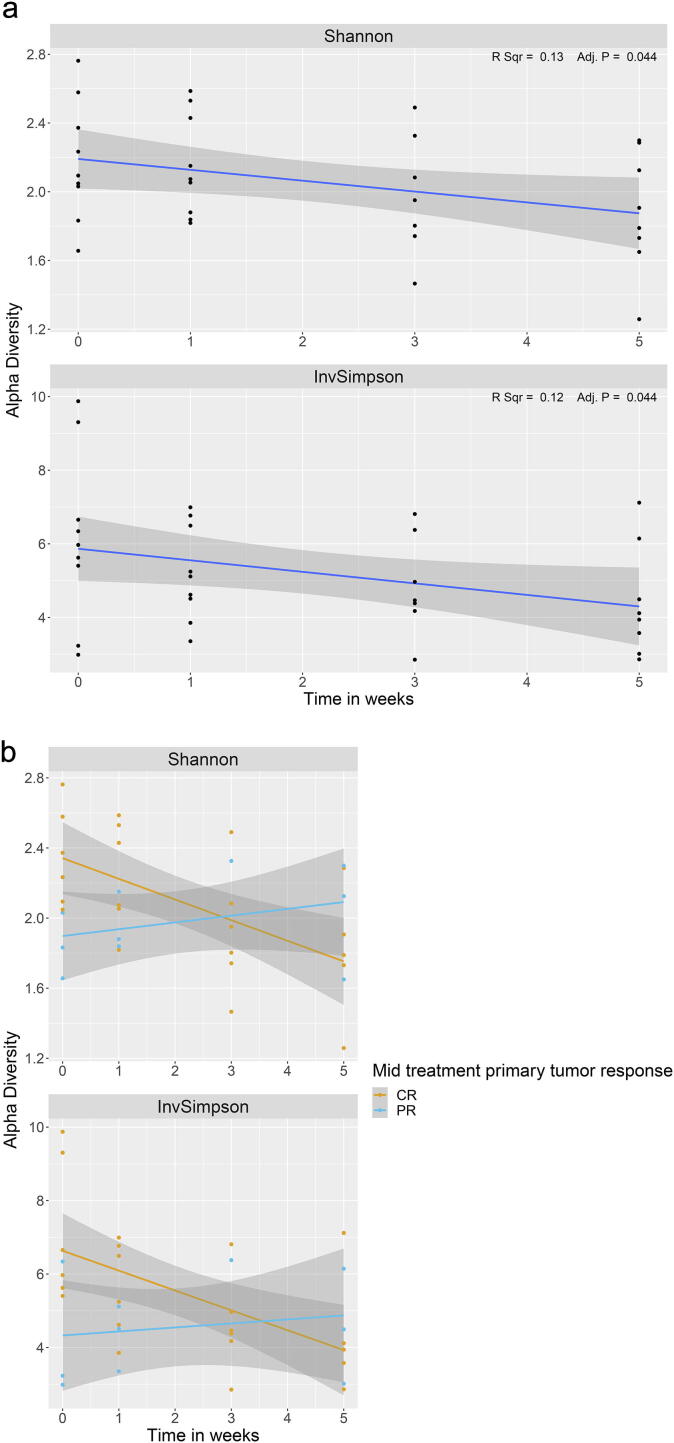
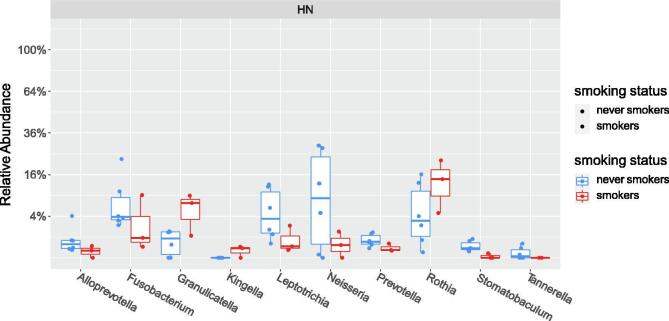
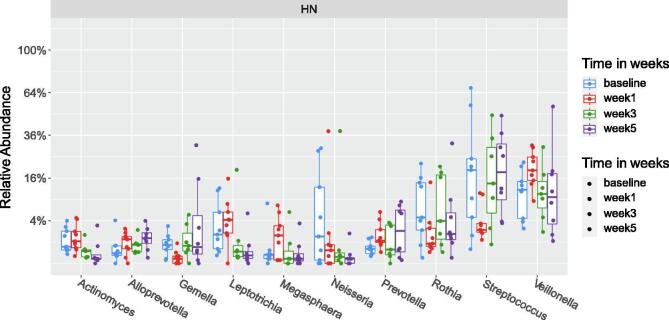
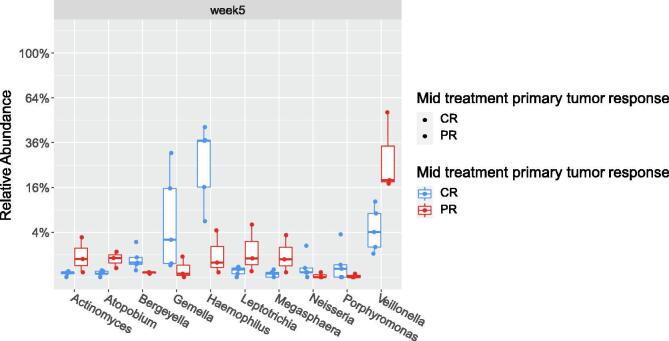
Results: Ten patients were enrolled, but 9 patients were included in the final analysis. Mean age was 62 years (range: 51-71). As per AJCC 8th Ed, 56%, 22% and 22% of patients had stage I, II and III, respectively. At 4-weeks, 6 patients had CR and 3 patients had PR; at follow-up imaging post treatment, all patients had CR. The baseline diversity of the tumoral versus buccal microbiome was not statistically different. For the entire cohort, alpha diversity was significantly decreased over the course of treatment (p = 0.04). There was a significant alteration in the bacterial community within the first week of radiation. Baseline tumor alpha diversity of patients with CR was significantly higher than those with PR (p = 0.03). While patients with CR had significant reduction in diversity over the course of radiation (p = 0.01), the diversity remained unchanged in patients with PR. Patients with history of smoking had significantly increased abundance of Kingella (0.05) and lower abundance of Stomatobaculum (p = 0.03) compared to never smokers.
Conclusions: The tumor microbiome of HPV-associated OPC exhibits reduced alpha diversity and altered taxa abundance over the course of radiotherapy. The baseline bacterial profiles of smokers vs. non-smokers were inherently different. Baseline tumor alpha diversity of patients with CR was higher than patients with PR, suggesting that the microbiome deserves further investigation as a biomarker of radiation response.
Keywords: Alpha diversity; Biomarker; Human papilloma virus; Oropharynx cancer; Radiotherapy; Response prediction; Tumor microbiome.
© 2020 The Authors.
Conflict of interest statement
The authors declare that they have no known competing financial interests or personal relationships that could have appeared to influence the work reported in this paper.
Figures
References
-
- Sturgis E.M., Cinciripini P.M. Trends in head and neck cancer incidence in relation to smoking prevalence: an emerging epidemic of human papillomavirus-associated cancers? Cancer. 2007;110(7):1429–1435. - PubMed
-
- Ang K.K., Sturgis E.M. Human papillomavirus as a marker of the natural history and response to therapy of head and neck squamous cell carcinoma. Seminars in radiation oncology. 2012;22(2):128–142. - PubMed
-
- Kofler B., Laban S., Busch C.J., Lorincz B., Knecht R. New treatment strategies for HPV-positive head and neck cancer. European archives of oto-rhino-laryngology : official journal of the European Federation of Oto-Rhino-Laryngological Societies (EUFOS): affiliated with the German Society for Oto-Rhino-Laryngology - Head and Neck Surgery. 2014;271(7):1861–1867. - PubMed
Grants and funding
LinkOut - more resources
Full Text Sources
Other Literature Sources
Research Materials
