


Effects of competitive sports on temporomandibular dysfunction: a literature review
- PMID: 33367991
- PMCID: PMC7785544
- DOI: 10.1007/s00784-020-03742-2
Effects of competitive sports on temporomandibular dysfunction: a literature review
Abstract
Objectives: The German Society of Craniomandibular Function and Disorders recommends that patients suffering from temporomandibular dysfunctions should practice sports in order to compensate for everyday stress. This raises the question as to what extent competitive athletes develop temporomandibular dysfunctions or whether their athletic activities protect them. With the present literature review, the authors intend to give an overview of the currently available publications on this topic.
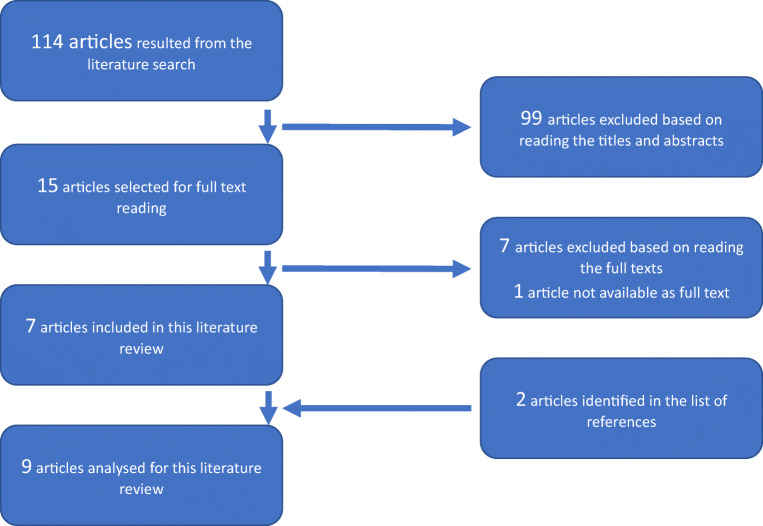
Materials and methods: A literature research in the PubMed and Google Scholar databases was performed to filter out the currently available publications on the topic 'sports, and temporomandibular dysfunction.
Results: Out of 114 available articles, seven met the inclusion criteria. Two other relevant articles were found in the list of references, so that in total, nine publications were picked for the review. In case numbers ranging from eight to 347 subjects, a temporomandibular dysfunction was detected with a prevalence between 11.7% and 100% for athletes and between 11.11% and 14.3% for non-athletes. Different kinds of sports were evaluated, all of them contact sports: basketball, handball, wrestling, boxing, karate, mixed martial arts, field hockey, water polo, and soccer. One study compared athletes with and without consumption of anabolic steroids, regardless of the type of sport. The level of athletic performance varied across the different studies.
Conclusions: Currently, studies dealing with the effect of competitive sports on temporomandibular dysfunction are scarce. Inconsistent methodological procedures permit only limited comparability.
Clinical relevance: A general trend, however, can already be discerned: professional athletes suffer from temporomandibular dysfunctions more frequently than non-athletes.
Keywords: Competitive sports; Sports; TMD-prevalence; Temporomandibular dysfunctions.
Conflict of interest statement
The authors declare that they have no conflict of interest.
References
-
- Hugger A, Lange M, Schindler HJ, Türp JC (2016) Begriffsbestimmungen: Funktionsstörung, Dysfunktion, craniomandibuläre Dysfunktion (CMD), Myoarthropathie des Kausystems (MAP) (Stand: 01/2016), DGFDT. https://www.dgfdt.de/documents/266840/266917/Begriffsbestimmungen+NEU/3c... (Accessed 20 April 2020)
-
- Heß S (2011) Zusammenhänge zwischen kraniomandibulärer Dysfunktion und pathologischen Veränderungen des Bewegungsapparates im Patientengut einer allgemeinzahnärztlichen Praxis. https://epub.ub.uni-greifswald.de/frontdoor/index/index/year/2011/docId/753 (Accessed 01 April 2020)
-
- Heinrich R, John M, Lenz E, Micheelis W, Potthoff P, Reich E, Reichart PA, Schiffner U, Schroeder E, von Törne I, Wefers KP (1999) Dritte Deutsche Mundgesundheitsstudie (DMS III). Ergebnisse, Trends und Problemanalysen aus der Grundlage bevölkerungsrepräsentativer Stichproben in Deutschland 1997. Köln, pp. 316-329
Publication types
MeSH terms
LinkOut - more resources
Full Text Sources
Medical
Miscellaneous
