


Identifying the commonly used antibiotics for self-medication in urban Mozambique: a qualitative study
- PMID: 33371035
- PMCID: PMC7754657
- DOI: 10.1136/bmjopen-2020-041323
Identifying the commonly used antibiotics for self-medication in urban Mozambique: a qualitative study
Abstract
Objectives: The study aimed at identifying the commonly used non-prescribed antibiotics (NPAs) and the main health conditions leading to the practices of self-medication with antibiotics (SMAs) in Maputo city, Mozambique.
Design: Cross-sectional qualitative study based on individual and group interviews.
Setting: The study was conducted in nine pharmacies of three socioeconomic areas of Maputo city, from October 2018 to March 2019.
Participants: The study included 32 pharmacy clients and 17 pharmacists. The pharmacy clients included men 10 (31%) and women 22 (69%) ranging from 19 to 67 years while the pharmacists included men 6 (35,3%) and women 11 (64,7%) with ages ranging from 24 to 47 years.
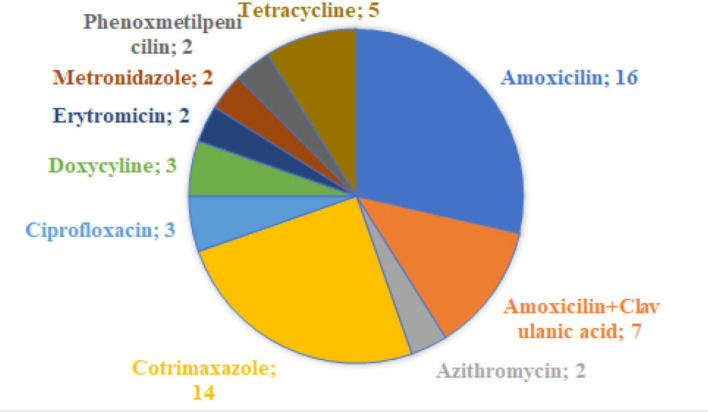
Findings: The majority of the pharmacy clients 30 (93.75%) admitted frequent use of NPAs, 15 (88.2%) out of the 17 pharmacists admitted dispensing NPAs. While the majority of the participants (16) mentioned the use of amoxicillin, also known as 'two colours medicine', 14 mentioned the use of cotrimoxazole and seven mentioned amoxicillin with clavulanic acid. Two to five participants also used tetracycline, ciprofloxacin, azithromycin, doxycycline, erythromycin, metronidazole and phenoxymethylpenicillin. The above mentioned NPAs were used to treat self-perceived sore throat, fever, pain, cough, vaginal discharge, eye problems, the common influenza, urinary infections, respiratory tract infections, wounds and toothaches.
Conclusions: Antibiotics are perceived as essential medical resources to manage health and illnesses. While taking an active role in their health-disease process, participants commonly used amoxicillin, 'two colours', cotrimoxazole and amoxicillin with clavulanic acid to manage their health and that of their families. In this sense, the practices of SMAs were perceived as part of the self-care process and not necessarily as misuse of antibiotics. A wideunderstanding of health-seeking beliefs and behaviours regarding the utilisation of antibiotics is needed to inform public health experts, health policymakers and other stake-holders in designing and implementing public health education and health promotion programsat all levels in Mozambique.
Keywords: anthropology; health & safety; pharmacology; public health; qualitative research; substance misuse.
© Author(s) (or their employer(s)) 2020. Re-use permitted under CC BY-NC. No commercial re-use. See rights and permissions. Published by BMJ.
Conflict of interest statement
Competing interests: None declared.
Figures
References
-
- Geest Svander, Whyte SR. The charm of medicines: metaphors and metonyms. Med Anthropol Q 1989;3:345–67. 10.1525/maq.1989.3.4.02a00030 - DOI
-
- WHO The evolving threat of antimicrobial resistance: options for action. Geneva: World Health Organization, 2012.
Publication types
MeSH terms
Substances
LinkOut - more resources
Full Text Sources
