


Low Basal CB2R in Dopamine Neurons and Microglia Influences Cannabinoid Tetrad Effects
- PMID: 33371336
- PMCID: PMC7767340
- DOI: 10.3390/ijms21249763
Low Basal CB2R in Dopamine Neurons and Microglia Influences Cannabinoid Tetrad Effects
Abstract
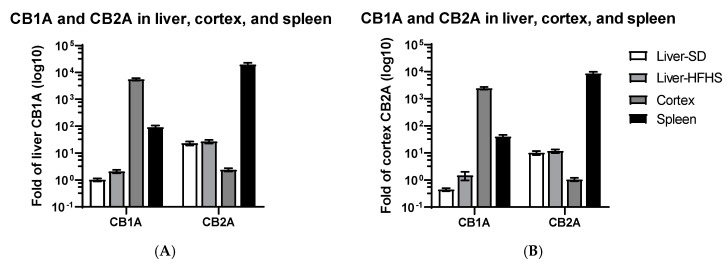
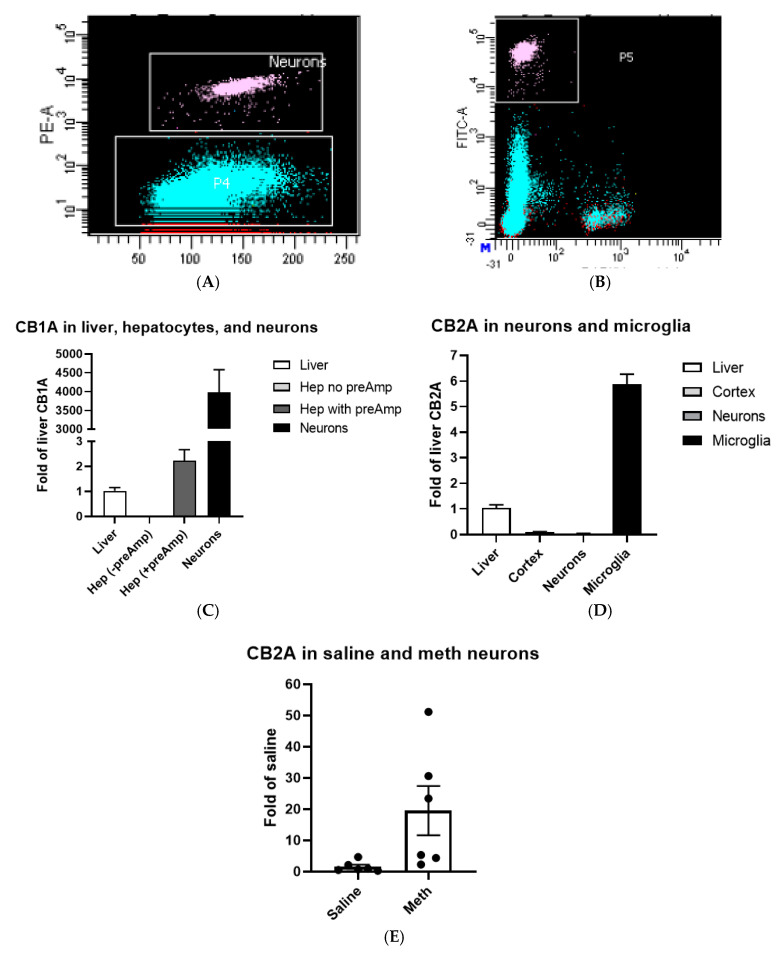
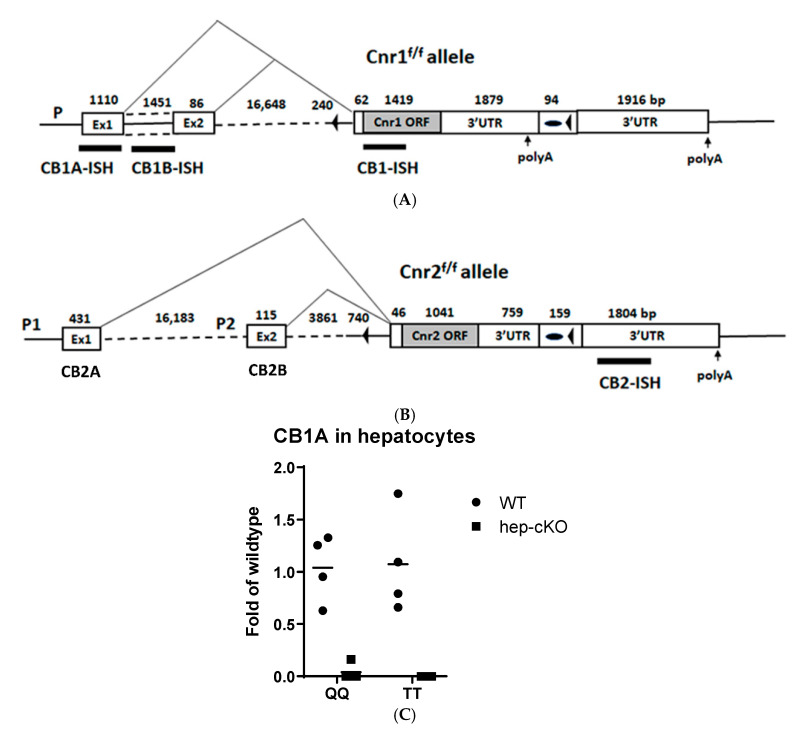
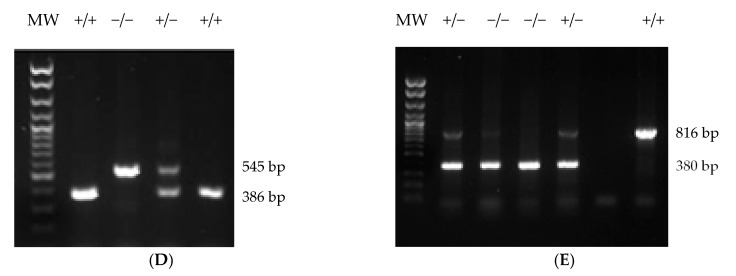
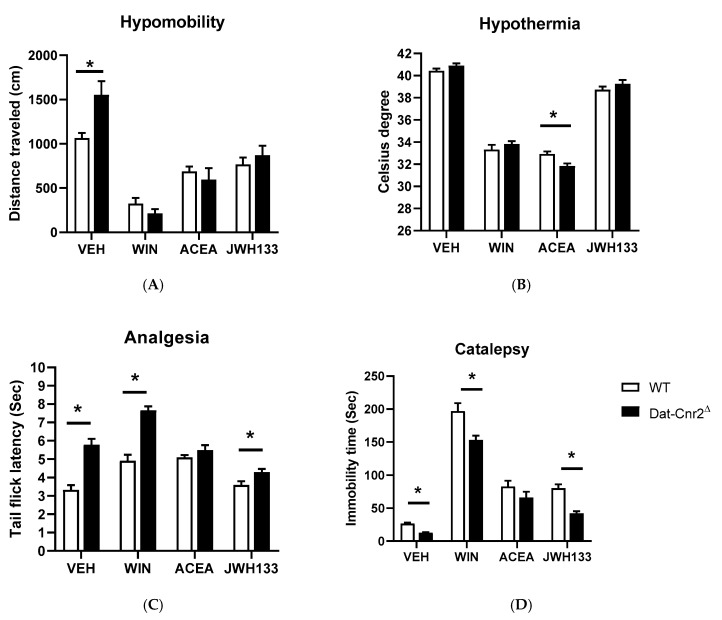
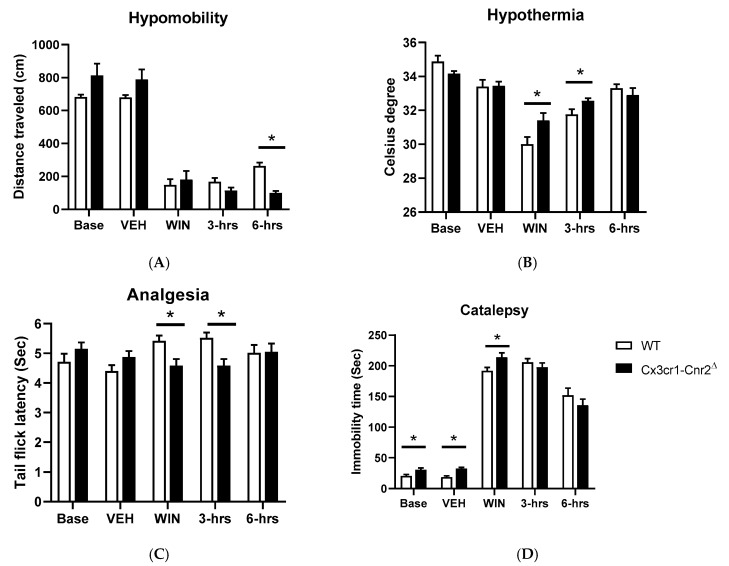
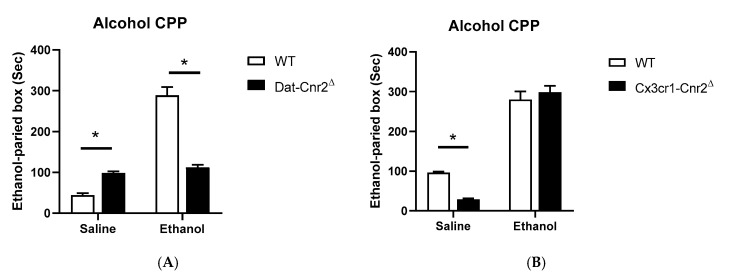
There are two well-characterized cannabinoid receptors (CB1R and CB2R and other candidates): the central nervous system (CNS) enriched CB1R and peripheral tissue enriched CB2R with a wide dynamic range of expression levels in different cell types of human tissues. Hepatocytes and neurons express low baseline CB1R and CB2R, respectively, and their cell-type-specific functions are not well defined. Here we report inducible expression of CB1R in the liver by high-fat and high sugar diet and CB2R in cortical neurons by methamphetamine. While there is less controversy about hepatocyte CB1R, the presence of functional neuronal CB2R is still debated to date. We found that neuron CB2R basal expression was higher than that of hepatocyte CB1R by measuring mRNA levels of specific isoform CB2A in neurons isolated by fluorescence-activated cell sorting (FACS) and CB1A in hepatocytes isolated by collagenase perfusion of liver. For in vivo studies, we generated hepatocyte, dopaminergic neuron, and microglia-specific conditional knockout mice (Abl-Cnr1Δ, Dat-Cnr2Δ, and Cx3cr1-Cnr2Δ) of CB1R and CB2R by crossing Cnr1f/f and Cnr2f/f strains to Abl-Cre, Dat-Cre, and Cx3cr1-Cre deleter mouse strains, respectively. Our data reveals that neuron and microglia CB2Rs are involved in the "tetrad" effects of the mixed agonist WIN 55212-2, CB1R selective agonist arachidonyl-2'-chloroethylamide (ACEA), and CB2R selective agonist JWH133. Dat-Cnr2Δ and Cx3cr1-Cnr2Δ mice showed genotypic differences in hypomobility, hypothermia, analgesia, and catalepsy induced by the synthetic cannabinoids. Alcohol conditioned place preference was abolished in DAT-Cnr2Δ mice and remained intact in Cx3cr1-Cnr2Δ mice in comparison to WT mice. These Cre-loxP recombinant mouse lines provide unique approaches in cannabinoid research for dissecting the complex endocannabinoid system that is implicated in many chronic disorders.
Keywords: CB1 receptor; CB2 receptor; Cre-loxP system; cannabinoids; hepatocytes; in situ hybridization; microglia; neurons; tetrad effects.
Conflict of interest statement
The authors declare no conflict of interest. The funders had no role in the design of the study; in the collection, analyses, or interpretation of data; in writing of the manuscript, or in the decision to publish the results.
Figures
References
-
- Little P.J., Compton D.R., Johnson M.R., Melvin L.S., Martin B.R. Pharmacology and stereoselectivity of structurally novel cannabinoids in mice. J. Pharmacol. Exp. Ther. 1988;247:1046–1051. - PubMed
-
- Liu Q.R., Canseco-Alba A., Zhang H.Y., Tagliaferro P., Chung M., Dennis E., Sanabria B., Schanz N., Escosteguy-Neto J.C., Ishiguro H., et al. Cannabinoid type 2 receptors in dopamine neurons inhibits psychomotor behaviors, alters anxiety, depression and alcohol preference. Sci. Rep. 2017;7:17410. - PMC - PubMed
-
- Liu Q.R., Huang N.S., Qu H., O’Connell J.F., Gonzalez-Mariscal I., Santa-Cruz-Calvo S., Doyle M.E., Xi Z.X., Wang Y., Onaivi E.S., et al. Identification of novel mouse and rat CB1R isoforms and in silico modeling of human CB1R for peripheral cannabinoid therapeutics. Acta Pharmacol. Sin. 2019;40:387–397. - PMC - PubMed
-
- Munro S., Thomas K.L., Abu-Shaar M. Molecular characterization of a peripheral receptor for cannabinoids. Nature. 1993;365:61–65. - PubMed
MeSH terms
Substances
Grants and funding
LinkOut - more resources
Full Text Sources
Other Literature Sources
Molecular Biology Databases
Miscellaneous
