. 2021 May;11(5):1212-1227.
doi: 10.1158/2159-8290.CD-20-0387. Epub 2020 Dec 28.

Metastasis and Immune Evasion from Extracellular cGAMP Hydrolysis

Affiliations

Metastasis and Immune Evasion from Extracellular cGAMP Hydrolysis

Jun Li et al. Cancer Discov. 2021 May.

Abstract

Cytosolic DNA is characteristic of chromosomally unstable metastatic cancer cells, resulting in constitutive activation of the cGAS-STING innate immune pathway. How tumors co-opt inflammatory signaling while evading immune surveillance remains unknown. Here, we show that the ectonucleotidase ENPP1 promotes metastasis by selectively degrading extracellular cGAMP, an immune-stimulatory metabolite whose breakdown products include the immune suppressor adenosine. ENPP1 loss suppresses metastasis, restores tumor immune infiltration, and potentiates response to immune checkpoint blockade in a manner dependent on tumor cGAS and host STING. Conversely, overexpression of wild-type ENPP1, but not an enzymatically weakened mutant, promotes migration and metastasis, in part through the generation of extracellular adenosine, and renders otherwise sensitive tumors completely resistant to immunotherapy. In human cancers, ENPP1 expression correlates with reduced immune cell infiltration, increased metastasis, and resistance to anti-PD-1/PD-L1 treatment. Thus, cGAMP hydrolysis by ENPP1 enables chromosomally unstable tumors to transmute cGAS activation into an immune-suppressive pathway. SIGNIFICANCE: Chromosomal instability promotes metastasis by generating chronic tumor inflammation. ENPP1 facilitates metastasis and enables tumor cells to tolerate inflammation by hydrolyzing the immunotransmitter cGAMP, preventing its transfer from cancer cells to immune cells.This article is highlighted in the In This Issue feature, p. 995.


Conflict of interest statement

CONFLICTS OF INTEREST STATEMENT

SFB holds a patent related to some of the work described targeting CIN and the cGAS-STING pathway in advanced cancer. He owns equity in, receives compensation from, and serves as a consultant and the Scientific Advisory Board and Board of Directors of Volastra Therapeutics Inc. He has also consulted for Sanofi, received sponsored travel from the Prostate Cancer Foundation, and both travel and compensation from Cancer Research UK. JDW served as a consultant for Adaptive Biotech, Advaxis, Amgen, Apricity, Array BioPharma, Ascentage Pharma, Astellas, Bayer, Beigene, Bristol Myers Squibb, Celgene, Chugai, Elucida, Eli Lilly, F Star, Genentech, Imvaq, Janssen, Kleo Pharma, Kyowa Hakko Kirin, Linneaus, MedImmune, Merck, Neon Therapuetics, Northern Biologics, Ono, Polaris Pharma, Polynoma, Psioxus, Puretech, Recepta, Takara Bio, Trieza, Sellas Life Sciences, Serametrix, Surface Oncology, Syndax, and Syntalogic. He also receives research support from Bristol Myers Squibb, Medimmune, Merck Pharmaceuticals, and Genentech. He owns equity in Potenza Therapeutics, Tizona Pharmaceuticals, Adaptive Biotechnologies, Elucida, Imvaq, Beigene, Trieza, and Linneaus. He has received honoraium from Esanex. TM is a consultant for Immunos Therapeutics and Pfizer; is a co-founder with equity in IMVAQ therapeutics; receives research funding from Bristol-Myers Squibb, Surface Oncology, Kyn Therapeutics, Infinity Pharmaceuticals Inc., Peregrine Pharmaceuticals Inc., Adaptive Biotechnologies, Leap Therapeutics Inc., and Aprea; is an inventor on patent applications related to work on Oncolytic Viral therapy, Alpha Virus Based Vaccine, Neo Antigen Modeling, CD40, GITR, OX40, PD-1 and CTLA-4. KL reports speaker fees from Roche Tissue Diagnostics, travel compensation from BMS and grant income for Genetech. JSR-F has received fees for consulting for Goldman Sachs, REPARE Therapeutics and Paige.AI, and serves as an advisory board member for Roche Diagnostics, InVicro, Genentech, Paige.AI, Volition RX, REPARE Therapeutics and GRAIL. C.S. receives grant support from Pfizer, AstraZeneca, BMS, Roche-Ventana and Boehringer-Ingelheim. C.S. has consulted for Pfizer, Novartis, GlaxoSmithKline, MSD, BMS, Celgene, AstraZeneca, Illumina, Genentech, Roche-Ventana, GRAIL, Medicxi, the Sarah Cannon Research Institute and is an Advisor for Dynamo Therapeutics. C.S. is a shareholder of Apogen Biotechnologies, Epic Bioscience, GRAIL, and has stock options in and is co-founder of Achilles Therapeutics. Outside of the submitted work, K.L. and C.S. have a patent on indel burden and checkpoint inhibitor response pending and a patent on targeting of frameshift neoantigens for personalized immunotherapy pending. BI is a consultant for Merck and Volastra Therapeutics Inc. Remaining authors declare no conflicts of interest.

Figures
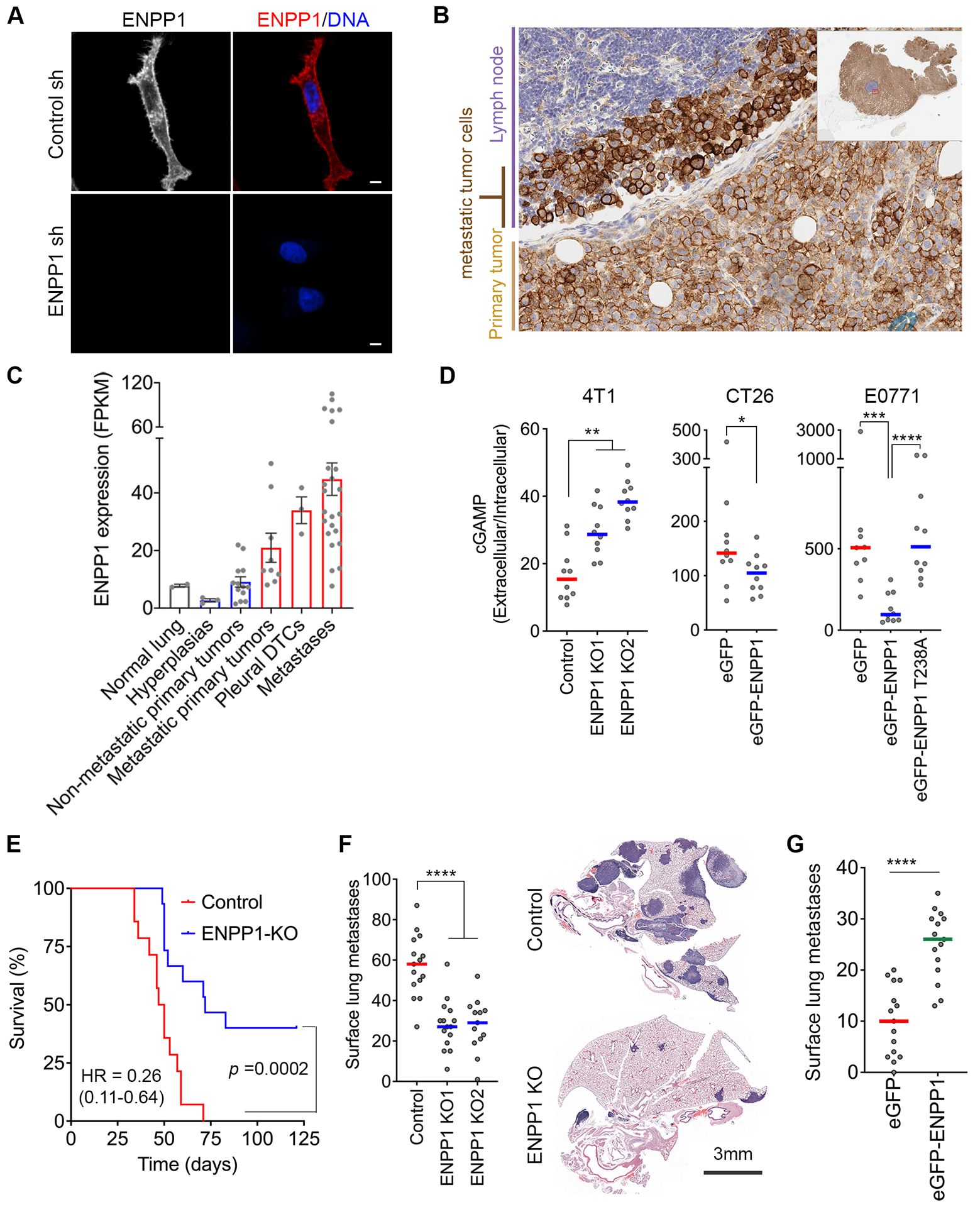
Figure 1.
Figure 1.. ENPP1 promotes metastasis of chromosomally unstable tumors.
(A) Representative immunofluorescence images of control and ENPP1-depleted MDA-MB-231 CINhigh cells stained with DAPI (DNA) and anti-ENPP1 antibody, scale bar 5μm. (B) Immunohistochemistry of an orthotopically transplanted MBA-MB-231 tumor using anti-ENPP1 antibody. (C) ENPP1 mRNA expression in various stages of lung adenocarcinoma progression, bars represent mean ± s.e.m. (D) Extracellular-to-intracellular cGAMP ratio in 4T1, CT26, and E0771 cells, bars represent median, n = 10 independent experiments, ** p<0.01, two-sided Mann-Whitney test. (E) Overall survival of animals that were orthotopically transplanted by control and Enpp1-knockout 4T1 tumors followed by tumor resection 7 days later, n = 15 animals per condition, significance tested using log-rank test. (F) Left, Quantification of surface lung metastases after tail vein injection of control and Enpp1-knockout 4T1 cells, bars represent median, n = 13–15 animals per condition, **** p<0.0001, two-sided Mann-Whitney test. Right, Representative hematoxylin and eosin-stained lungs from animals injected with control and ENPP1-knockout 4T1 cells, scale bar 3mm. (G) Surface lung metastases after tail vein injection of eGFP and eGFP-ENPP1-expressing CT26 cells, bars represent median, n = 15 animals per condition, **** p < 0.0001, two-sided Mann-Whitney test.
Figure 2.
Figure 2.. ENPP1 promotes extracellular adenosine production.
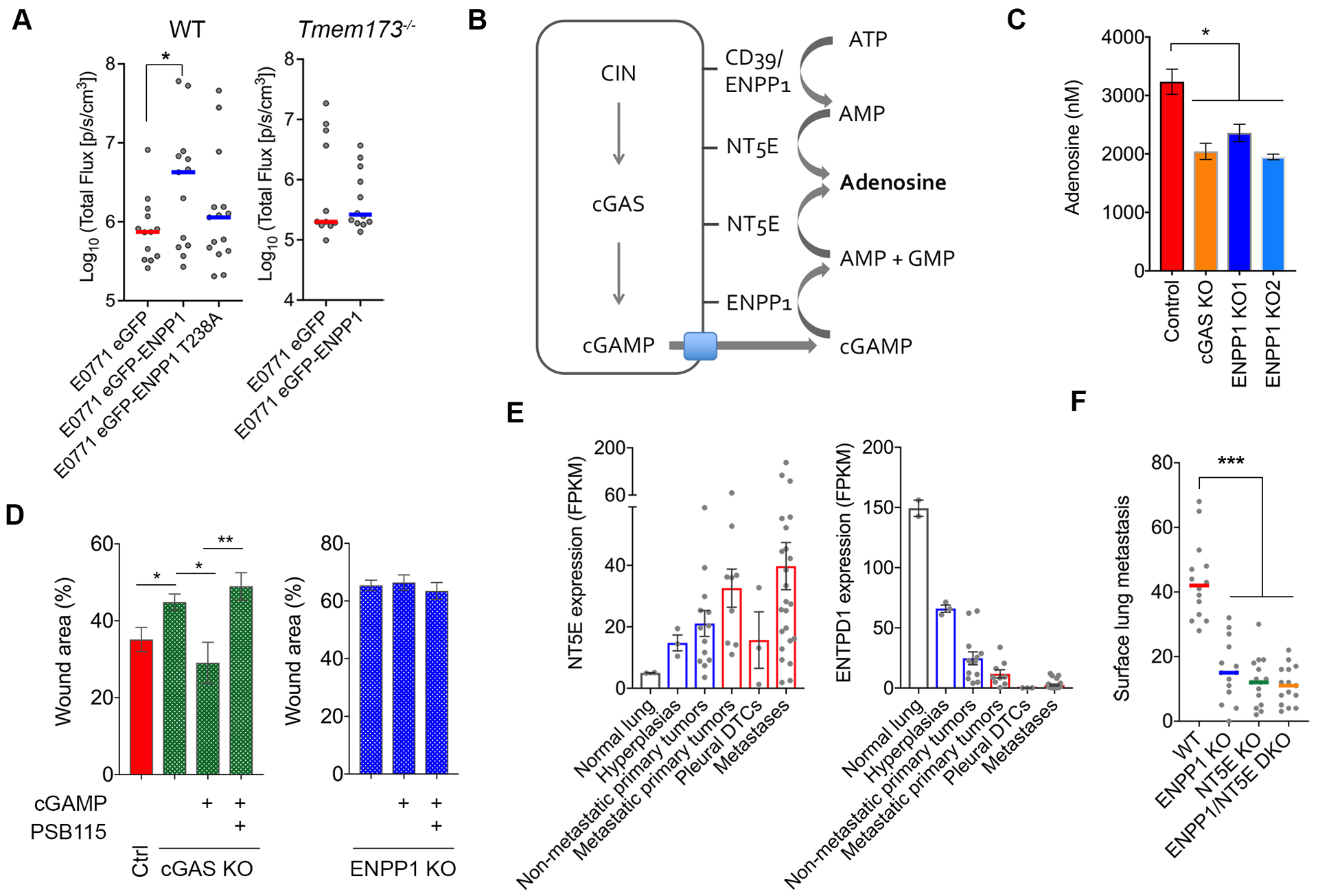
(A) Left, total bioluminescence imaging of WT or Tmem173−/− animals inoculated with E0771 cells expressing WT or enzymatically weakened ENPP1 (T328A), bars represent median, n = 13–15 mice per group for the WT animals and 11–12 for the Tmem173−/− animals, * p < 0.05, Welch t-test. (B) Schematic showing the generation of adenosine from extracellular cGAMP and ATP hydrolysis. (C) Normalized adenosine concentration (per 107 cells after 16 hours incubation in serum-free media) in conditioned media of control, Cgas-KO, Enpp1-KO 4T1 cells, bars represent mean ± s.e.m., n = 4 independent experiments, *p<0.05, two-sided t-test. (D) Percent wound remaining after 24 hours in control, Cgas-KO, and Enpp1-KO 4T1 cells treated with cGAMP or cGAMP and the adenosine receptor blocker, PSB115. (E) NT5E and ENTPD1 mRNA expression in various stages of lung adenocarcinoma progression, bars represent mean ± s.e.m. (F) Surface lung metastases after tail vein injection of control, Enpp1-KO, Nt5e-KO, and Enpp1/Nt5e double KO 4T1 cells, bars represent median, n = 15 animals per condition, **** p < 0.001, two-sided Mann-Whitney test.
Figure 3.
Figure 3.. ENPP1 reduces tumor immune infiltration.
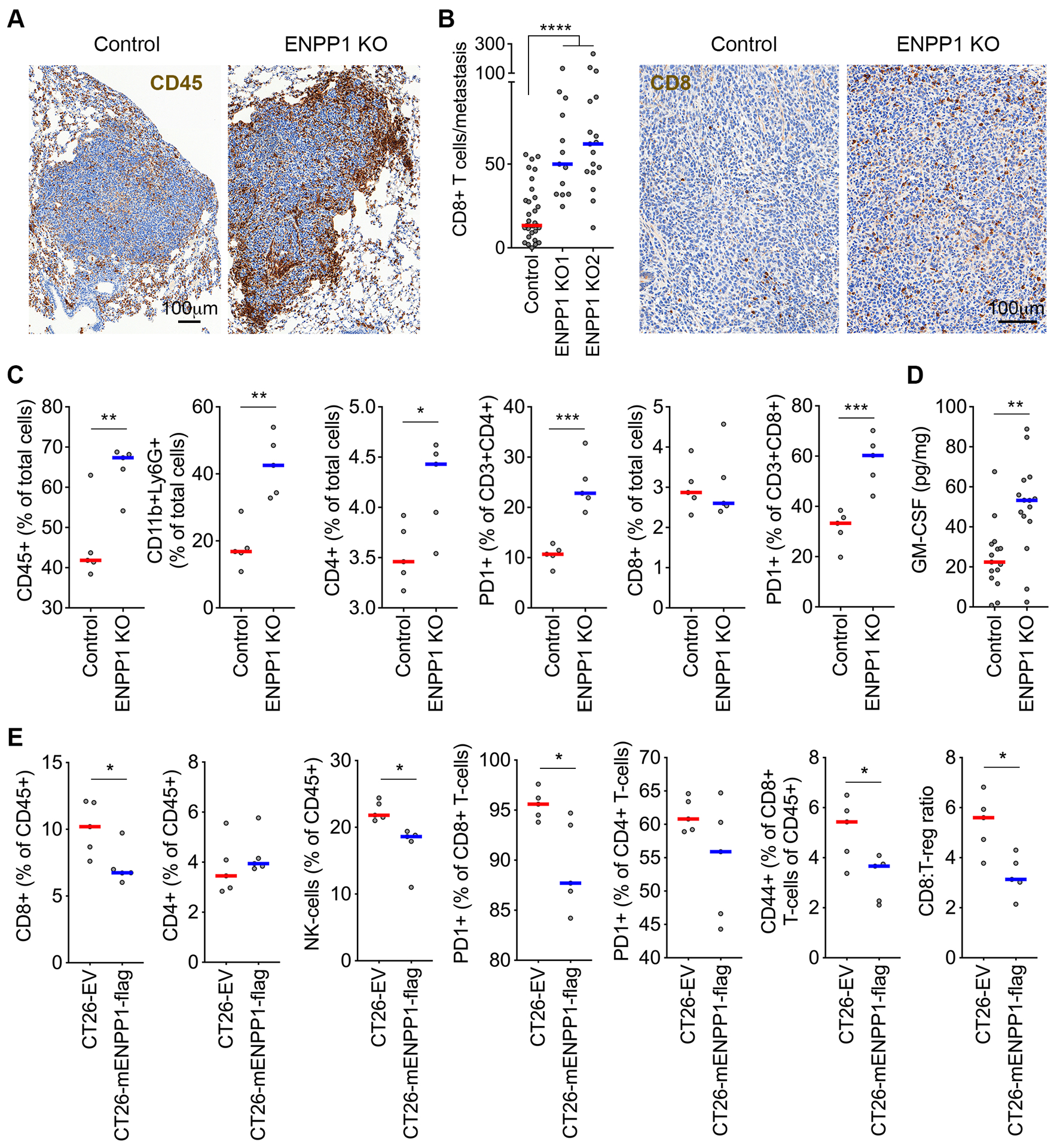
(A) Representative immunohistochemistry (IHC) of control and ENPP1-knockout TNBC lung metastases stained using an anti-CD45 antibody. (B) The number of metastasis-infiltrating CD8+ T-cells (left) and representative IHC of control ENPP1-knockout TNBC lung metastases stained using anti-CD8 antibody (right), bars represent median, n = 13–31 metastases, **** p<0.0001, two-sided Mann-Whitney test. (C) Percentage of CD45+, CD11b+Ly6G+, CD4+, and CD8+ cells out of the total cells as well as the percentage of PD1+ cells out of the CD3+CD4+ and CD3+CD8+ cells obtained from dissociated lungs after injection with control or ENPP1-knockout 4T1 cells, n = 5 animals per group. (D) GM-CSF levels measured in orthotopically transplanted control and ENPP1-knockout tumors, bars represent median, n = 15 tumors per condition, ** p<0.01, two-sided Mann-Whitney test. (E) Percentage of CD8+ T-cells, CD4+ T-cells (and the PD1+ and CD44+ fractions of thereof), and NK-cells obtained from dissociated subcutaneously transplanted control and ENPP1 expressing CT26 tumors, n = 5 animals per group, bars represent median, * p < 0.05.
Figure 4.
Figure 4.. ENPP1 promotes resistance to immune checkpoint blockade therapy.
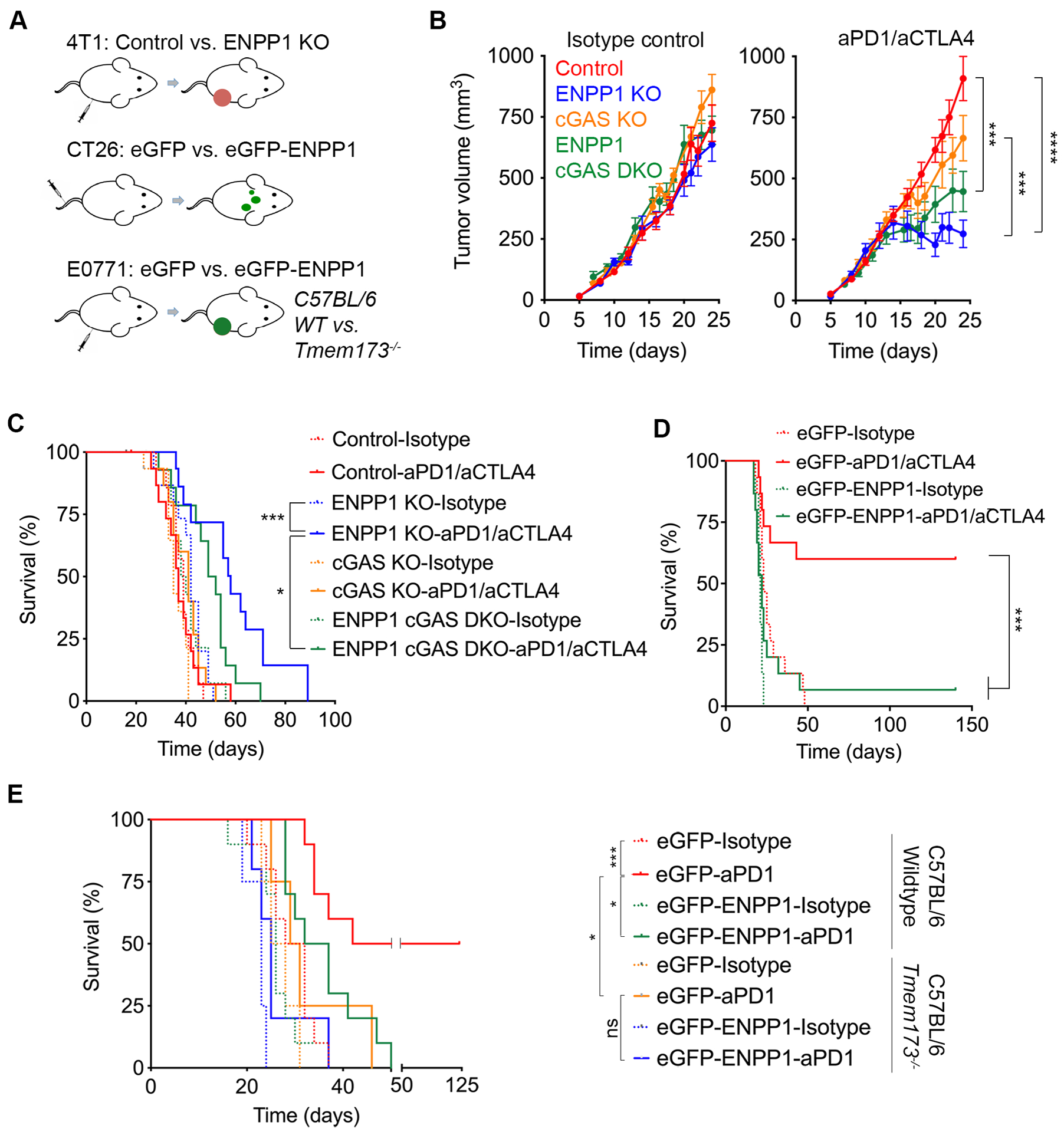
(A) Schematic diagram of immunotherapy experiments. (B) Growth curves of control, Enpp1-KO, Cgas-KO, and Enpp1/Cgas double-KO orthotopically transplanted tumors 4T1 upon treatment with combined ICB or corresponding isotype controls, data points represent mean ± s.e.m., n = 15 animals per group, ****p<0.0001, *** p < 0.001, ** p <0.01, two-sided t-test. (C) Survival of animals after orthotopic transplantation with control, Enpp1-KO, Cgas-KO, or Enpp1/Cgas double-KO 4T1 cells treated with combined ICB or corresponding isotype controls, significance tested using log-rank test, *** p < 0.001, * p <0.05, n = 15 animals per group. (D) Survival of BALB/c mice injected with eGFP or eGFP-ENPP1 expressing CT26 cells, treated with combined ICB or isotype controls, n = 15 animals per group, significance tested using log-rank test, ***p < 0.001. (E) Survival of wildtype or Tmem173−/− C57BL/6 mice orthotopically transplanted with eGFP or eGFP-ENPP1 expressing E0771 tumors, treated with combined ICB or isotype control antibodies, n = 10 and 4–5 animals per group for the wildtype and Tmem173−/− C57BL/6 mice, respectively, significance tested using log-rank test, *** p < 0.001, *p<0.05.
Figure 5.
Figure 5.. ENPP1 expression is associated with metastasis in human cancer.
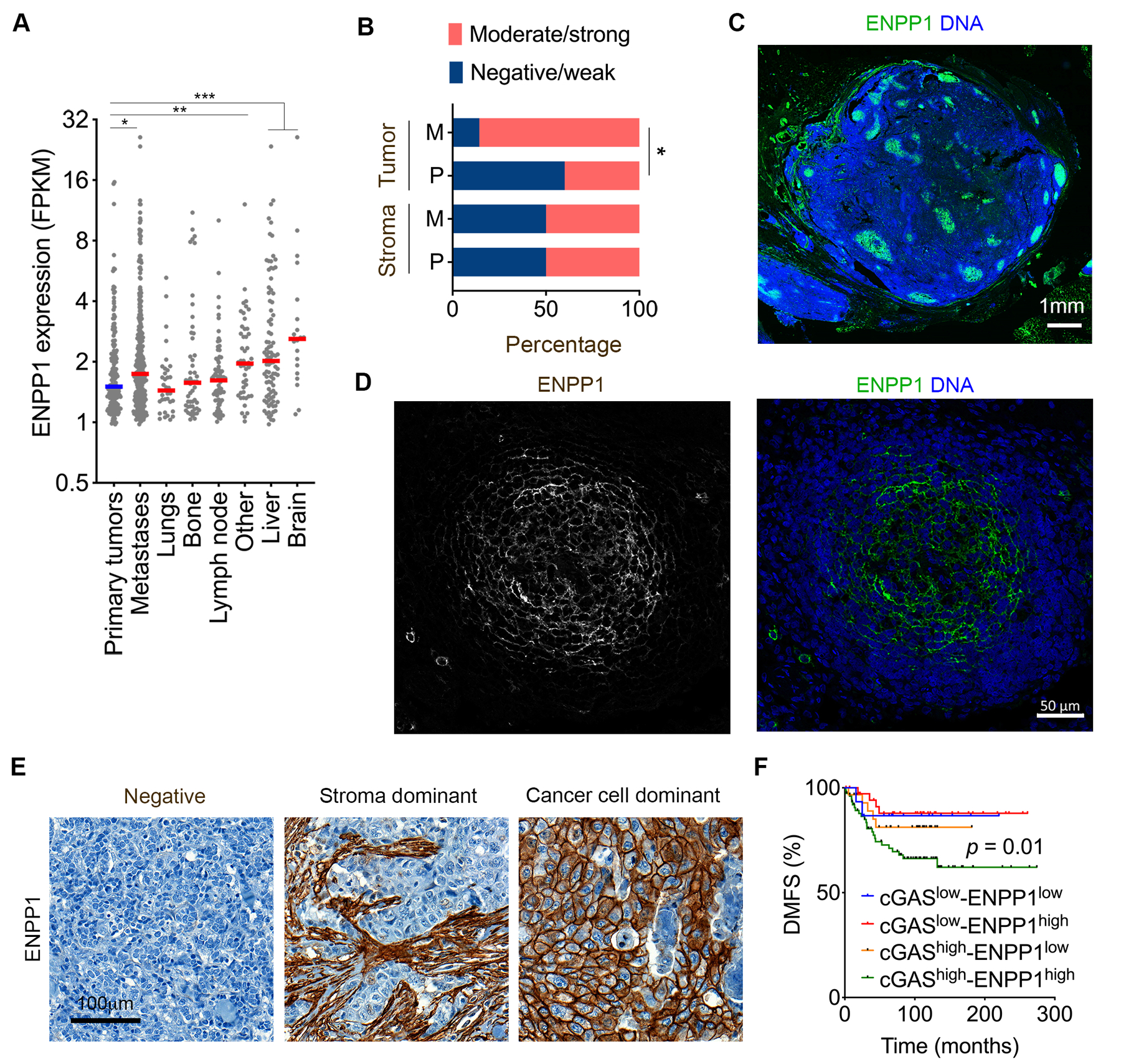
(A) ENPP1 expression across primary and metastatic tumors, stratified by the site of metastasis, n = 180 tumors for primary tumors and 331 tumors for metastases, bars represent median, * p < 0.05, ** p < 0.01, *** p < 0.001. (B) Percentage of mucosal melanoma patients with tumor-specific or stromal specific ENPP1 staining patterns in primary as well as metastatic mucosal melanoma human tumor samples, *p < 0.05, χ2-test. (C-D) Representative immunofluorescence images of low (C) and high (D) magnification images of lymph node metastases from mucosal melanoma stained using DAPI (DNA) and anti-ENPP1 antibody showing selective membrane staining of ENPP1 on metastatic cancer cells. Scale bar 1 mm (C) and 50 μm (D). (E) Representative images of human TNBCs stained using anti-ENPP1 antibody, scale bar 100 μm. (F) Distant-metastasis-free survival in patients with TNBC stratified based on their ENPP1 and cGAS expression n = 159, significance tested using log-rank test.
Figure 6.
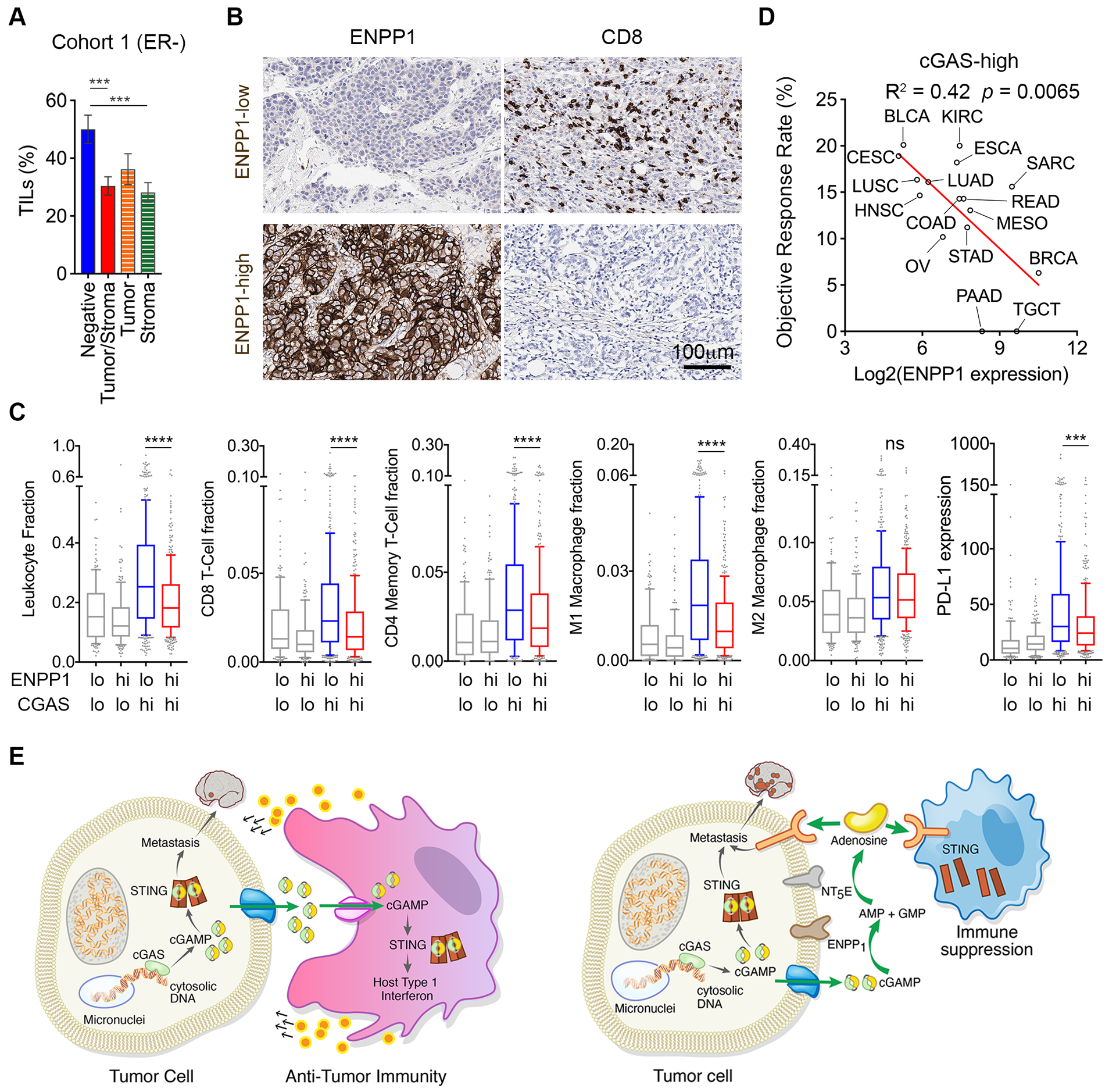
Figure 6.. ENPP1 expression is associated with reduced lymphocytic infiltration in human cancer.
(A) Percentage of tumor-infiltrating lymphocytes (TILs) in breast tumors stratified based on their ENPP1 expression, bars represent mean ± s.e.m., *** p < 0.001, two-tailed t-test. (B) Representative images of human breast cancers stained using anti-ENPP1 or anti-CD8 antibodies. Scale bar 100μm. (C) Tumor immune infiltration inferred using the CIBERSORT method on breast tumors found in the TCGA, box plots represent median, lower and upper quartiles, error bars represent 10th and 90th percentiles, n = 1079 tumors, **** p<0.0001, two-sided Mann-Whitney test. (D) Percent objective response rate (ORR) to anti-PD1/PD-L1 therapy as a function of ENPP1 expression by cancer type for tumor histologies with high levels of CGAS expression. (E) Schematic illustrating the consequence of ENPP1 activity (right) or its absence (left) on cancer metastasis and immune evasion.

References

    1. Bakhoum SF, Ngo B, Laughney AM, Cavallo JA, Murphy CJ, Ly P, et al. Chromosomal instability drives metastasis through a cytosolic DNA response. Nature 2018;553(7689):467–72 doi 10.1038/nature25432. - DOI - PMC - PubMed
    1. Burrell RA, McGranahan N, Bartek J, Swanton C. The causes and consequences of genetic heterogeneity in cancer evolution. Nature 2013;501(7467):338–45 doi 10.1038/nature12625. - DOI - PubMed
    1. Rosenthal R, Cadieux EL, Salgado R, Bakir MA, Moore DA, Hiley CT, et al. Neoantigen-directed immune escape in lung cancer evolution. Nature 2019;567(7749):479–85 doi 10.1038/s41586-019-1032-7. - DOI - PMC - PubMed
    1. Watkins TBK, Lim EL, Petkovic M, Elizalde S, Birkbak NJ, Wilson GA, et al. Pervasive chromosomal instability and karyotype order in tumour evolution. Nature 2020. doi 10.1038/s41586-020-2698-6. - DOI - PMC - PubMed
    1. McGranahan N, Rosenthal R, Hiley CT, Rowan AJ, Watkins TBK, Wilson GA, et al. Allele-Specific HLA Loss and Immune Escape in Lung Cancer Evolution. Cell 2017;171(6):1259–71 e11 doi 10.1016/j.cell.2017.10.001. - DOI - PMC - PubMed

Publication types

Substances