. 2021 Feb 8;6(3):e142572.
doi: 10.1172/jci.insight.142572.

Trk agonist drugs rescue noise-induced hidden hearing loss

Affiliations

Trk agonist drugs rescue noise-induced hidden hearing loss

Katharine A Fernandez et al. JCI Insight. .

Abstract

TrkB agonist drugs are shown here to have a significant effect on the regeneration of afferent cochlear synapses after noise-induced synaptopathy. The effects were consistent with regeneration of cochlear synapses that we observed in vitro after synaptic loss due to kainic acid-induced glutamate toxicity and were elicited by administration of TrkB agonists, amitriptyline, and 7,8-dihydroxyflavone, directly into the cochlea via the posterior semicircular canal 48 hours after exposure to noise. Synaptic counts at the inner hair cell and wave 1 amplitudes in the auditory brainstem response (ABR) were partially restored 2 weeks after drug treatment. Effects of amitriptyline on wave 1 amplitude and afferent auditory synapse numbers in noise-exposed ears after systemic (as opposed to local) delivery were profound and long-lasting; synapses in the treated animals remained intact 1 year after the treatment. However, the effect of systemically delivered amitriptyline on synaptic rescue was dependent on dose and the time window of administration: it was only effective when given before noise exposure at the highest injected dose. The long-lasting effect and the efficacy of postexposure treatment indicate a potential broad application for the treatment of synaptopathy, which often goes undetected until well after the original damaging exposures.

Keywords: Neurodegeneration; Otology; Synapses.


Conflict of interest statement

Conflict of interest: AE is a founder and consultant to Decibel Therapeutics.

Figures

Figure 1
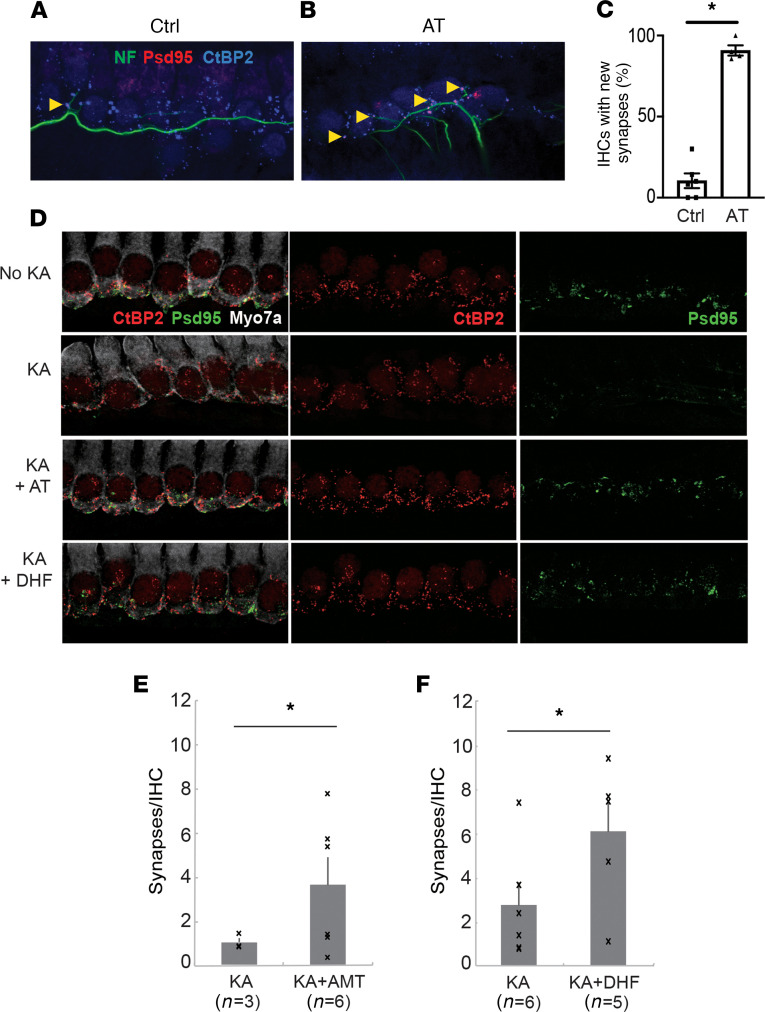
Figure 1. AT and DHF act as TrkB agonists in SGN.
(A and B) Isolated SGNs and denervated organ of Corti were cocultured in the absence (A) or presence (B) of 0.5 μM AT. After 6 days in culture, explants were fixed and immunostained with antibodies against neurofilament (NF, green), CtBP2 (blue), and Psd95 (red), and confocal images were obtained in the inner hair cell region. (C) Juxtapositions of hair cell ribbons and afferent endings were identified by CtBP2/Psd95 puncta (yellow arrowheads in A and B) and counted, indicating a significant increase in percentage of juxtaposed CtBP2/Psd-95 puncta at inner hair cells after AT treatment. Data are represented as mean ± SEM (n = 6 for Ctrl and 4 for AT); Student’s t test; *P < 0.05. (D) Cochlear explants were cultured with (KA) or without (no KA) exposure to kainic acid (0.4 mM) for 1 hour followed by treatment with culture medium with 0.1 μM AT (KA + AT) or 0.5 μM DHF (KA + DHF). The cultures were immunostained for CtBP2 (red) and Psd95 (green) after 48 hours. (E and F) AT (E) and DHF (F) induced significant synaptic regeneration. Data are represented as mean ± SEM (n = 3 for no KA, 3 for KA, and 6 for KA + AT in E; n = 4 for no KA, 6 for KA, and 5 for KA + DHF in F; 2-tailed, unpaired Student’s t test; *P < 0.05.
Figure 2
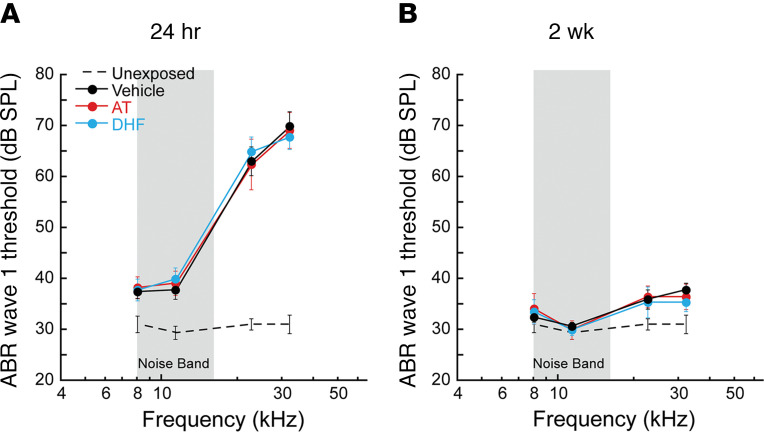
Figure 2. Noise-induced threshold elevations were similar across groups, and Trk agonists did not alter recovery.
(A) Wave 1 thresholds recorded 24 hours after noise (8–16 kHz, 100 dB SPL, 2 hours; gray bar) and before delivery of drugs in AP, or the control AP solution alone to the posterior semicircular canal, were similar across treatment groups (AT, 25 mM; DHF, 5 mM; AP vehicle). (B) By 2 weeks after noise, all groups recovered similarly. Data are shown as mean ± SEM; n = 6–8/group. In both panels, thresholds for 16-week unexposed CBA/CaJ mice (23) are included for comparison.
Figure 3
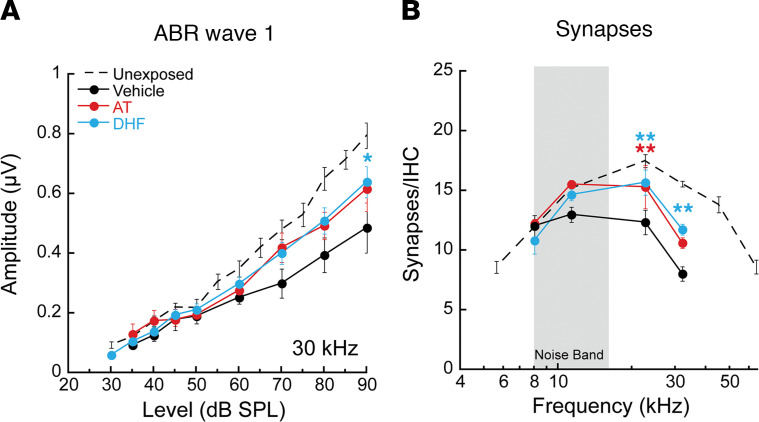
Figure 3. Local, postexposure treatment with Trk agonists recovers cochlear nerve function and IHC synapses.
(A and B) Animals treated with 25 mM AT or 5 mM DHF 48 hours after noise showed significantly greater ABR wave 1 amplitudes (A; shown, for example, at 30 kHz; F2, 130 = 4.636, P = 0.0114) and synapse counts (B; F2, 72 = 8.182, P = 0.0006) than controls treated with vehicle alone. Data are shown as means ± SEM, n = 6–8/group. Results of 2-way ANOVA comparing vehicle-only controls and drug-treated animals, with Bonferroni multiple comparisons test, are indicated as follows: *P < 0.05, **P < 0.01. ABR wave 1 response amplitudes and synapse counts from untreated mice (23) are included for comparison.
Figure 4
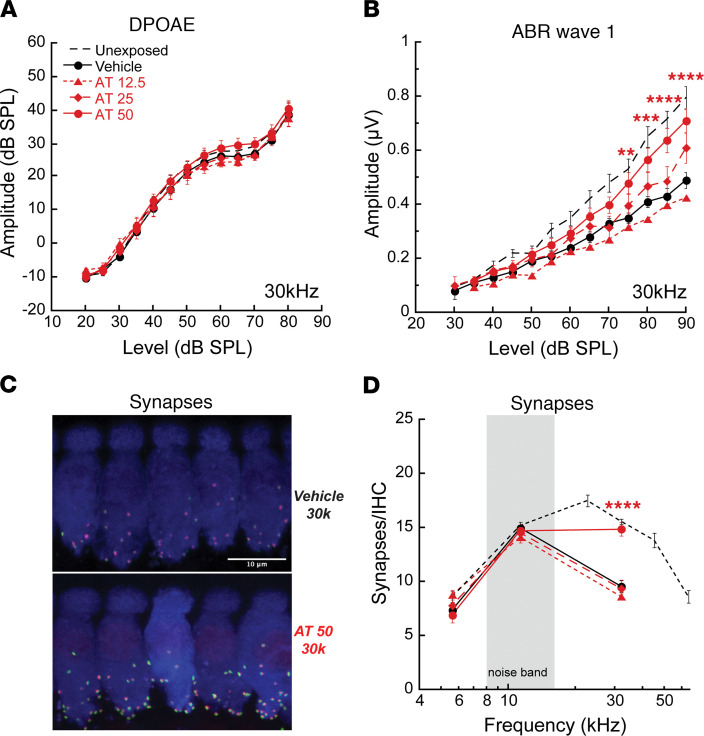
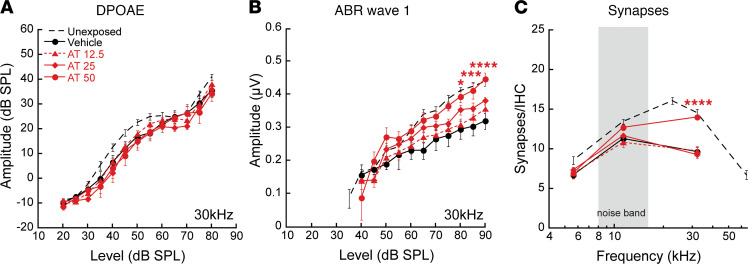
Figure 4. Systemic AT protection is dose responsive.
(A and B) Amitriptyline in saline (AT; 12.5, 25, or 50 mg/kg) or the saline vehicle alone was delivered once daily for 5–9 days. Animals were noise exposed on day 3, 6 hours after injection. DPOAE amplitudes recovered by 2 weeks, but ABR amplitudes did not (compare A and B). Compared with vehicle-only controls, a significant preservation of ABR wave 1 amplitude at 30 kHz (B) (F1, 392 = 70.39, P < 0.0001) is apparent in mice treated with 50 mg/kg AT. (C and D) Similarly, synapses (pictured in C and quantified in D) show significant protection by high-dose AT in the 30 kHz region relative to vehicle-only controls (F1, 116 = 18.90, P < 0.0001). Data are shown as mean ± SEM, n = 10–30/group). (A, B, and D) Results of 2-way ANOVA comparing vehicle-only controls and drug-treated animals, with Bonferroni multiple comparisons test; **P < 0.01, ***P < 0.001, ****P < 0.0001. Untreated mice (23) are shown for comparison.
Figure 5
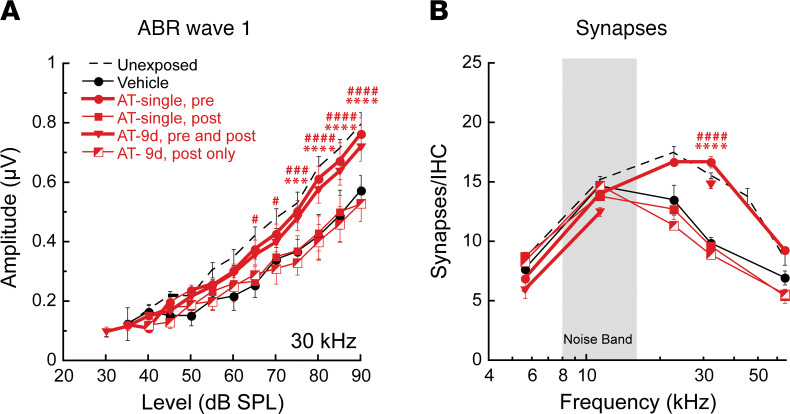
Figure 5. Systemic AT, delivered before but not after exposure, protects cochlear nerve function and IHC synapses.
(A and B) Groups of animals received i.p. injections of AT in saline or saline vehicle alone. Shown are data for (a) AT (50 mg/kg) or saline once, 6 hours prior to noise exposure; (b) AT (50 mg/kg) or saline once, 3 days after noise exposure; (c) AT (50 mg/kg) or saline before and after noise (once daily for 9 days with noise exposure delivered 6 hours after the third day of treatment); and (d) AT (50 mg/kg) or saline solely after noise (once daily for 9 days beginning 3 days after noise exposure). Together, results show systemic AT required preexposure delivery (groups with heavy lines) to achieve protection (ABR amplitude, F2, 496 = 55.49, P < 0.0001; synapses, F2, 143 = 24.19, P < 0.0001). Data are shown as mean ± SEM, n = 10–30/group. Results of 2-way ANOVA with Bonferroni multiple comparisons test are indicated as follows: *P < 0.05, **P < 0.01, ***P < 0.001, ****P < 0.0001 for “AT-single, pre” condition; #P < 0.05, ##P < 0.01, ###P < 0.001, ####P < 0.0001 for “AT-9d, pre and post” condition. For comparison, counts were from for 16-week unexposed CBA/CaJ mice (23).
Figure 6
Figure 6. AT protection is long-lasting.
(A) Subsets of mice were held 1 year after noise. DPOAE amplitudes remained well preserved in all groups. (B) Relative to age-matched, vehicle-treated controls, significant conservation of ABR wave 1 amplitude was observed in mice treated with 50 mg/kg AT for 9 days beginning 3 days before noise (F1, 122 = 33.88, P < 0.0001). (C) The number of synapses remaining at 2 weeks was also maintained 1 year after noise exposure, with significantly more synapses in the 30 kHz region for mice treated with 50 mg/kg AT (F1, 131 = 16.71, P < 0.0001). Data are represented as ± SEM; n = 7–30/group. Results of 2-way ANOVA with Bonferroni multiple comparisons test are shown; *P < 0.05, ***P < 0.001, ****P < 0.0001. Unexposed, age-matched animals (23) are shown for comparison.

References

    1. Kujawa SG, Liberman MC. Acceleration of age-related hearing loss by early noise exposure: evidence of a misspent youth. J Neurosci. 2006;26(7):2115–2123. doi: 10.1523/JNEUROSCI.4985-05.2006. - DOI - PMC - PubMed
    1. Kujawa SG, Liberman MC. Adding insult to injury: cochlear nerve degeneration after “temporary” noise-induced hearing loss. J Neurosci. 2009;29(45):14077–14085. doi: 10.1523/JNEUROSCI.2845-09.2009. - DOI - PMC - PubMed
    1. Nadol JB . Patterns of neural degeneration in the human cochlea and auditory nerve: implications for cochlear implantation. Otolaryngol Head Neck Surg. 1997;117(3 pt 1):220–228. - PubMed
    1. Ruel J, et al. Physiology, pharmacology and plasticity at the inner hair cell synaptic complex. Hear Res. 2007;227(1–2):19–27. - PubMed
    1. Sergeyenko Y, et al. Age-related cochlear synaptopathy: an early-onset contributor to auditory functional decline. J Neurosci. 2013;33(34):13686–13694. - PMC - PubMed

Publication types

MeSH terms