


The Effect of Blanching on Phytochemical Content and Bioactivity of Hypochaeris and Hyoseris Species (Asteraceae), Vegetables Traditionally Used in Southern Italy
- PMID: 33374396
- PMCID: PMC7824150
- DOI: 10.3390/foods10010032
The Effect of Blanching on Phytochemical Content and Bioactivity of Hypochaeris and Hyoseris Species (Asteraceae), Vegetables Traditionally Used in Southern Italy
Abstract
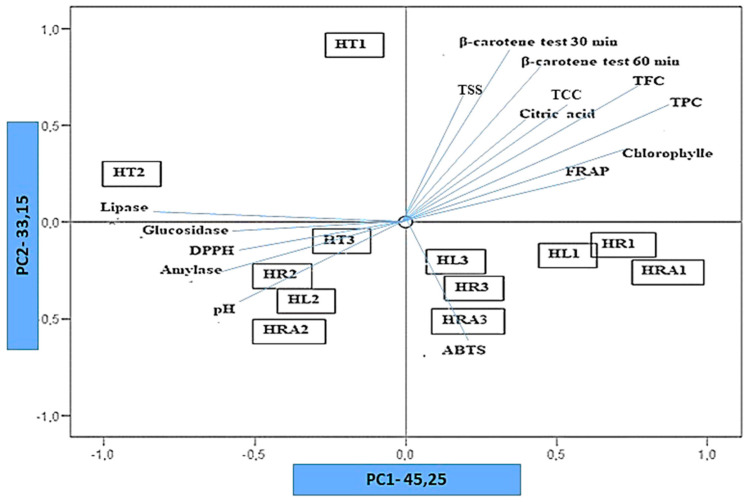
The impact of blanching on the phytochemical content and bioactivity of Hypochaeris laevigata (HL), Hypochaeris radicata (HR), Hyoseris radiata (HRA), and Hyoseris lucida subsp. taurina (HT) leaves was studied and compared to fresh plant materials and residual blanching water. For this purpose, total phenols, flavonoids, carotenoids, and chlorophyll contents were quantified. The antioxidant effect was investigated by using different in vitro tests (β-carotene, ferric reducing ability power (FRAP), 2,2'-Azino-bis(3-ethylbenzothiazoline-6-sulfonic acid) (ABTS) and 2,2-diphenyl-1-picrylhydrazyl (DPPH), whereas the potential inhibitory activity of key enzymes linked to obesity was screened against lipase, α-amylase, and α-glucosidase. Generally, the phytochemical content followed the trend: fresh > blanching water > blanched samples. The same trend was observed in the antioxidant activity independently of the applied test as well as in the inhibition of lipase and carbohydrates-hydrolysing enzymes. In particular, fresh Hypochaeris laevigata (HL1) showed the lowest inhibitory concentration 50% (IC50) values of 31.3 and 42.7 μg/mL, against α-glucosidase and α-amylase, respectively, whereas fresh Hyoseris radiata (HRA1) showed the most promising hypolipidemic activity (IC50 value of 39.8 μg/mL). Collectively, these results support the health effect of these wild plants and demonstrated that blanching water should be reused in food preparation since it is a good source of bioactive compounds and its consumption should be recommended in order to increase the uptake of micronutrients.
Keywords: Hyoseris radiata; Hyoseris taurina; Hypochaeris laevigata; Hypochaeris radicata; antioxidants; diabetes type 2; obesity; phytochemicals.
Conflict of interest statement
No potential conflict of interest was reported by the authors.
Figures
References
-
- Gastaldo P., Barberis G., Fossati F. Le piante della medicina tradizionale nei dintorni di Praglia (Appennino Ligure-Piemontese) Atti. Dell’accad. Ligur. Sci. Lett. 1978;35:1–35.
-
- Bellomaria B., Lattanzi E. Le piante del territorio di Cupra Marittima (Marche) attualmente usate nella medicina popolare. Arch. Bot. Biogeogr. Ital. 1982;58:1–19.
-
- Guarrera P.M. Usi tradizionali delle piante in alcune aree marchigiane. Inf. Bot. Ital. 1990;22:155–167.
-
- Ghirardini M.P., Carli M., Del Vecchio N., Rovati A., Cova O., Valigi F., Agnetti G., Macconi M., Adamo D., Traina M., et al. The importance of a taste. A comparative study on wild food plant consumption in twenty-one local communities in Italy. J. Ethnobiol. Ethnomed. 2007;3:22–33. doi: 10.1186/1746-4269-3-22. - DOI - PMC - PubMed
LinkOut - more resources
Full Text Sources
Miscellaneous
