


Sensitization of Non-permissive Laboratory Mice to SARS-CoV-2 with a Replication-Deficient Adenovirus Expressing Human ACE2
- PMID: 33377063
- PMCID: PMC7757354
- DOI: 10.1016/j.xpro.2020.100169
Sensitization of Non-permissive Laboratory Mice to SARS-CoV-2 with a Replication-Deficient Adenovirus Expressing Human ACE2
Abstract
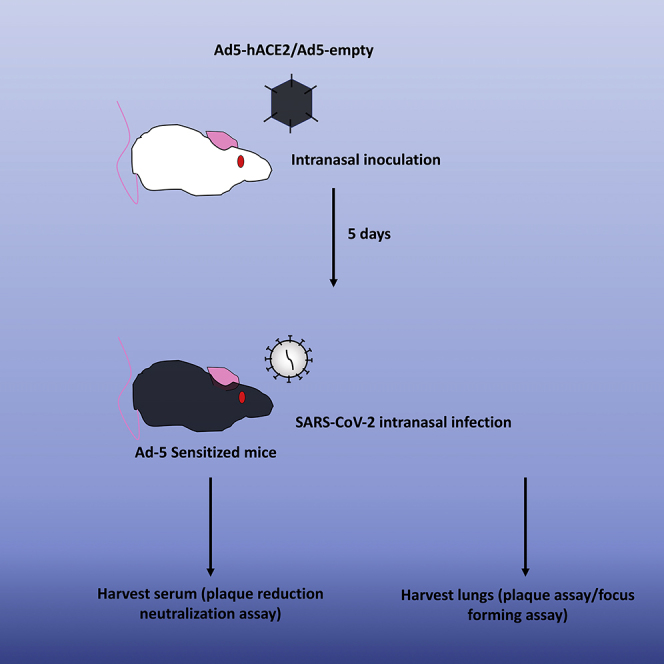
Common laboratory mice such as BALB/c and C57BL/6 mice are not permissive to SARS-CoV2 infection. Sensitization of laboratory mice with Adenovirus expressing human ACE2 (Ad5-hACE2) provides a rapid model for testing viral intervention in vivo. Despite the lack of lethal outcome, Ad5-hACE2-sensitized mice show 20% weight loss on average upon viral challenge with infectious virus being detected at the site of sensitization. This protocol describes the sensitization and subsequent infection of common laboratory mice for use in testing anti-viral interventions. For complete details on the use and execution of this protocol, please refer to Sun et al. (2020).
Keywords: Immunology; Model Organisms.
© 2020 The Author(s).
Conflict of interest statement
The authors declare no competing interests.
Figures
References
-
- Anderson R.D., Haskell R.E., Xia H., Roessler B.J., Davidson B.L. A simple method for the rapid generation of recombinant adenovirus vectors. Gene Ther. 2000;7:1034–1038. - PubMed
Publication types
MeSH terms
Substances
Grants and funding
LinkOut - more resources
Full Text Sources
Medical
Miscellaneous
