Effects of rapid maxillary expansion on temporomandibular joints
- PMID: 33378434
- PMCID: PMC8032308
- DOI: 10.2319/080619-517.1
Effects of rapid maxillary expansion on temporomandibular joints
Abstract
Objective: To evaluate the impact of rapid maxillary expansion (RME) on the condylar position, disc joint, joint space, and interarticular relationship in growing patients.
Materials and methods: A systematic search was performed in nine databases. The clinical studies selected included those with pre- and post-magnetic resonance, conventional computed tomography or cone beam tomography in growing patients. Risk of bias assessment was performed using the Cochrane Collaboration tool for controlled clinical studies and National Heart, Lung, and Blood Institute (NHLBI) Quality Assessment for Before-After Studies With No Control Group.
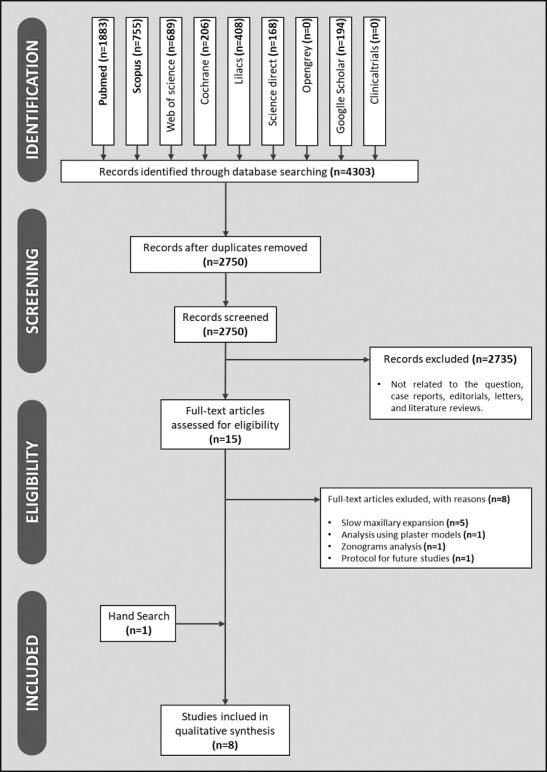
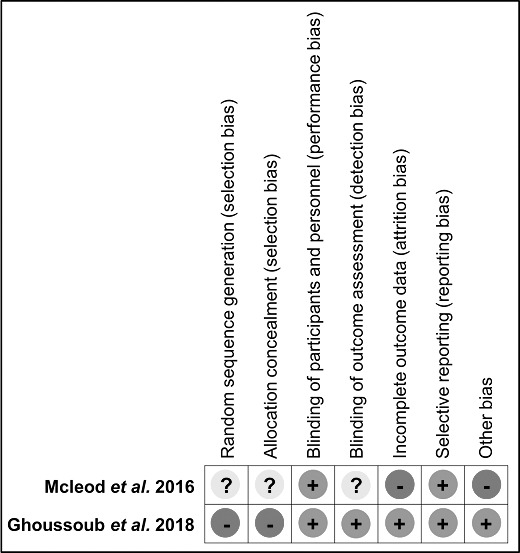
Results: Initially, 4303 records were identified. Only eight studies fulfilled the criteria and were included in the qualitative analysis. Of those, two were controlled clinical studies with a risk of uncertain to high bias. The remaining papers had a low to moderate risk of bias. Results showed that RME in children and adolescents promoted the following: remodeling in the head and or condylar branch, changes in condylar position and joint space, maintenance of improved symmetry between the condyles, and no ability to modify the position or shape of the articular disc.
Conclusions: RME in growing patients is able, in the short term, to modify the condyle-fossa relationship but does not change the position or shape of the articular disc. The intercondylar symmetric relationship is maintained or improved. Although the NHLBI score shows low to moderate risk of bias, the clinical relevance of these review findings is limited by Cochrane and Grades of Recommendation, Assessment, Development and Evaluation scores.
Keywords: Rapid maxillary expansion; Systematic review; Temporomandibular joint.
© 2020 by The EH Angle Education and Research Foundation, Inc.
Figures
Comment in
-
Rapid Maxillary Expansion May Improve Condyle-Fossa Relationship and Intercondylar Symmetry.J Evid Based Dent Pract. 2021 Mar;21(1):101532. doi: 10.1016/j.jebdp.2021.101532. Epub 2021 Feb 2. J Evid Based Dent Pract. 2021. PMID: 34051959
References
-
- McNamara JA. Maxillary transverse deficiency. Am J Orthod Dentofacial Orthop. 2000;117;:567–570. - PubMed
-
- McNamara JA, Brudon WL. Orthodontics and Dentofacial Orthopedics. Ann Arbor, MI: Needham Press; 2001. pp. 97–110.
-
- Haas AJ. Rapid expansion of the maxillary dental arch and nasal cavity by opening the midpalatal suture. Angle Orthod. 1961;31:73–90.
-
- Lima Filho RM, Ruellas AC. Long-term anteroposterior and vertical maxillary changes in skeletal Class II patients treated with slow and rapid maxillary expansion. Angle Orthod. 2007;77:870–874. - PubMed
-
- Doruk C, Bicakci AA, Basciftci FA, Agar U, Babacan H. A comparison of the effects of rapid maxillary expansion and fan-type rapid maxillary expansion on dentofacial structures. Angle Orthod. 2004;74:184–194. - PubMed
Publication types
MeSH terms
LinkOut - more resources
Full Text Sources
Medical