A prospective clinical trial of the effects produced by the Connecticut intrusion arch on the maxillary dental arch
- PMID: 33378499
- PMCID: PMC8028463
- DOI: 10.2319/102219-666.1
A prospective clinical trial of the effects produced by the Connecticut intrusion arch on the maxillary dental arch
Abstract
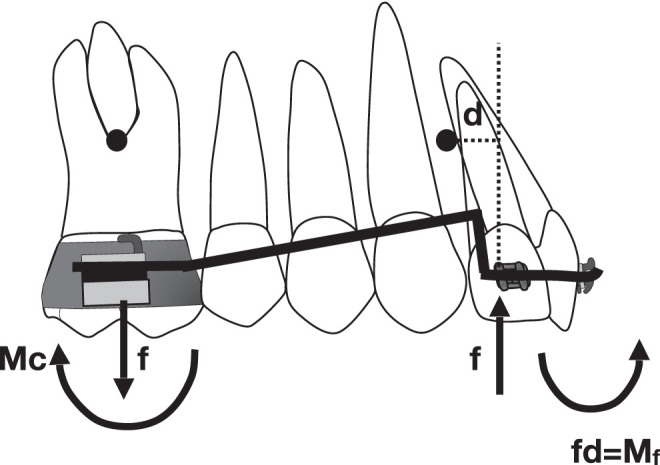
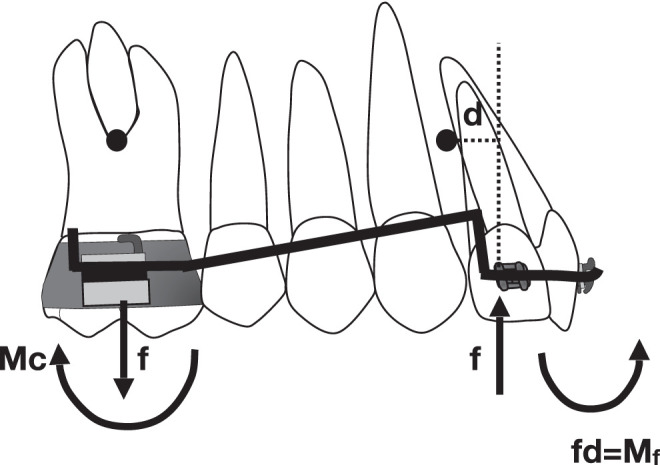
Objective: To assess and compare the effects produced in the maxillary dental arch by means of Connecticut intrusion arch (CIA) with or without a cinch back on the distal end of the tube of the first molars.
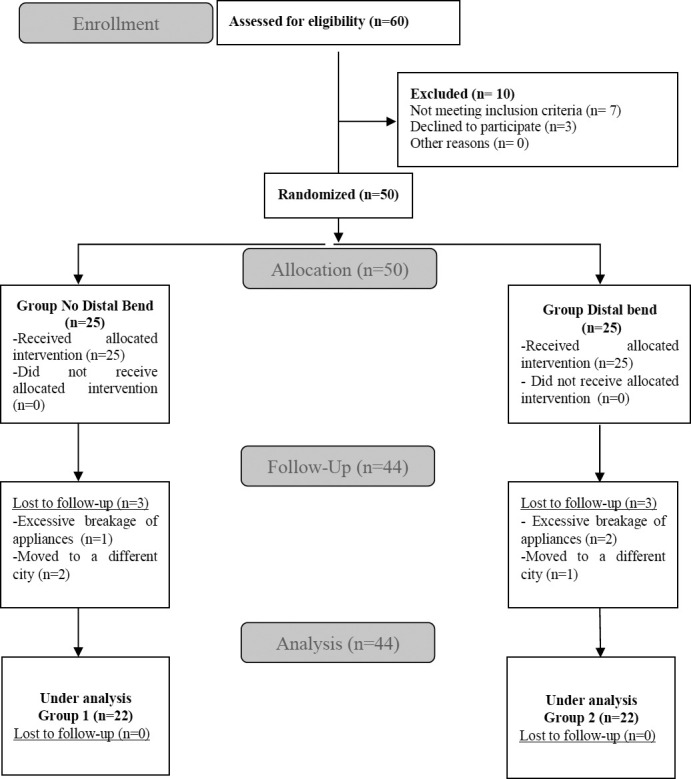
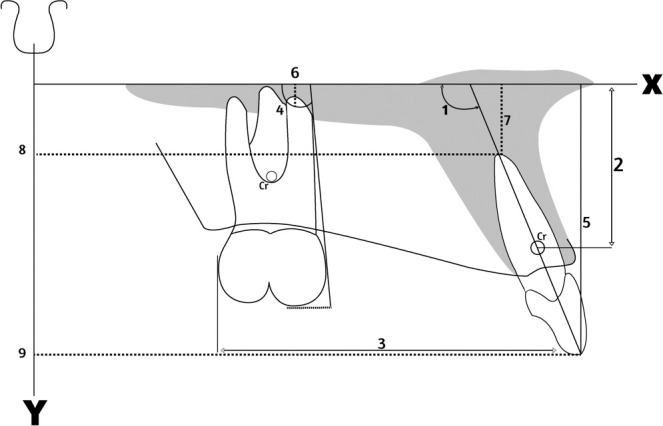
Materials and methods: This study included 44 patients with a mean age of 13.1 ± 1.8 years treated for deep bite with a CIA randomly divided into two groups: group 1 (G1), 22 patients with initial mean age of 12.72 ± 1.74 years treated with the CIA in the upper arch without a cinch back on the distal surface of the tube of the first molars, and group 2 (G2), 22 patients with an initial mean age of 13.67 ± 2.03 years treated with the CIA with a cinch back. Lateral cephalograms were available before treatment (T1) and after intrusion of maxillary incisors (T2). The mean treatment period was 5.5 ± 1.45 months. Intragroup and intergroup changes in the maxillary incisor and molar positions were analyzed by paired and independent t-tests associated with the Holm-Bonferroni correction method for multiple comparisons (P < .05).
Results: There were significant differences between groups in terms of maxillary incisor displacement. The maxillary incisors flared labially (2.17°) and proclined (1.68 mm) in group 1, whereas a palatal inclination (-1.99°) and retroclination (-1.13 mm) was observed in group 2. No significant differences were found for the molar positions between the groups.
Conclusions: The presence or absence of a distal bend in CIA affects incisor tipping and proclination during intrusion mechanics.
Keywords: Biomechanics; Intrusion arch; Overbite.
© 2020 by The EH Angle Education and Research Foundation, Inc.
Figures
References
-
- Burstone CJ, van Steenbergen E, Hanley KJ. Modern Edgewise Mechanics and the Segmented Arch Technique. Farmington, CT: University of Connecticut; 1995.
-
- Nielsen IL. Vertical malocclusions: etiology, development, diagnosis and some aspects of treatment. Angle Orthod. 1991;61:247–260. - PubMed
-
- Ricketts R. Bioprogressive therapy as an answer to orthodontic needs. Part II. Am J Orthod. 1976;70:359–397. - PubMed
-
- Nanda R. Correction of deep overbite in adults. Dent Clin North Am. 1997;41:67–87. - PubMed
-
- Melsen B, Agerbaek N, Markenstam G. Intrusion of incisors in adult patients with marginal bone loss. Am J Orthod Dentofacial Orthop. 1989;96:232–241. - PubMed
Publication types
MeSH terms
LinkOut - more resources
Full Text Sources