Review
. 2021 Jan;44(1):63-76.
doi: 10.1016/j.tins.2020.09.012.

Computational Models of Interoception and Body Regulation

Affiliations
Review

Computational Models of Interoception and Body Regulation

Frederike H Petzschner et al. Trends Neurosci. 2021 Jan.

Abstract

To survive, organisms must effectively respond to the challenge of maintaining their physiological integrity in the face of an ever-changing environment. Preserving this homeostasis critically relies on adaptive behavior. In this review, we consider recent frameworks that extend classical homeostatic control via reflex arcs to include more flexible forms of adaptive behavior that take interoceptive context, experiences, and expectations into account. Specifically, we define a landscape for computational models of interoception, body regulation, and forecasting, address these models' unique challenges in relation to translational research efforts, and discuss what they can teach us about cognition as well as physical and mental health.

Keywords: active inference; allostasis; computational psychiatry; homeostasis; predictive coding; reinforcement learning.


Figures

Figure 1.
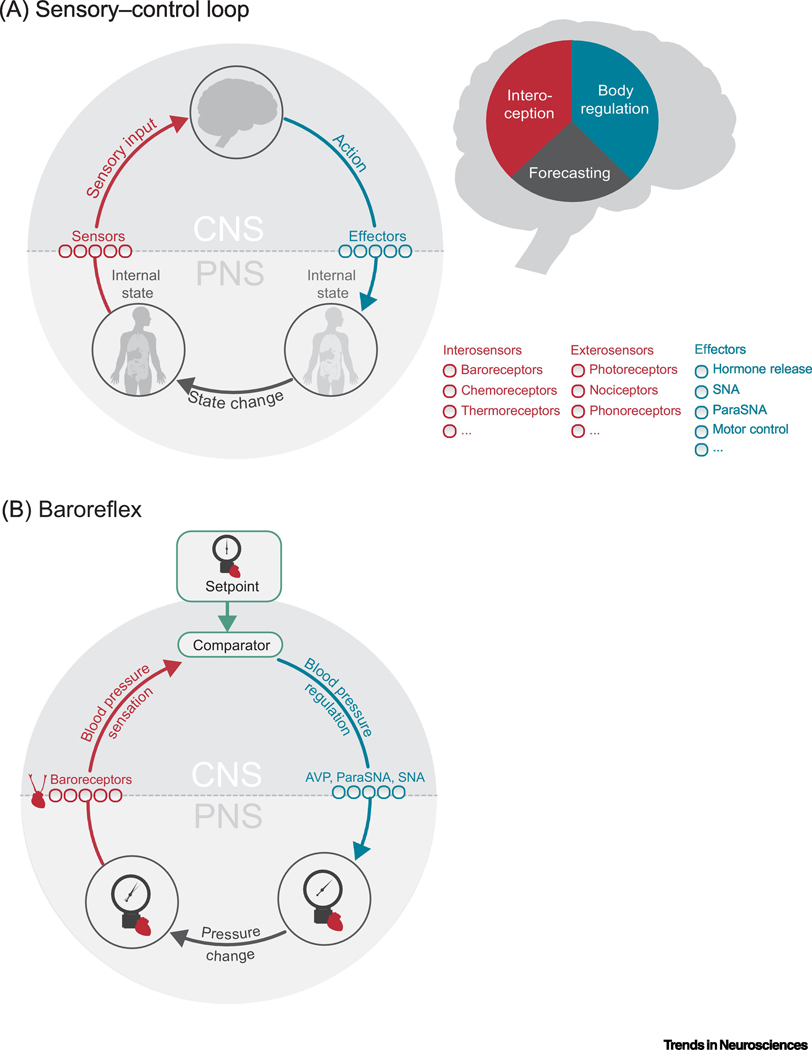
Figure 1.. Schematic of the homeostatic sensory-control loop.
A. Left: An organism translates incoming information about an internal state (red arrow) from its sensors into appropriately adjusted actions, executed by its effectors (blue arrow). Internal states can thereby be informed by both intero-sensors and extero-sensors. These actions, in turn, alter the internal state (state change, grey arrow) and, therefore, the future sensory inputs, resulting in a circular relationship between states, sensations and actions. Right: It is assumed that the CNS forms internal models of the sensory-control loop or specific parts of it. Here, we cover three types of internal models: (i) Models of interoception that describe how internal states can be inferred from sensory signals, (ii) models of body regulation that describe how appropriate actions are selected based on internal states and (iii) models of forecasting that describe how actions lead to changes in the internal states. B. Example of a sensory-control loop: The reflex arc of blood pressure control via the baroreflex: Sensory signals from arterial and cardiopulmonary stretch receptors, baroreceptors, trigger responses in the CNS that result in short-term down-regulation of blood pressure via barosensitive autonomic efferents in the hypothalamus, brainstem, and spinal cord [3,4]. For example, excitatory efferents from the NTS (i) activate inhibitory efferents in the dorsal motor vagal nucleus leading to peripheral parasympathetic activation and (ii) stimulate medullary projections to hypothalamus which inhibit AVP release, collectively reducing blood pressure and heart rate. Abbreviations: CNS: central nervous system; PNS: peripheral nervous system; ParaSNA: Parasympathetic Nervous System Activation; SNA: Sympathetic Nervous System Activation; AVP: arginine vasopressin.
Figure 2.
Figure 2.. Schematic of computational models of interoception.
A. Top left: Computational models of interoception are inverse models, as indicated by the black dotted arrow. Large circle: Schematic illustration of interoception: New incoming sensory information, which depends on the current internal state, the likelihood function, is combined with a-priori expectations about the internal state, the prior, to form a percept, the posterior. The prior thereby results from an internal model of the state of the body in the world – in short, a model of the body. B: Schematic representation of Bayes’ Theorem. The posterior can be computed in a statistically optimal manner by calculating the product of the likelihood and the prior, here illustrated with the example of Gaussian distributions. Importantly, Bayes’ Theorem takes the uncertainty of information into account. Information with high prior precision (left) will be weighted more than information with low prior precision (right). C: Schematic representation of Predictive Coding: Brain areas at higher levels of the hierarchy send predictions about the expected input to lower levels. Every mismatch between predicted and actual input at lower levels will be processed as a prediction error that is propagated up the hierarchy. Predictive Coding requires a minimum of two classes of neurons: Representation neurons signaling predictions (green circles) and prediction error neurons (black triangle). At the lowest level of the hierarchy the input is the actual sensory data. Predictive Coding is hypothesized to be a general feature of many living organisms, and therefore, it could be interrogated across the spectrum of animal species.
Figure 3.
Figure 3.. Schematic of computational models of body regulation.
A. Example of Homeostatic Reinforcement Learning (HRL) in the sensory-control loop. In HRL, actions that reduce the difference between current internal states and desired internal states (drives) are processed as being rewarding. By comparing the estimated reward value to the actual experienced reward, a reward prediction error (RPE) can be computed which is used to update future value estimates and inform action selection. Agents can thus learn to maximize rewards by minimizing drive to maintain homeostasis. See [21,42] for a detailed discussion. B. Example of Interoceptive Active Inference (IAI) in the sensory-control loop. IAI extends Predictive Coding to include action selection. Specifically, actions signaled by descending predictions are thought to represent desired internal states. Actions are then selected to fulfill predictions which bring the actual internal state closer to the desired one.

References

    1. Cannon WB (1939) The wisdom of the body, Norton & Co.
    1. Ramsay DS and Woods SC (2014) Clarifying the Roles of Homeostasis and Allostasis in Physiological Regulation. Psychol Rev 121, 225–247 - PMC - PubMed
    1. Robertson D. et al. (2012) Primer on the Autonomic Nervous System, Academic Press.
    1. Guyenet PG (2006) The sympathetic control of blood pressure. Nat. Rev. Neurosci 7, 335–346 - PubMed
    1. McEwen BS (2017) Allostasis and the Epigenetics of Brain and Body Health Over the Life Course: The Brain on Stress. JAMA Psychiatry 74, 551–552 - PubMed

Publication types

LinkOut - more resources