


Synthesis, Characterization, and Application of Carboxymethyl Cellulose from Asparagus Stalk End
- PMID: 33379203
- PMCID: PMC7795991
- DOI: 10.3390/polym13010081
Synthesis, Characterization, and Application of Carboxymethyl Cellulose from Asparagus Stalk End
Abstract
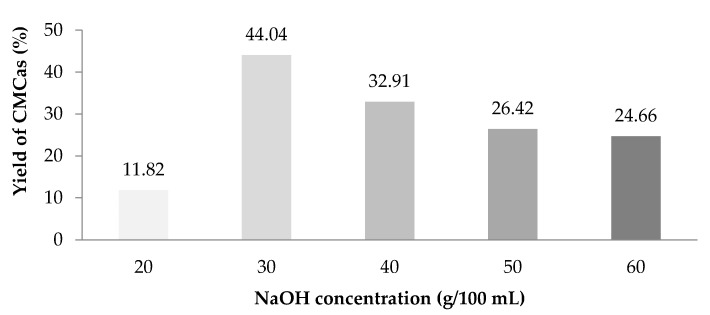
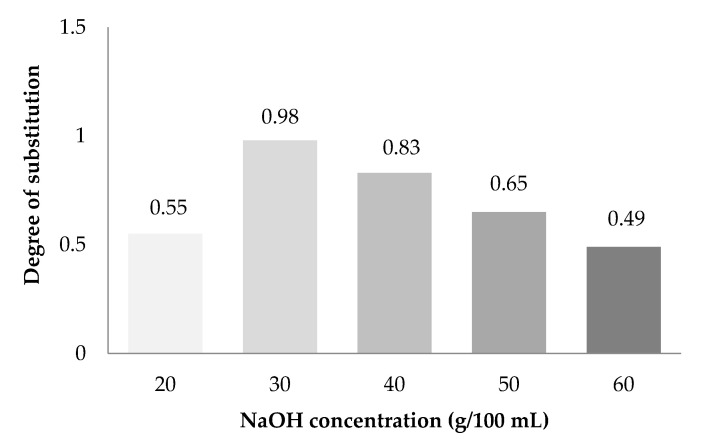
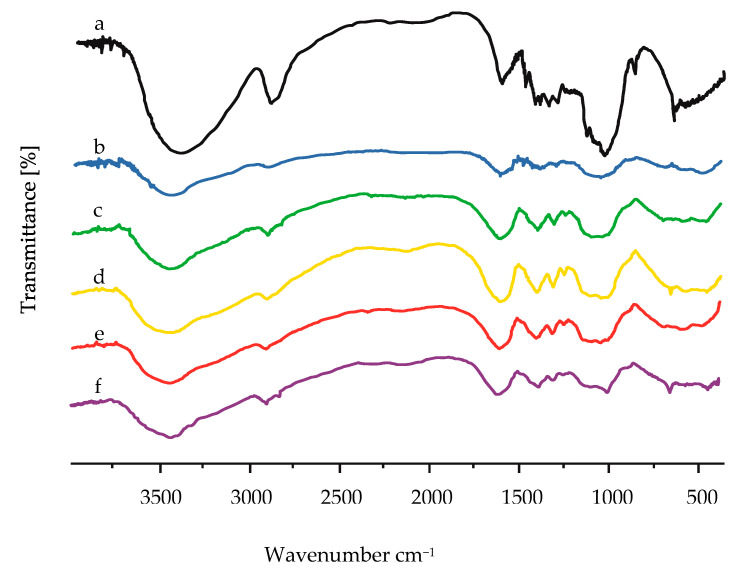
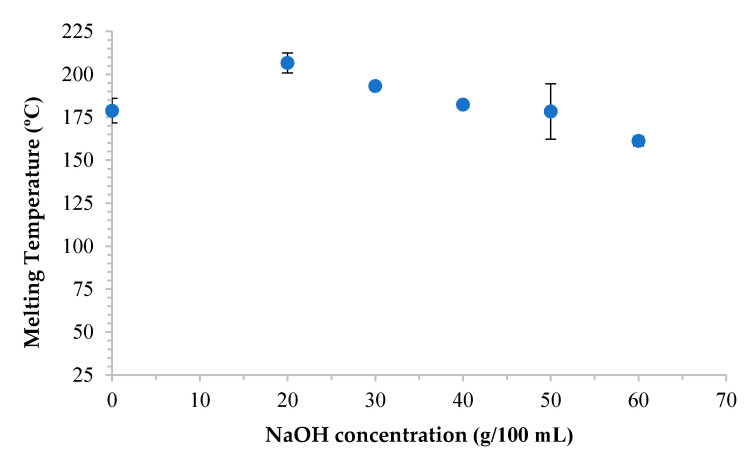
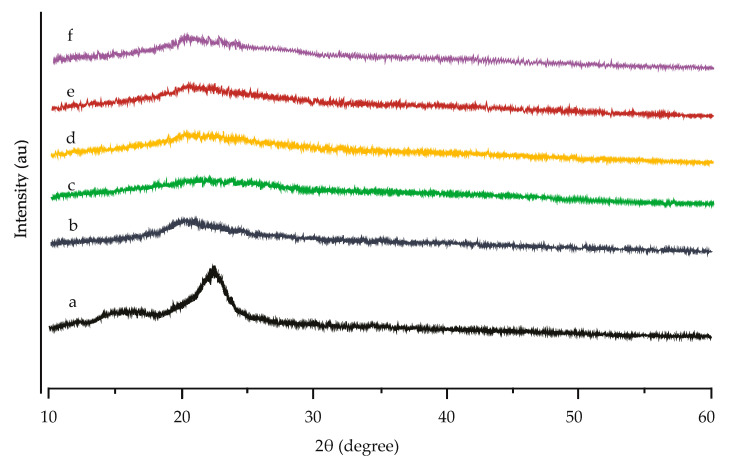
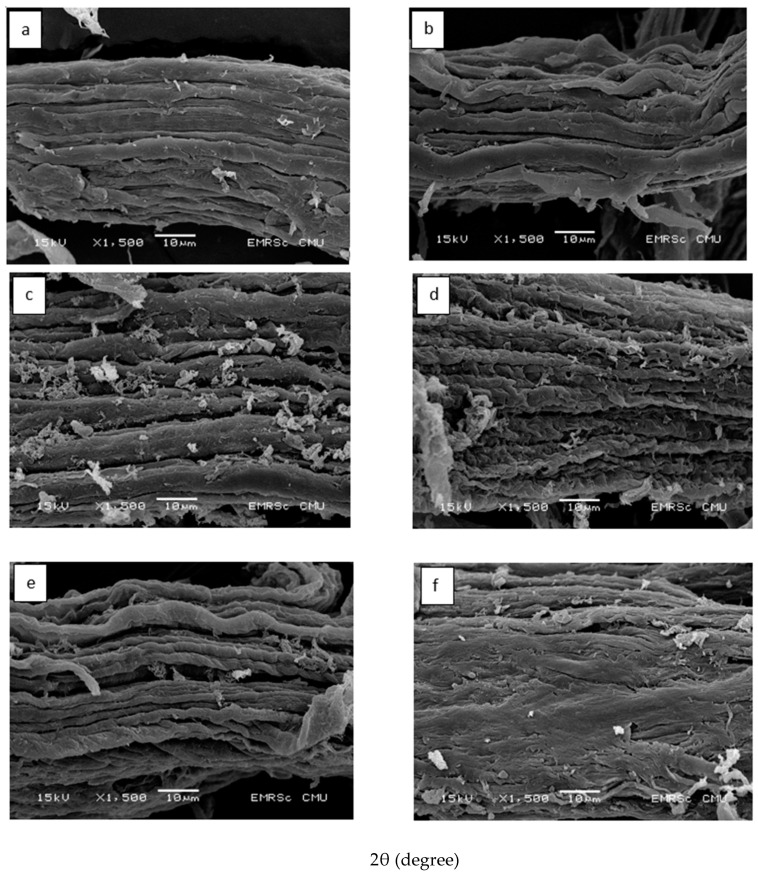
Cellulose from Asparagus officinalis stalk end was extracted and synthesized to carboxymethyl cellulose (CMCas) using monochloroacetic acid (MCA) via carboxymethylation reaction with various sodium hydroxide (NaOH) concentrations starting from 20% to 60%. The cellulose and CMCas were characterized by the physical properties, Fourier Transform Infrared spectroscopy (FTIR), Differential scanning calorimetry (DSC), Scanning electron microscopy (SEM) and X-ray diffraction (XRD). In addition, mechanical properties of CMCas films were also investigated. The optimum condition for producing CMCas was found to be 30% of NaOH concentration for the carboxymethylation reaction, which provided the highest percent yield of CMCas at 44.04% with the highest degree of substitution (DS) at 0.98. The melting point of CMCas decreased with increasing NaOH concentrations. Crystallinity of CMCas was significantly deformed (p < 0.05) after synthesis at a high concentration. The L* value of the CMCas was significantly lower at a high NaOH concentration compared to the cellulose. The highest tensile strength (44.59 MPa) was found in CMCas film synthesized with 40% of NaOH concentration and the highest percent elongation at break (24.99%) was obtained in CMCas film treated with 30% of NaOH concentration. The applications of asparagus stalk end are as biomaterials in drug delivery system, tissue engineering, coating, and food packaging.
Keywords: CMC; DS; agricultural waste; asparagus; biopolymer; carboxymethyl cellulose; cellulose extraction; degree of substitution.
Conflict of interest statement
The authors declare that there are no conflicts of interest regarding the publication of this paper.
Figures
References
-
- Nindo C., Sun T., Wang S., Tang J., Powers J. Evaluation of drying technologies for retention of physical quality and antioxidants in asparagus (Asparagus officinalis, L.) LWT Food Sci. Technol. 2003;36:507–516. doi: 10.1016/S0023-6438(03)00046-X. - DOI
-
- Huang Y., Kennedy J., Peng. Y., Wang X., Yuan X., Zhao B., Zhao Q. Optimization of ultrasonic circulating extraction of polysaccharides from Asparagus officinalis using response surface methodology. Int. J. Biol. Macromol. 2011;49:181–187. - PubMed
-
- Guo Q., Wang N., Liu H., Li Z., Lu L., Wang C. The bioactive compounds and biological functions of Asparagus officinalis L.—A review. J. Funct. Foods. 2020;65:103727. doi: 10.1016/j.jff.2019.103727. - DOI
-
- Noperi-Mosqueda L.C., López-Moreno F.J., Navarro-León E., Sánchez E., Blasco B., Moreno D.A., Soriano T., Ruiz J.M. Effects of asparagus decline on nutrients and phenolic compounds, spear quality, and allelopathy. Sci. Hortic. 2020;261:109029. doi: 10.1016/j.scienta.2019.109029. - DOI
-
- Fuentes-Alventosa J.M., Jaramillo-Carmona S., Rodríguez-Gutiérrez G., Rodríguez-Arcos R., Fernández-Bolaños J., Guillén-Bejarano R., Espejo-Calvo J.A., Jiménez-Araujo A. Effect of the extraction method on phytochemical composition and antioxidant activity of high dietary fibre powders obtained from asparagus by-products. Food Chem. 2009;116:484–490. doi: 10.1016/j.foodchem.2009.02.074. - DOI
LinkOut - more resources
Full Text Sources
