


Hepatitis B Virus Cure: Targets and Future Therapies
- PMID: 33379331
- PMCID: PMC7795643
- DOI: 10.3390/ijms22010213
Hepatitis B Virus Cure: Targets and Future Therapies
Abstract
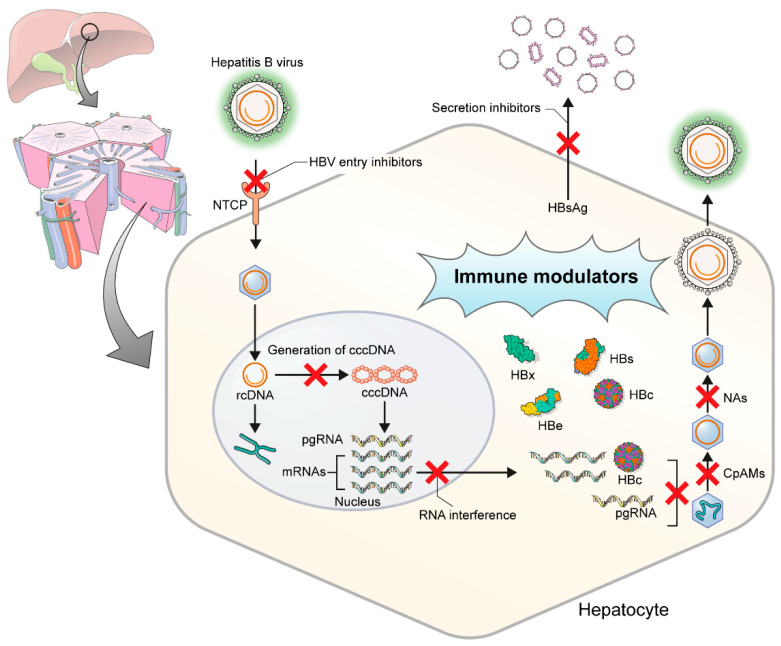
Chronic hepatitis B virus (HBV) infection is a major global health problem. It can cause progressive liver fibrosis leading to cirrhosis with end-stage liver disease, and a markedly increased risk of hepatocellular carcinoma. In the last two decades, substantial progress has been made in the treatment of chronic hepatitis, B. However, HBV is often reactivated after stopping nucloes(t)ide analogues because antivirals alone do not directly target covalently closed circular DNA, which is the template for all viral RNAs. Therefore, although currently available antiviral therapies achieve suppression of HBV replication in the majority of patients, hepatitis B surface antigen (HBsAg) loss and seroconversion is rarely achieved despite long-term antiviral treatment (HBsAg loss of less than 10% in 5 years). Various clinical trials of agents that interrupt the HBV life cycle in hepatocytes have been conducted. Potential treatment strategies and new agents are emerging as HBV cure. A combination of current and new anti-HBV agents may increase the rate of HBsAg seroclearance; thus, optimized regimens must be validated. Here, we review the newly investigated therapeutic compounds and the results of preclinical and/or clinical trials.
Keywords: cure; hepatitis B; target; treatment.
Conflict of interest statement
Ahn, S.H. has acted as advisors and lecturers for BMS, Gilead Sciences, MSD, AbbVie, Janssen, Assembly Biosciences, Arbutus Biopharma, GreenCross, Ildong. SHA has received unrestricted grant from Gilead Sciences for the investigator initiated trials.
Figures
References
Publication types
MeSH terms
Substances
LinkOut - more resources
Full Text Sources
Other Literature Sources
Medical
