Effects of face masks on acoustic analysis and speech perception: Implications for peri-pandemic protocols
- PMID: 33379897
- PMCID: PMC7857500
- DOI: 10.1121/10.0002873
Effects of face masks on acoustic analysis and speech perception: Implications for peri-pandemic protocols
Abstract
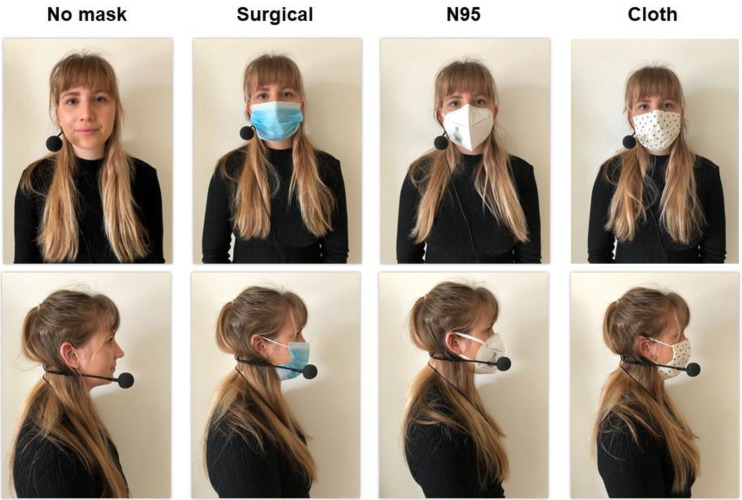
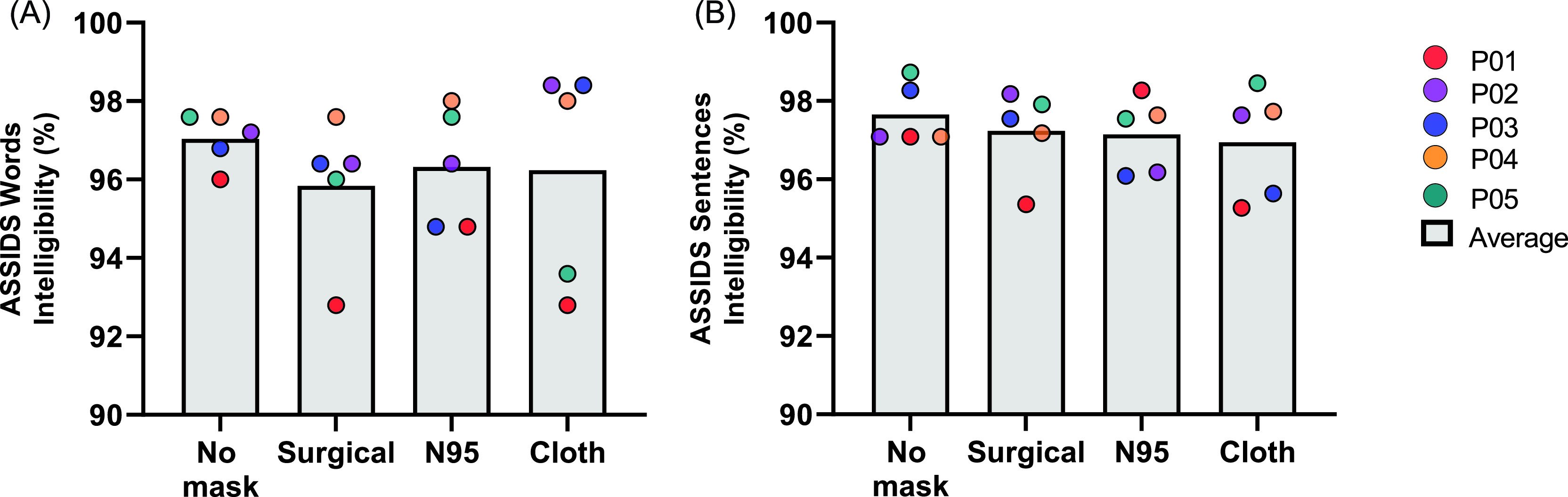
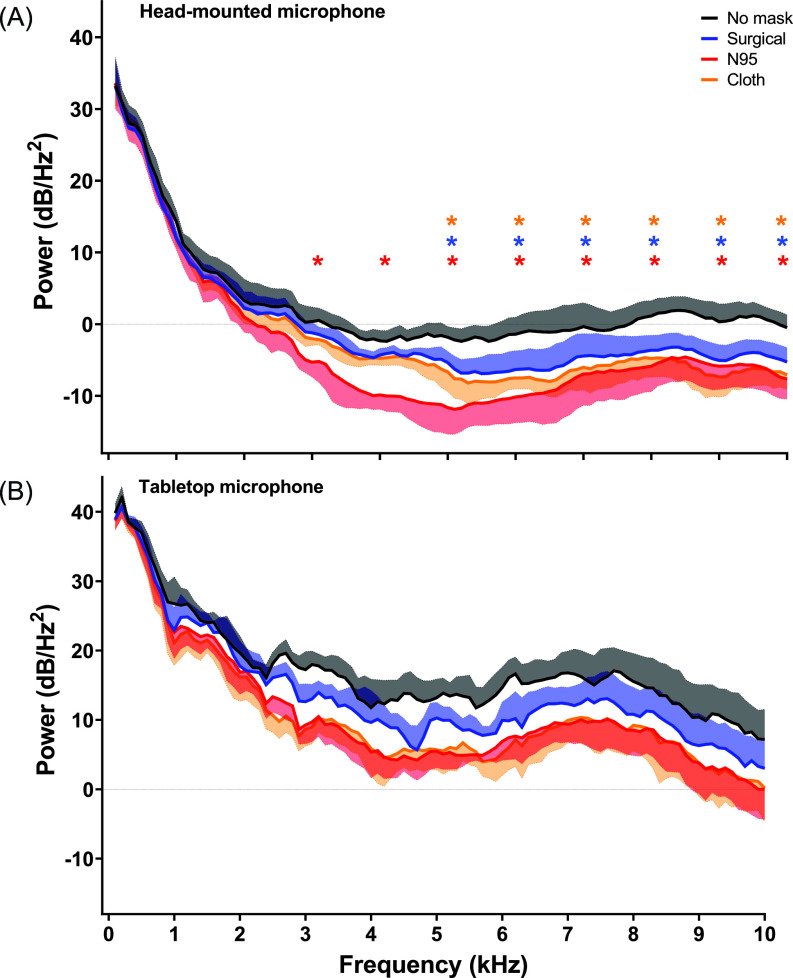
Wearing face masks (alongside physical distancing) provides some protection against infection from COVID-19. Face masks can also change how people communicate and subsequently affect speech signal quality. This study investigated how three common face mask types (N95, surgical, and cloth) affected acoustic analysis of speech and perceived intelligibility in healthy subjects. Acoustic measures of timing, frequency, perturbation, and power spectral density were measured. Speech intelligibility and word and sentence accuracy were also examined using the Assessment of Intelligibility of Dysarthric Speech. Mask type impacted the power distribution in frequencies above 3 kHz for the N95 mask, and above 5 kHz in surgical and cloth masks. Measures of timing and spectral tilt mainly differed with N95 mask use. Cepstral and harmonics to noise ratios remained unchanged across mask type. No differences were observed across conditions for word or sentence intelligibility measures; however, accuracy of word and sentence translations were affected by all masks. Data presented in this study show that face masks change the speech signal, but some specific acoustic features remain largely unaffected (e.g., measures of voice quality) irrespective of mask type. Outcomes have bearing on how future speech studies are run when personal protective equipment is worn.
Figures
References
-
- Boersma, P. (2001). “ Praat, a system for doing phonetics by computer,” Glot Int. 5(9/10), 341–345.
-
- CDC (2020). Use of Masks to Help Slow the Spread of COVID-19 ( Centers for Disease Control and Prevention, Atlanta, GA: ).
-
- Chu, D. K. , Akl, E. A. , Duda, S. , Solo, K. , Yaacoub, S. , Schünemann, H. J. , Chu, D. K. , Akl, E. A. , El-harakeh, A. , Bognanni, A. , Lotfi, T. , Loeb, M. , Hajizadeh, A. , Bak, A. , Izcovich, A. , Cuello-Garcia, C. A. , Chen, C. , Harris, D. J. , Borowiack, E. , Chamseddine, F. , Schünemann, F. , Morgano, G. P. , Muti Schünemann, G. E. U. , Chen, G. , Zhao, H. , Neumann, I. , Chan, J. , Khabsa, J. , Hneiny, L. , Harrison, L. , Smith, M. , Rizk, N. , Giorgi Rossi, P. , AbiHanna, P. , El-Khoury, R. , Stalteri, R. , Baldeh, T. , Piggott, T. , Zhang, Y. , Saad, Z. , Khamis, A. , Reinap, M. , Duda, S. , Solo, K. , Yaacoub, S. , and Schünemann, H. J. (2020). “ Physical distancing, face masks, and eye protection to prevent person-to-person transmission of SARS-CoV-2 and COVID-19: A systematic review and meta-analysis,” Lancet 395, 1973–1987. 10.1016/S0140-6736(20)31142-9 - DOI - PMC - PubMed
Publication types
MeSH terms
LinkOut - more resources
Full Text Sources
Other Literature Sources
Medical