Effect of Phosphate-Specific Diet Therapy on Phosphate Levels in Adults Undergoing Maintenance Hemodialysis: A Systematic Review and Meta-Analysis
- PMID: 33380474
- PMCID: PMC7792658
- DOI: 10.2215/CJN.09360620
Effect of Phosphate-Specific Diet Therapy on Phosphate Levels in Adults Undergoing Maintenance Hemodialysis: A Systematic Review and Meta-Analysis
Abstract
Background and objectives: Hyperphosphatemia is a persistent problem in individuals undergoing maintenance hemodialysis, which may contribute to vascular and bone complications. In some dialysis centers, dietitians work with patients to help them manage serum phosphate. Given the regularity of hyperphosphatemia in this population and constraints on kidney dietitian time, the authors aimed to evaluate the evidence for this practice.
Design, setting, participants, & measurements: There was a systematic review and meta-analysis of clinical trials. MEDLINE, Embase, CINAHL, Web of Science, Cochrane Central Register of Controlled Trials, and other databases were searched for controlled trials published from January 2000 until November 2019 in the English language. Included studies were required to examine the effect of phosphate-specific diet therapy provided by a dietitian on serum phosphate in individuals on hemodialysis. Risk of bias and certainty of evidence were assessed using the Grading of Recommendations, Assessment, Development, and Evaluations (GRADE) method.
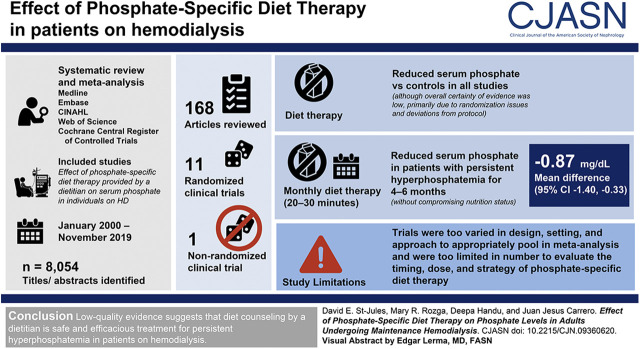
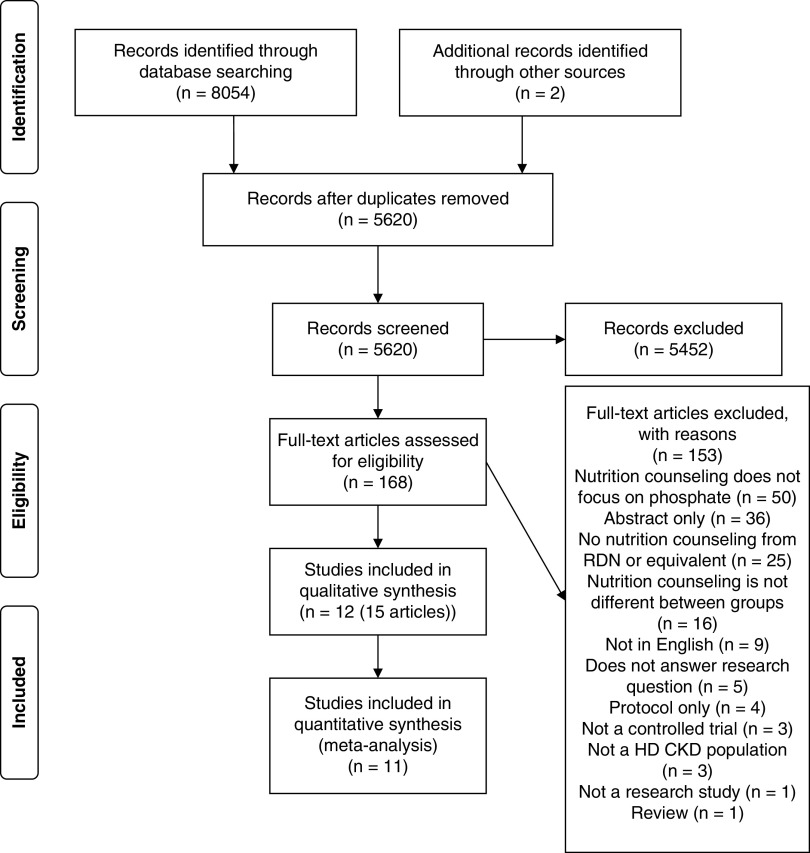
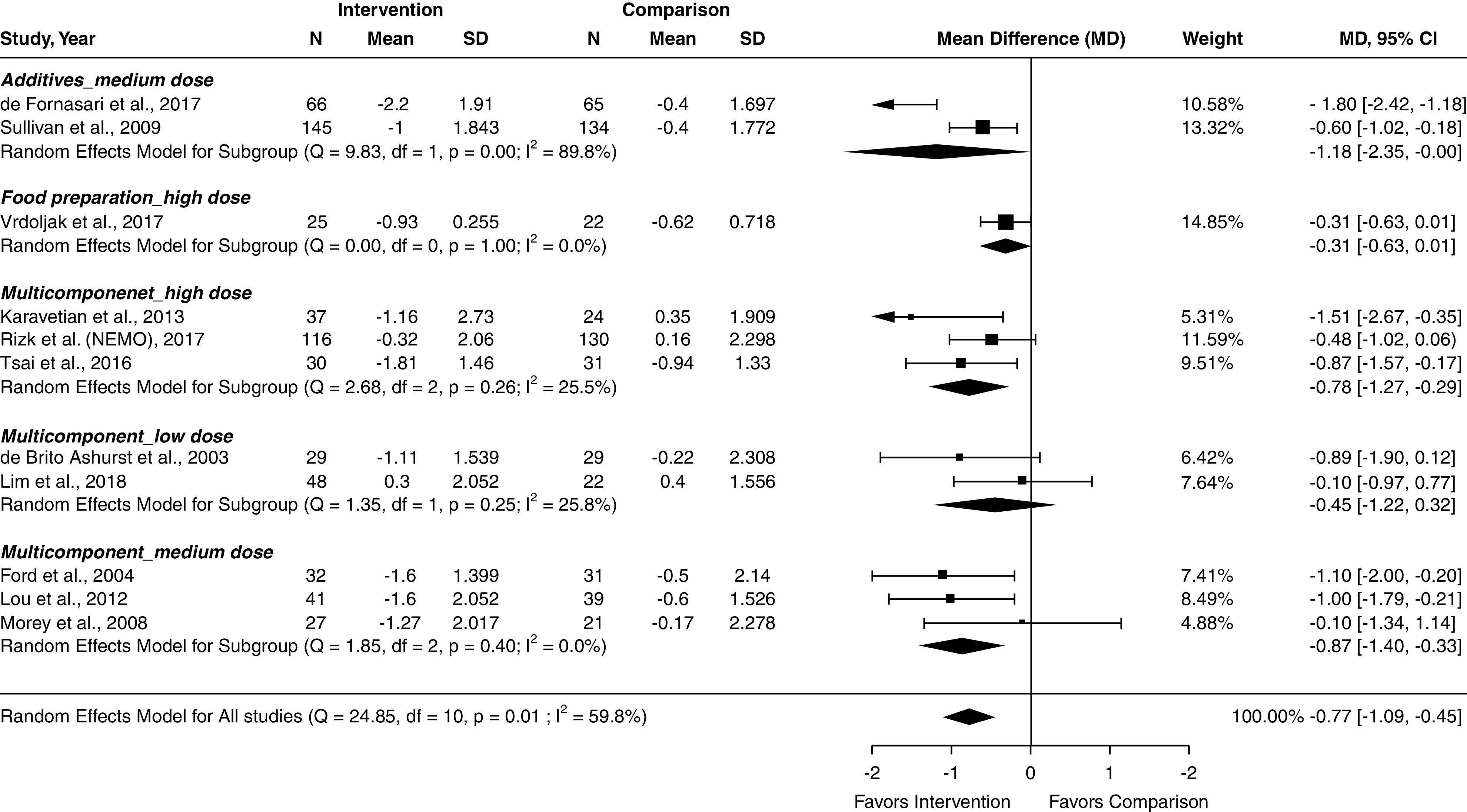
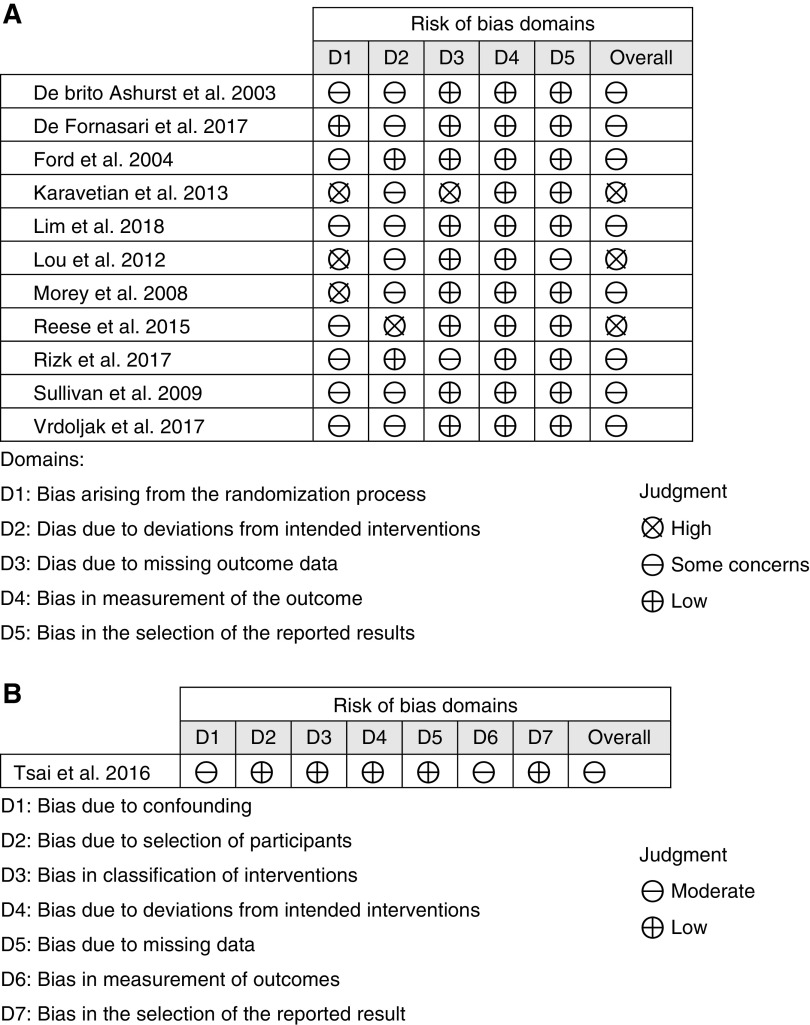
Results: Of the 8054 titles/abstracts identified, 168 articles were reviewed, and 12 clinical trials (11 randomized, one nonrandomized) were included. Diet therapy reduced serum phosphate compared with controls in all studies, reaching statistical significance in eight studies, although overall certainty of evidence was low, primarily due to randomization issues and deviations from protocol. Monthly diet therapy (20-30 minutes) significantly lowered serum phosphate in patients with persistent hyperphosphatemia for 4-6 months, without compromising nutrition status (mean difference, -0.87 mg/dl; 95% confidence interval, -1.40 to -0.33 mg/dl), but appeared unlikely to maintain these effects if discontinued. Unfortunately, trials were too varied in design, setting, and approach to appropriately pool in meta-analysis, and were too limited in number to evaluate the timing, dose, and strategy of phosphate-specific diet therapy.
Conclusions: There is low-quality evidence that monthly diet therapy by a dietitian appears to be a safe and efficacious treatment for persistent hyperphosphatemia in patients on HD.
Keywords: ESRD; chronic kidney disease; hemodialysis; hyperphosphatemia; nutrition; phosphorus.
Copyright © 2021 by the American Society of Nephrology.
Figures
Comment in
-
Dietary Therapy for Managing Hyperphosphatemia.Clin J Am Soc Nephrol. 2020 Dec 31;16(1):9-11. doi: 10.2215/CJN.18171120. Clin J Am Soc Nephrol. 2020. PMID: 33380472 Free PMC article. No abstract available.
References
-
- Kidney Disease Improving Global Outcomes (KDIGO) CKD-MBD Update Work Group : KDIGO 2017. Clinical Practice Guideline Update for the Diagnosis, Evaluation, Prevention, and Treatment of Chronic Kidney Disease-Mineral and Bone Disorder (CKD-MBD). Available at https://kdigo.org/wp-content/uploads/2017/02/2017-KDIGO-CKD-MBD-GL-Updat.... Accessed October 21, 2020 - PMC - PubMed
-
- Ikizler TA, Burrowes JD, Byham-Gray LD, Campbell KL, Carrero J-J, Chan W, Fouque D, Friedman AN, Ghaddar S, Goldstein-Fuchs DJ, Kaysen GA, Kopple JD, Teta D, Wang AY, Cuppari L: KDOQI clinical practice guideline for nutrition in CKD: 2020 update. Am J Kidney Dis 76: S1–S107, 2020 - PubMed
-
- Writing Group of the Nutrition Care Process/Standardized Language Committee: Nutrition care process and model part I: The 2008 update. J Am Diet Assoc 108: 1113–1117, 2008 - PubMed
-
- Hand RK, Burrowes JD: Renal dietitians’ perceptions of roles and responsibilities in outpatient dialysis facilities. J Ren Nutr 25: 404–411, 2015 - PubMed
Publication types
MeSH terms
Substances
LinkOut - more resources
Full Text Sources
Medical