


Decline in mild stroke presentations and intravenous thrombolysis during the COVID-19 pandemic: The Society of Vascular and Interventional Neurology Multicenter Collaboration
- PMID: 33383463
- PMCID: PMC7836428
- DOI: 10.1016/j.clineuro.2020.106436
Decline in mild stroke presentations and intravenous thrombolysis during the COVID-19 pandemic: The Society of Vascular and Interventional Neurology Multicenter Collaboration
Abstract
Background: To evaluate overall ischemic stroke volumes and rates, specific subtypes, and clinical presentation during the COVID-19 pandemic in a multicenter observational study from eight states across US.
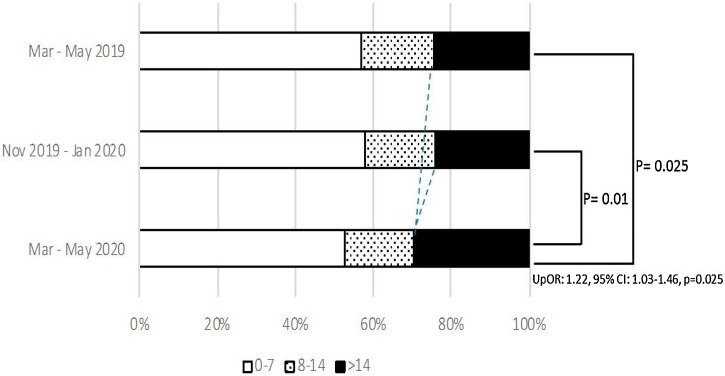
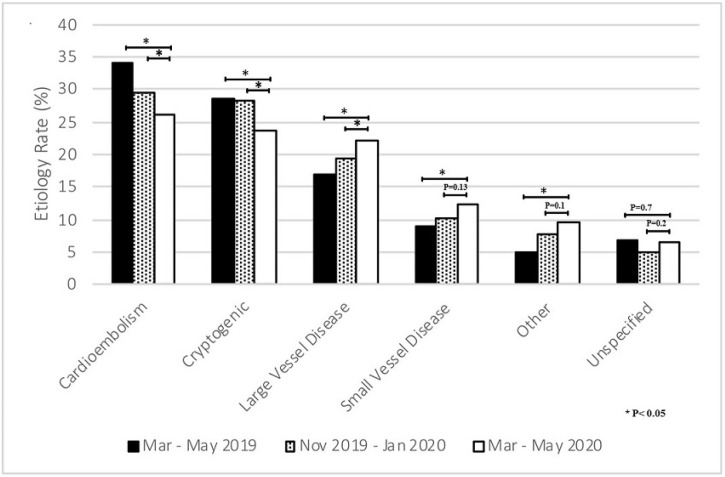
Methods: We compared all ischemic strokes admitted between January 2019 and May 2020, grouped as; March-May 2020 (COVID-19 period) and March-May 2019 (seasonal pre-COVID-19 period). Primary outcome was stroke severity at admission measured by NIHSS stratified as mild (0-7), moderate [8-14], and severe (>14). Secondary outcomes were volume of large vessel occlusions (LVOs), stroke etiology, IV-tPA rates, and discharge disposition.
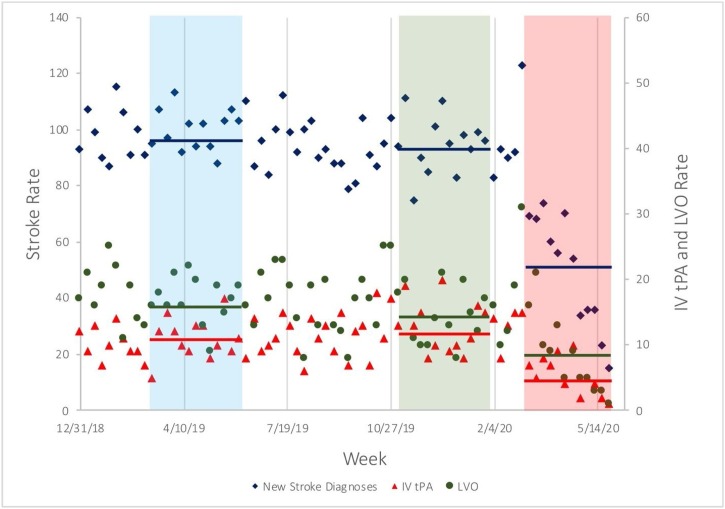
Results: Of the 7969 patients diagnosed with acute ischemic stroke during the study period, 933 (12 %) presented in the COVID-19 period while 1319 (17 %) presented in the seasonal pre-COVID-19 period. Significant decline was observed in the mean weekly volumes of newly diagnosed ischemic strokes (98 ± 3 vs 50 ± 20,p = 0.003), LVOs (16.5 ± 3.8 vs 8.3 ± 5.9,p = 0.008), and IV-tPA (10.9 ± 3.4 vs 5.3 ± 2.9,p = 0.0047), whereas the mean weekly proportion of LVOs (18 % ±5 vs 16 % ±7,p = 0.24) and IV-tPA (10.4 % ±4.5 vs. 9.9 % ±2.4,p = 0.66) remained the same, when compared to the seasonal pre-COVID-19 period. Additionally, an increased proportion of patients presented with a severe disease (NIHSS > 14) during the COVID-19 period (29.7 % vs 24.5 %,p < 0.025). The odds of being discharged to home were 26 % greater in the COVID-19 period when compared to seasonal pre-COVID-19 period (OR:1.26, 95 % CI:1.07-1.49,p = 0.016).
Conclusions: During COVID-19 period there was a decrease in volume of newly diagnosed ischemic stroke cases and IV-tPA administration. Patients admitted to the hospital had severe neurological clinical presentation and were more likely to discharge home.
Keywords: COVID-19; Coronavirus; Ischemic stroke; Large vessel occlusion; NIHSS.
Copyright © 2020 Elsevier B.V. All rights reserved.
Figures
References
Publication types
MeSH terms
Substances
LinkOut - more resources
Full Text Sources
Other Literature Sources
Medical
