


Emerging Genetic Tools to Investigate Molecular Pathways Related to Heat Stress in Chickens: A Review
- PMID: 33383690
- PMCID: PMC7823582
- DOI: 10.3390/ani11010046
Emerging Genetic Tools to Investigate Molecular Pathways Related to Heat Stress in Chickens: A Review
Abstract
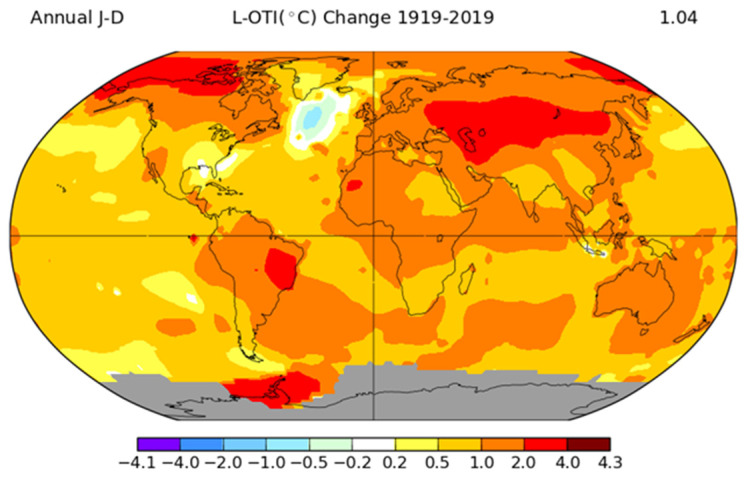
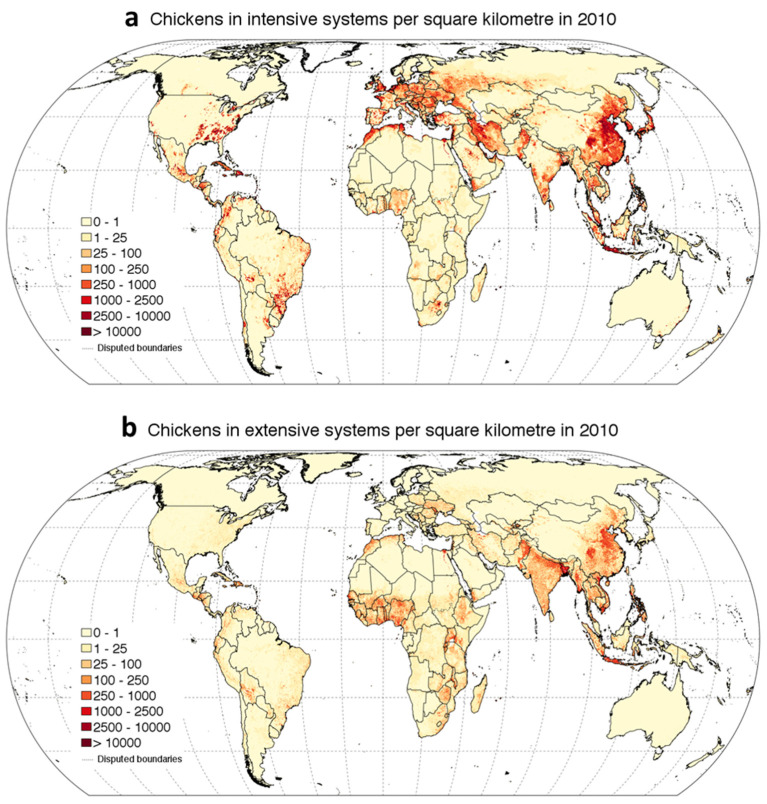
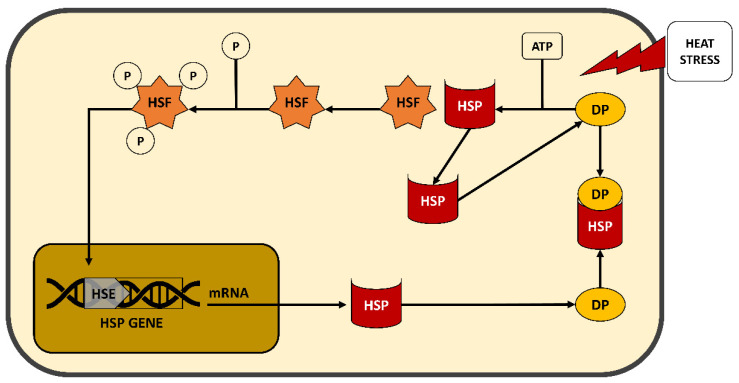
Chicken products are the most consumed animal-sourced foods at a global level across greatly diverse cultures, traditions, and religions. The consumption of chicken meat has increased rapidly in the past few decades and chicken meat is the main animal protein source in developing countries. Heat stress is one of the environmental factors which decreases the productive performance of poultry and meat quality. Heat stress produces the over-expression of heat shock factors and heat shock proteins in chicken tissues. Heat shock proteins regulate several molecular pathways in cells in response to stress conditions, changing the homeostasis of cells and tissues. These changes can affect the physiology of the tissue and hence the production ability of chickens. Indeed, commercial chicken strains can reach a high production level, but their body metabolism, being comparatively accelerated, has poor thermoregulation. In contrast, native backyard chickens are more adapted to the environments in which they live, with a robustness that allows them to survive and reproduce constantly. In the past few years, new molecular tools have been developed, such as RNA-Seq, Single Nucleotide Polymorphisms (SNPs), and bioinformatics approaches such as Genome-Wide Association Study (GWAS). Based on these genetic tools, many studies have detected the main pathways involved in cellular response mechanisms. In this context, it is necessary to clarify all the genetic and molecular mechanisms involved in heat stress response. Hence, this paper aims to review the ability of the new generation of genetic tools to clarify the molecular pathways associated with heat stress in chickens, offering new perspectives for the use of these findings in the animal breeding field.
Keywords: biodiversity; climate change; heat shock protein; poultry.
Conflict of interest statement
The authors declare no conflict of interest.
Figures
References
-
- OECD/FAO . OECD-FAO Agricultural Outlook 2017–2026. OECD Publishing; Paris, France: 2017. - DOI
-
- FAOSTAT. [(accessed on 27 October 2020)]; Available online: http://www.fao.org/faostat/en/#data/QL.
-
- Mottet A., Tempio G. Global poultry production: Current state and future outlook and challenges. World’s Poult. Sci. J. 2017;73:245–256. doi: 10.1017/S0043933917000071. - DOI
Publication types
LinkOut - more resources
Full Text Sources
Miscellaneous
