


Diagnostic accuracy of adrenal imaging for subtype diagnosis in primary aldosteronism: systematic review and meta-analysis
- PMID: 33384386
- PMCID: PMC7780716
- DOI: 10.1136/bmjopen-2020-038489
Diagnostic accuracy of adrenal imaging for subtype diagnosis in primary aldosteronism: systematic review and meta-analysis
Abstract
Objectives: Accurate subtype classification in primary aldosteronism (PA) is critical in assessing the optimal treatment options. This study aimed to evaluate the diagnostic accuracy of adrenal imaging for unilateral PA classification.
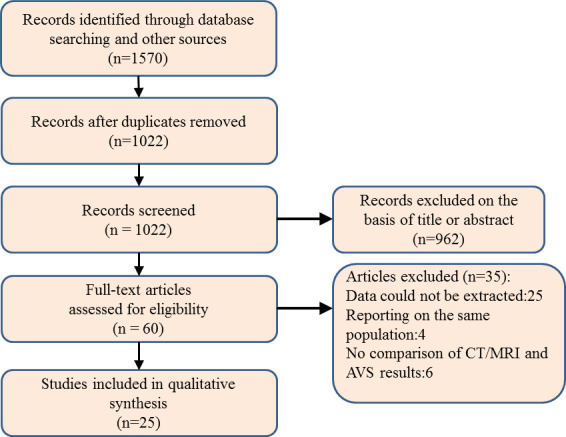
Methods: Systematic searches of PubMed, EMBASE and the Cochrane databases were performed from 1 January 2000 to 1 February 2020, for all studies that used CT or MRI in determining unilateral PA and validated the results against invasive adrenal vein sampling (AVS). Summary diagnostic accuracies were assessed using a bivariate random-effects model. Subgroup analyses, meta-regression and sensitivity analysis were performed to explore the possible sources of heterogeneity.
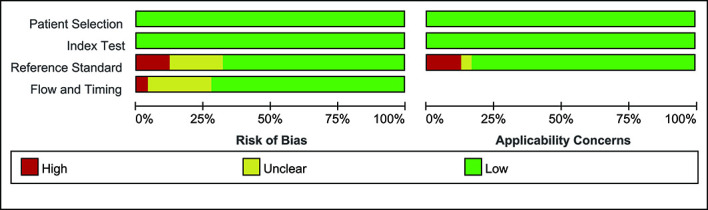
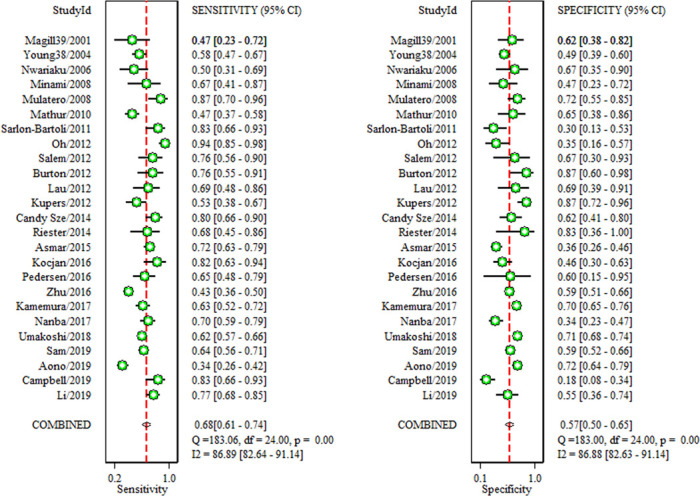
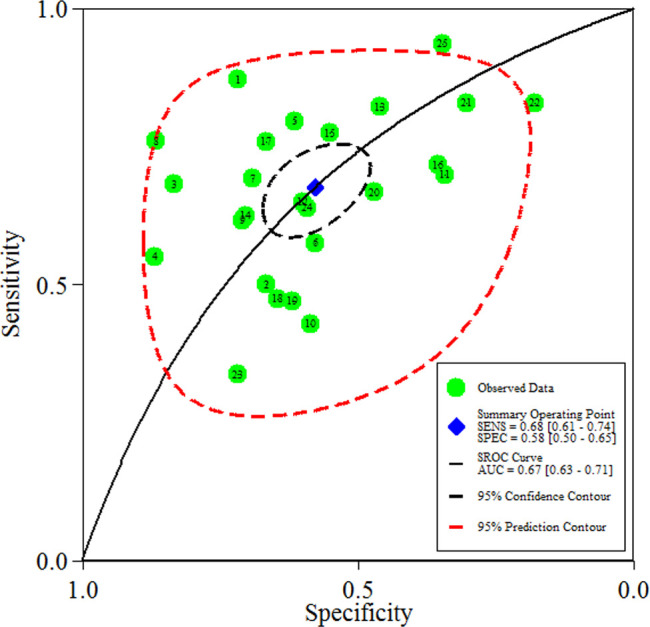
Result: A total of 25 studies, involving a total of 4669 subjects, were identified. The overall analysis revealed a pooled sensitivity of 68% (95% CI: 61% to 74%) and specificity of 57% (95% CI 50% to 65%) for CT/MRI in identifying unilateral PA. Sensitivity was higher in the contrast-enhanced (CT) group versus the traditional CT group (77% (95% CI 66% to 85%) vs 58% (95% CI 50% to 66%). Subgroup analysis stratified by screening test for PA showed that the sensitivity of the aldosterone-to-renin ratio (ARR) group was higher than that of the non-ARR group (78% (95% CI 69% to 84%) vs 66% (95% CI 58% to 72%)). The diagnostic accuracy of PA patients aged ≤40 years was reported in four studies, and the overall sensitivity was 71%, with 79% specificity. Meta-regression revealed a significant impact of sample size on sensitivity and of age and study quality on specificity.
Conclusion: CT/MRI is not a reliable alternative to invasive AVS without excellent sensitivity or specificity for correctly identifying unilateral PA. Even in young patients (≤40 years), 21% of patients would have undergone unnecessary adrenalectomy based on imaging results alone.
Keywords: cardiology; endocrine tumours; hypertension.
© Author(s) (or their employer(s)) 2020. Re-use permitted under CC BY-NC. No commercial re-use. See rights and permissions. Published by BMJ.
Conflict of interest statement
Competing interests: None declared.
Figures
References
Publication types
MeSH terms
Associated data
LinkOut - more resources
Full Text Sources
Medical
