


Vanadium-dependent activation of glucose transport in adipocytes by catecholamines is not mediated via adrenoceptor stimulation or monoamine oxidase activity
- PMID: 33384769
- PMCID: PMC7754167
- DOI: 10.4239/wjd.v11.i12.622
Vanadium-dependent activation of glucose transport in adipocytes by catecholamines is not mediated via adrenoceptor stimulation or monoamine oxidase activity
Abstract
Background: Benzylamine and methylamine activate glucose uptake in adipocytes. For tyramine, this effect has even been extended to cardiomyocytes.
Aim: To investigate the effects of catecholamines and other amines on glucose uptake.
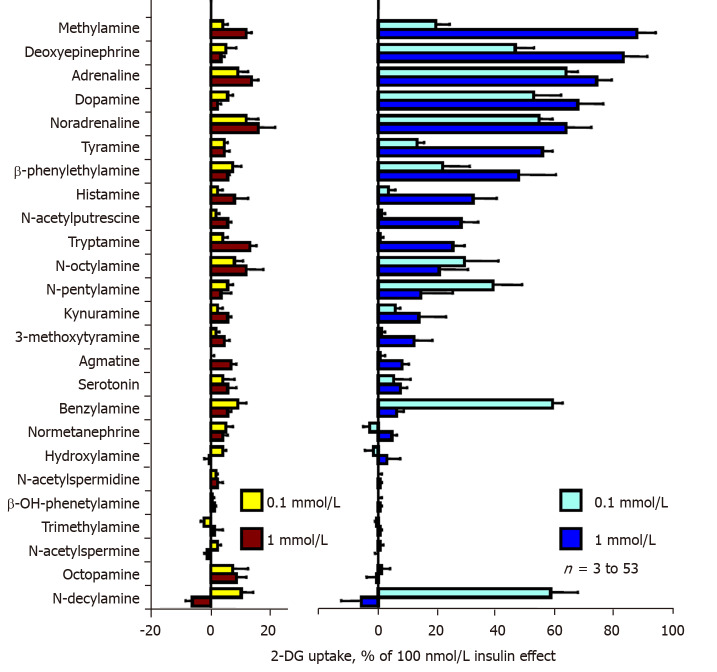
Methods: A screening compared 25 biogenic amines on 2-deoxyglucose (2-DG) uptake activation in rat adipocytes. Pharmacological approaches and transgenic mouse models were then used to decipher the mode of action of several hits.
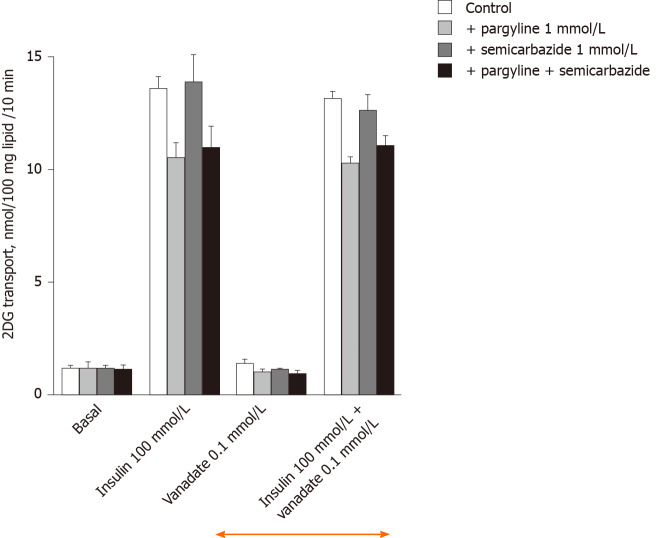
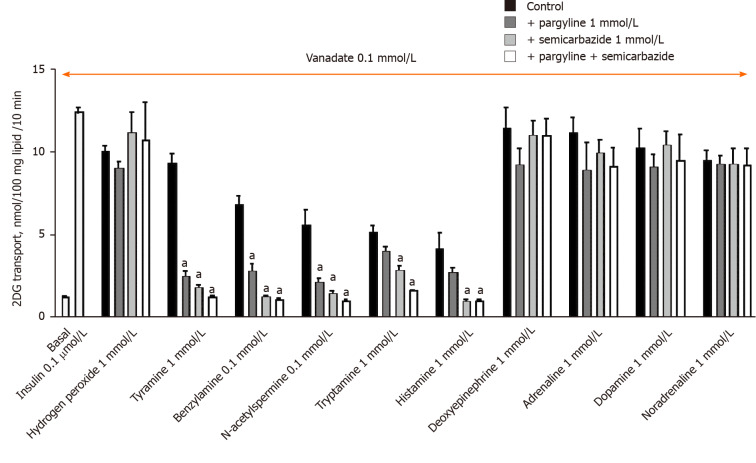
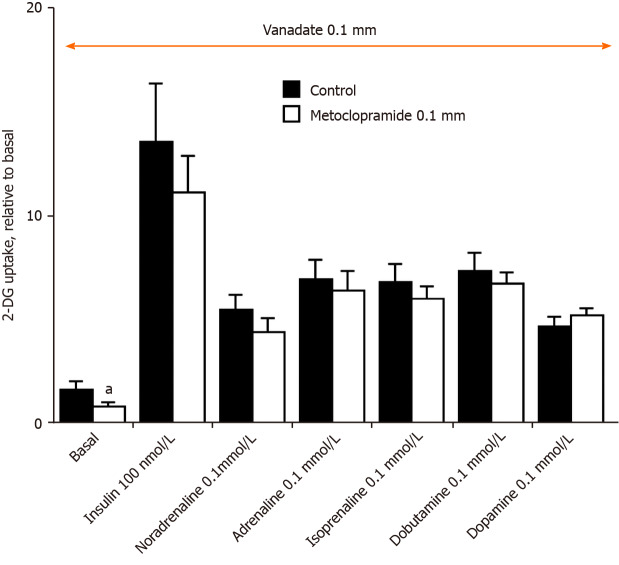
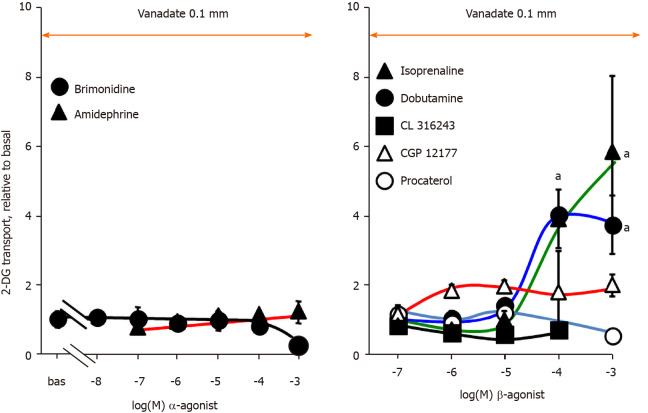
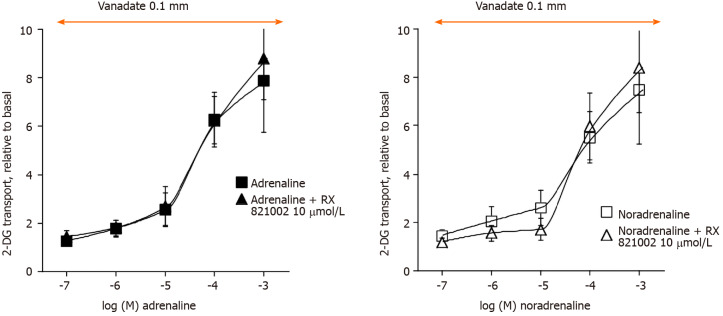
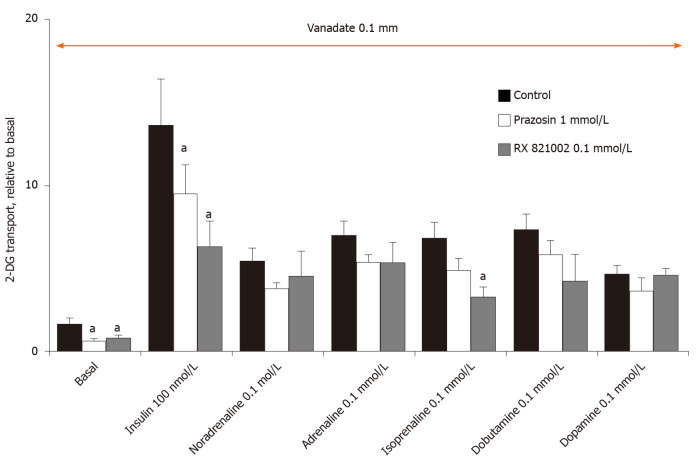
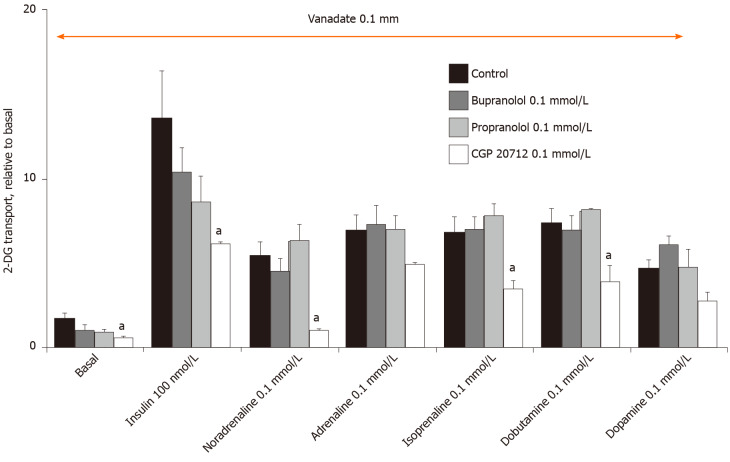
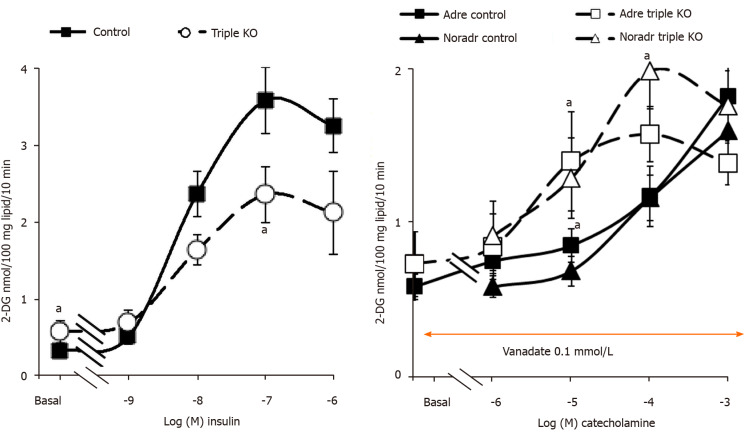
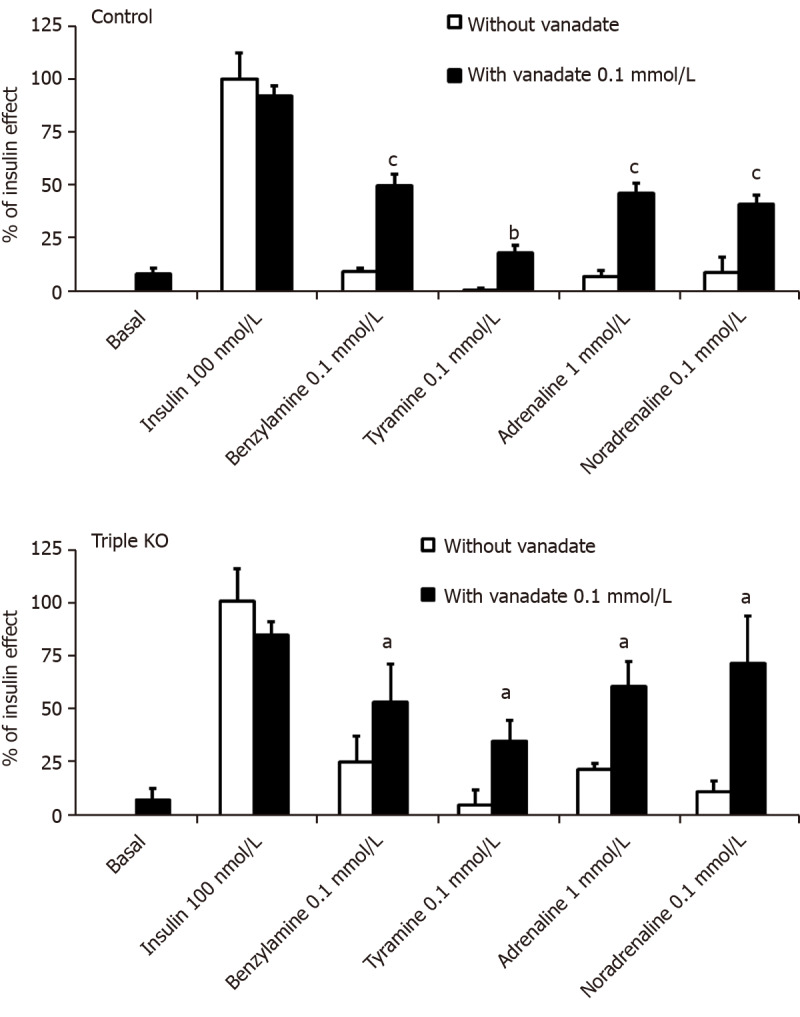
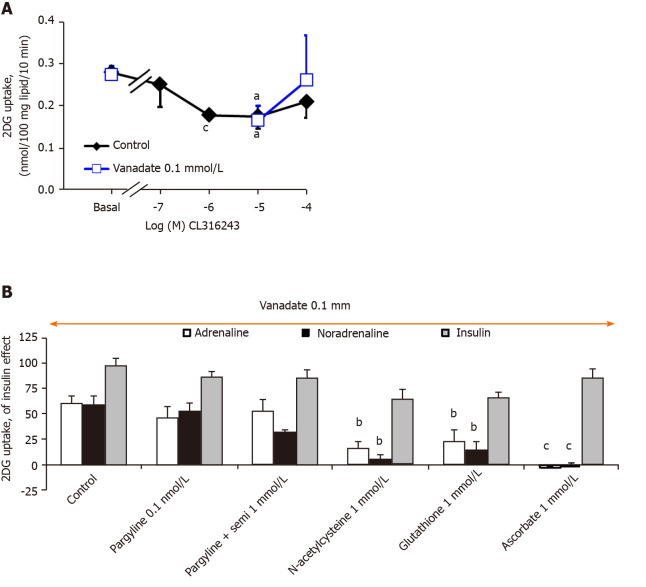
Results: In rat adipocytes, insulin stimulation of 2-DG uptake was reproduced with catecholamines. 100 µmol/L or 1 mmol/L adrenaline, noradrenaline, dopamine and deoxyepinephrine, maximally activated hexose transport only when sodium orthovanadate was added at 100 µmol/L. Such activation was similar to that already reported for benzylamine, methylamine and tyramine, well-recognized substrates of semicarbazide-sensitive amine oxidase (SSAO) and monoamine oxidase (MAO). Several, but not all, tested agonists of β-adrenoreceptors (β-ARs) also activated glucose transport while α-AR agonists were inactive. Lack of blockade by α- and β-AR antagonists indicated that catecholamine-induced 2-DG uptake was not mediated by AR stimulation. Adipocytes from mice lacking β1-, β2- and β3-ARs (triple KO) also responded to millimolar doses of adrenaline or noradrenaline by activating hexose transport in the presence of 100 µmol/L vanadate. The MAO blocker pargyline, and SSAO inhibitors did not block the effects of adrenaline or noradrenaline plus vanadate, which were blunted by antioxidants.
Conclusion: Catecholamines exert unexpected insulin-like actions in adipocytes when combined with vanadium. For limiting insulin resistance by activating glucose consumption at least in fat stores, we propose that catecholamine derivatives combined with vanadium can generate novel complexes that may have low toxicity and promising anti-diabetic properties.
Keywords: Adipocyte; Amine oxidases; Diabetes; Insulin; Obesity; Vanadium.
©The Author(s) 2020. Published by Baishideng Publishing Group Inc. All rights reserved.
Conflict of interest statement
Conflict-of-interest statement: The authors declare no competing financial interests.
Figures
References
-
- Czech MP. Differential effects of sulfhydryl reagents on activation and deactivation of the fat cell hexose transport system. J Biol Chem. 1976;251:1164–1170. - PubMed
-
- Lönnroth P, Eriksson JW, Posner BI, Smith U. Peroxovanadate but not vanadate exerts insulin-like effects in human adipocytes. Diabetologia. 1993;36:113–116. - PubMed
-
- Enrique-Tarancón G, Marti L, Morin N, Lizcano JM, Unzeta M, Sevilla L, Camps M, Palacín M, Testar X, Carpéné C, Zorzano A. Role of semicarbazide-sensitive amine oxidase on glucose transport and GLUT4 recruitment to the cell surface in adipose cells. J Biol Chem. 1998;273:8025–8032. - PubMed
-
- Enrique-Tarancón G, Castan I, Morin N, Marti L, Abella A, Camps M, Casamitjana R, Palacín M, Testar X, Degerman E, Carpéné C, Zorzano A. Substrates of semicarbazide-sensitive amine oxidase co-operate with vanadate to stimulate tyrosine phosphorylation of insulin-receptor-substrate proteins, phosphoinositide 3-kinase activity and GLUT4 translocation in adipose cells. Biochem J. 2000;350 Pt 1:171–180. - PMC - PubMed
LinkOut - more resources
Full Text Sources
Research Materials
