Review
. 2020 Dec 17;2(6):e200281.
doi: 10.1148/ryct.2020200281. eCollection 2020 Dec.

Coronary Artery Calcium Scoring: New Insights into Clinical Interpretation-Lessons from the CAC Consortium

Affiliations
Review

Coronary Artery Calcium Scoring: New Insights into Clinical Interpretation-Lessons from the CAC Consortium

Siegfried Adelhoefer et al. Radiol Cardiothorac Imaging. .

Abstract

Coronary artery calcium (CAC) is a highly specific marker for coronary atherosclerosis. The CAC Consortium, a multicenter, retrospective, real-world cohort study, was established to investigate the association between CAC and long-term, cause-specific mortality. This review summarizes findings from CAC Consortium studies published between 2016 and 2020, aiming to demystify CAC as a clinical decision-guiding tool and push the limits of who might benefit from CAC in clinical practice. CAC has been shown to effectively stratify cardiovascular risk across ethnicities irrespective of age, sex, and risk factor burden. In comparison to other widely used risk scores, CAC appears to be most consistent in its ability to add to cardiovascular disease (CVD) event prediction. Beyond risk stratification, CAC has been shown to identify high-risk patient subgroups. While currently recommended only for patients at borderline or intermediate risk by the American College of Cardiology/American Heart Association (10-year atherosclerotic CVD event risk, 5% to < 20%), CAC scoring may also provide value in select young patients aged 30-49 years and in low-risk patients with a family history. While new studies emphasize that patients with a CAC greater than or equal to 1000 be considered a distinct patient group, a CAC of 0 has additionally emerged to be a reliable negative risk factor, identifying patients at low risk of both CVD and non-CVD mortality. © RSNA, 2020.


Conflict of interest statement

Disclosures of Conflicts of Interest: S.A. disclosed no relevant relationships. S.M.I.U. disclosed no relevant relationships. A.D.O. disclosed no relevant relationships. O.H.O. disclosed no relevant relationships. M.J.B. Activities related to the present article: disclosed money paid to author’s institution from National Institutes of Health (NIH)/National Heart, Lung, and Blood Institute (NHLBI). Activities not related to the present article: disclosed money paid to author from Amgen, Sanofi, Regeneron, Novartis, Novo Nordisk, Bayer, Gilead, Zogenix, and Tricida for consultancy, advisory board, and mock AdCom preparation; disclosed grants/grants pending to author’s institution from NIH/NHLBI, Food and Drug Administration, American Heart Association, Aetna Foundation, and Amgen Foundation. Other relationships: disclosed no relevant relationships. O.D. disclosed no relevant relationships.

Figures
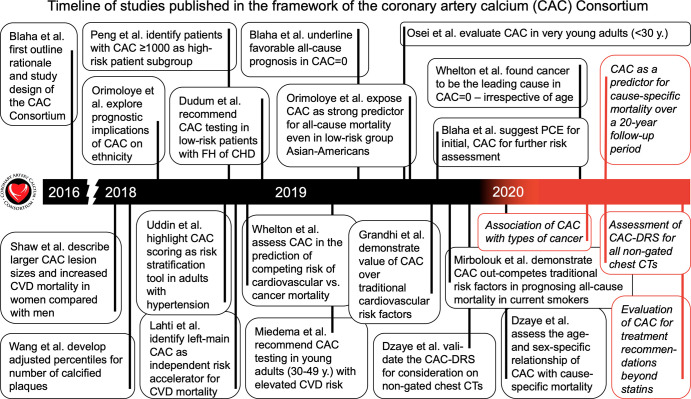
Timeline of studies published in the framework of the CAC Consortium (in black) and future directions in the field of CAC scoring (in red). CAC = coronary artery calcium, CAC-DRS = Coronary Artery Calcium Data and Reporting System, CHD = coronary heart disease, CVD = cardiovascular disease, FH = family history, PCE = Pooled Cohort Equation.
Figure 1:
Timeline of studies published in the framework of the CAC Consortium (in black) and future directions in the field of CAC scoring (in red). CAC = coronary artery calcium, CAC-DRS = Coronary Artery Calcium Data and Reporting System, CHD = coronary heart disease, CVD = cardiovascular disease, FH = family history, PCE = Pooled Cohort Equation.
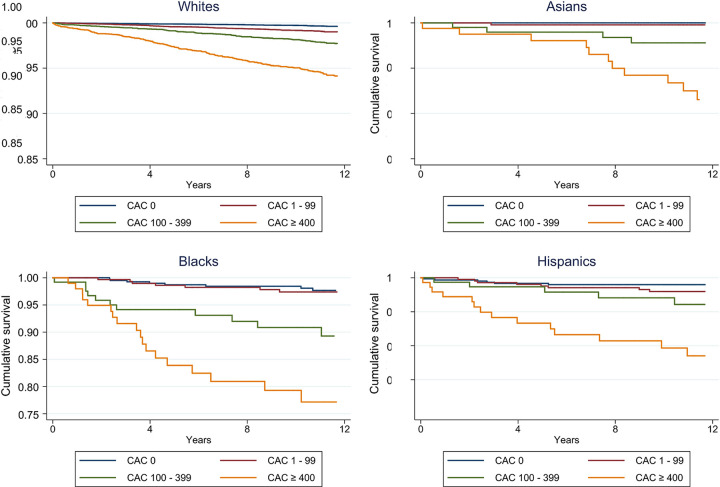
Race/ethnicity-specific Kaplan-Meier curves for cardiovascular disease mortality by CAC group. CAC = coronary artery calcium. (Reprinted, with permission, from reference 7.)
Figure 2:
Race/ethnicity-specific Kaplan-Meier curves for cardiovascular disease mortality by CAC group. CAC = coronary artery calcium. (Reprinted, with permission, from reference .)
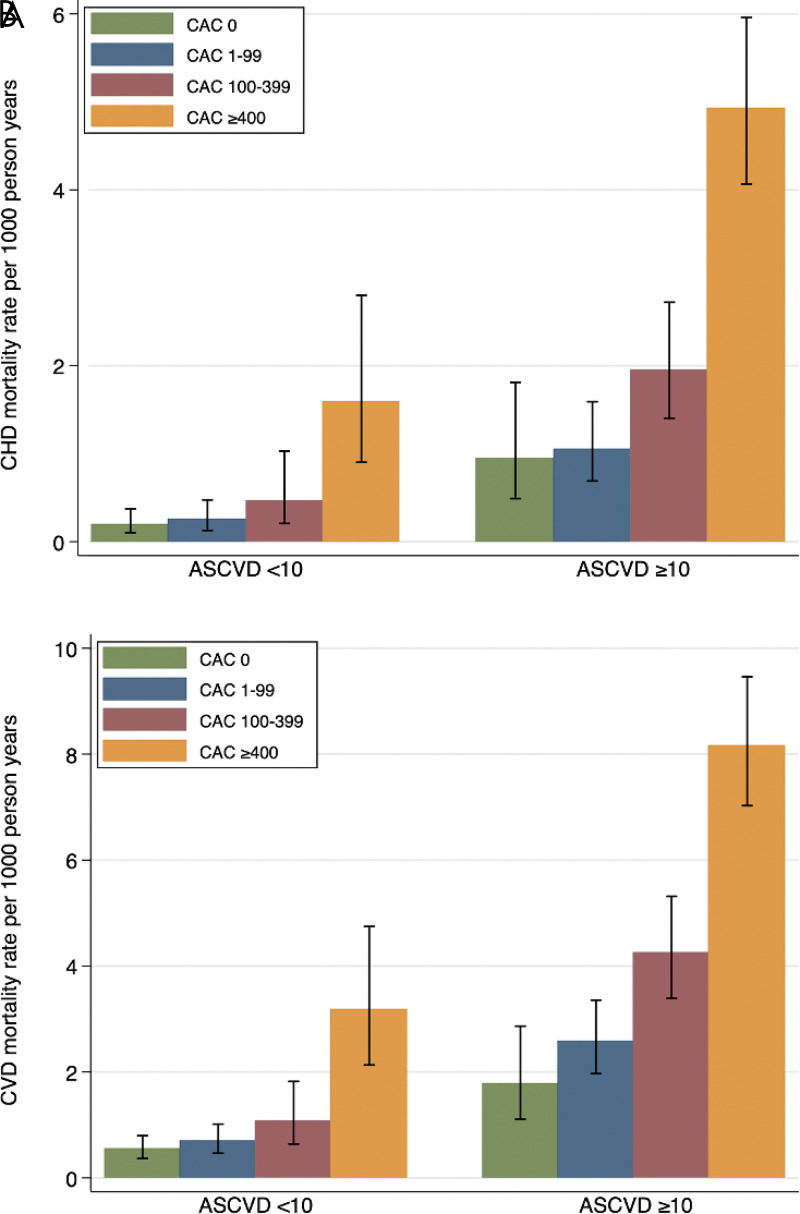
Mortality rates (per 1000 person-years) for CHD and CVD among patients with hypertension by CAC group. ASCVD = atherosclerotic cardiovascular disease, CAC = coronary artery calcium, CHD = coronary heart disease, CVD = cardiovascular disease. (Reprinted, with permission, from reference 11.)
Figure 3:
Mortality rates (per 1000 person-years) for CHD and CVD among patients with hypertension by CAC group. ASCVD = atherosclerotic cardiovascular disease, CAC = coronary artery calcium, CHD = coronary heart disease, CVD = cardiovascular disease. (Reprinted, with permission, from reference .)
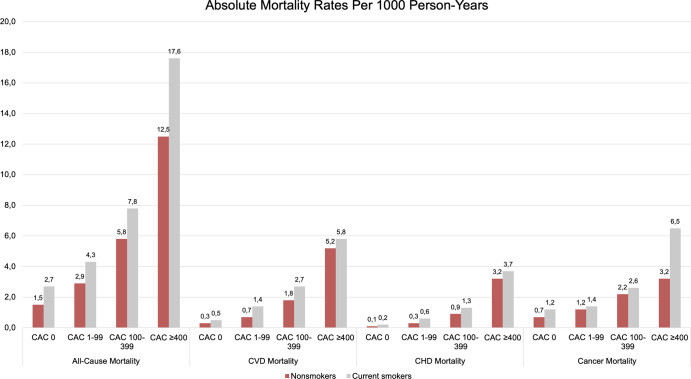
Cause-specific mortality rates (per 1000 person-years) within CAC groups and by smoking status. CAC = coronary artery calcium, CHD = coronary heart disease, CVD = cardiovascular disease. (Adapted, with permission, from reference 12.)
Figure 4:
Cause-specific mortality rates (per 1000 person-years) within CAC groups and by smoking status. CAC = coronary artery calcium, CHD = coronary heart disease, CVD = cardiovascular disease. (Adapted, with permission, from reference .)
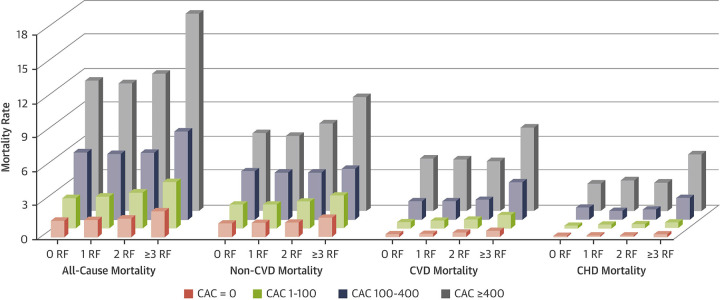
All-cause and cause-specific mortality rate (per 1000 person-years) by baseline CAC and risk factor burden. CAC = coronary artery calcium, CHD = coronary heart disease, CVD = cardiovascular disease, RF = risk factor. (Reprinted, with permission, from reference 16.)
Figure 5:
All-cause and cause-specific mortality rate (per 1000 person-years) by baseline CAC and risk factor burden. CAC = coronary artery calcium, CHD = coronary heart disease, CVD = cardiovascular disease, RF = risk factor. (Reprinted, with permission, from reference .)
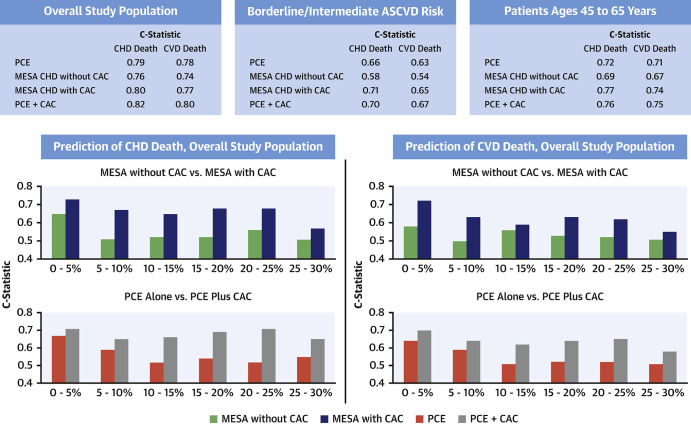
Discriminative ability for the prediction of CVD events by 5% ASCVD risk strata groups. ASCVD = atherosclerotic CVD, CAC = coronary artery calcium, CHD = coronary heart disease, CVD = cardiovascular disease, MESA = Multi-Ethnic Study of Atherosclerosis, PCE = Pooled Cohort Equation. (Reprinted, with permission, from reference 17.)
Figure 6:
Discriminative ability for the prediction of CVD events by 5% ASCVD risk strata groups. ASCVD = atherosclerotic CVD, CAC = coronary artery calcium, CHD = coronary heart disease, CVD = cardiovascular disease, MESA = Multi-Ethnic Study of Atherosclerosis, PCE = Pooled Cohort Equation. (Reprinted, with permission, from reference .)
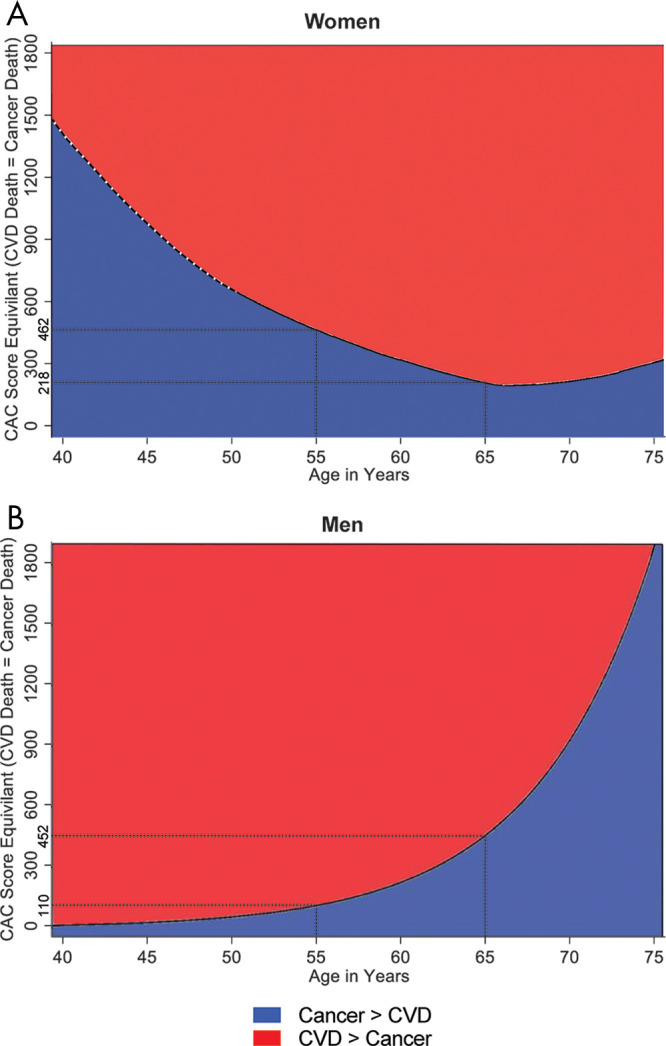
CAC score at which the rate of CVD and cancer mortality are equal for A, women and, B, men. Note U-shaped versus exponential relationship for CVD versus cancer mortality in women and men, respectively. CAC = coronary artery calcium, CVD = cardiovascular disease. (Reprinted, with permission, from reference 38.)
Figure 7:
CAC score at which the rate of CVD and cancer mortality are equal for A, women and, B, men. Note U-shaped versus exponential relationship for CVD versus cancer mortality in women and men, respectively. CAC = coronary artery calcium, CVD = cardiovascular disease. (Reprinted, with permission, from reference .)
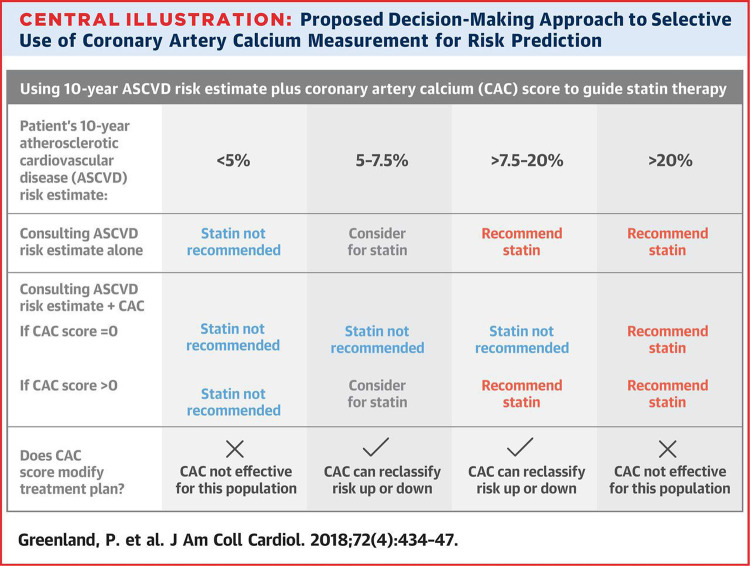
Guideline-based decision-making approach in primary prevention of CVD. Note CAC of 0 can reclassify risk in patients at borderline or intermediate CVD risk. (Reprinted, with permission, from reference 40.)
Figure 8:
Guideline-based decision-making approach in primary prevention of CVD. Note CAC of 0 can reclassify risk in patients at borderline or intermediate CVD risk. (Reprinted, with permission, from reference .)
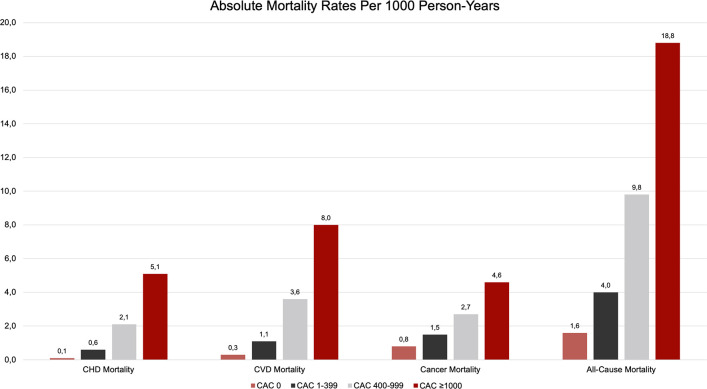
Cause-specific mortality rate (per 1000 person-years) by CAC group. CAC = coronary artery calcium, CHD = coronary heart disease, CVD = cardiovascular disease. (Adapted, with permission, from reference 14.)
Figure 9:
Cause-specific mortality rate (per 1000 person-years) by CAC group. CAC = coronary artery calcium, CHD = coronary heart disease, CVD = cardiovascular disease. (Adapted, with permission, from reference .)
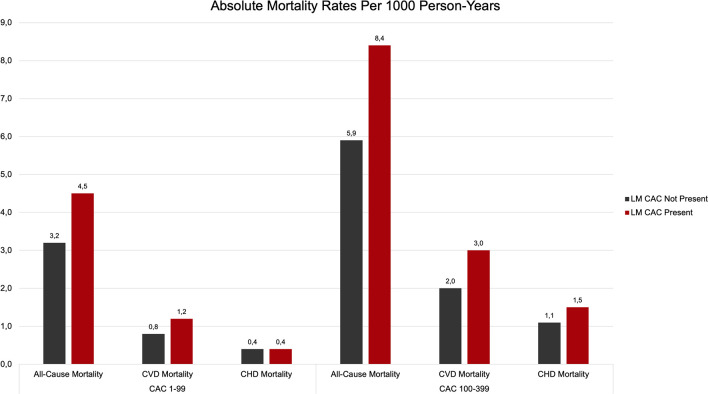
CHD, CVD, and all-cause mortality rates (per 1000 person-years) by presence or absence of left main CAC (LM CAC). CAC = coronary artery calcium, CHD = coronary heart disease, CVD = cardiovascular disease. (Adapted, with permission, from reference 13.)
Figure 10:
CHD, CVD, and all-cause mortality rates (per 1000 person-years) by presence or absence of left main CAC (LM CAC). CAC = coronary artery calcium, CHD = coronary heart disease, CVD = cardiovascular disease. (Adapted, with permission, from reference .)
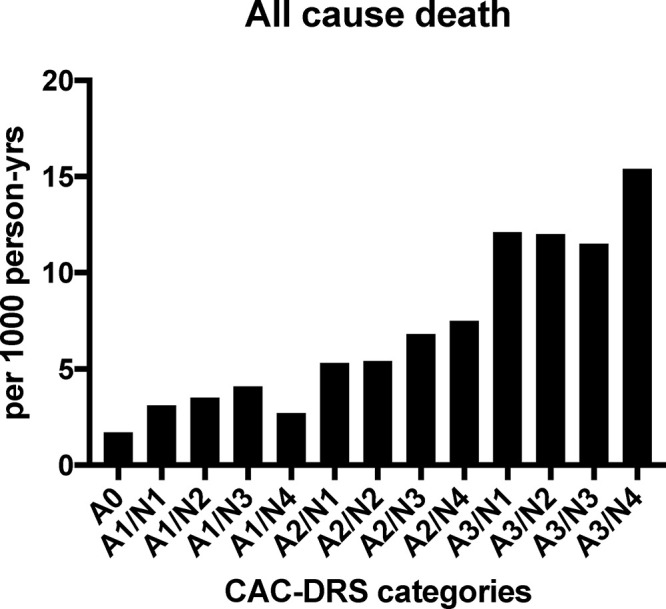
Cumulative all-cause mortality rate (per 1000 person-years) by CAC-DRS categories. CAC-DRS = Coronary Artery Calcium Data and Reporting System, Ax = Agatston score, Ny = number of vessels affected by CAC, yrs = years. (Reprinted, with permission, from reference 19.)
Figure 11:
Cumulative all-cause mortality rate (per 1000 person-years) by CAC-DRS categories. CAC-DRS = Coronary Artery Calcium Data and Reporting System, Ax = Agatston score, Ny = number of vessels affected by CAC, yrs = years. (Reprinted, with permission, from reference .)
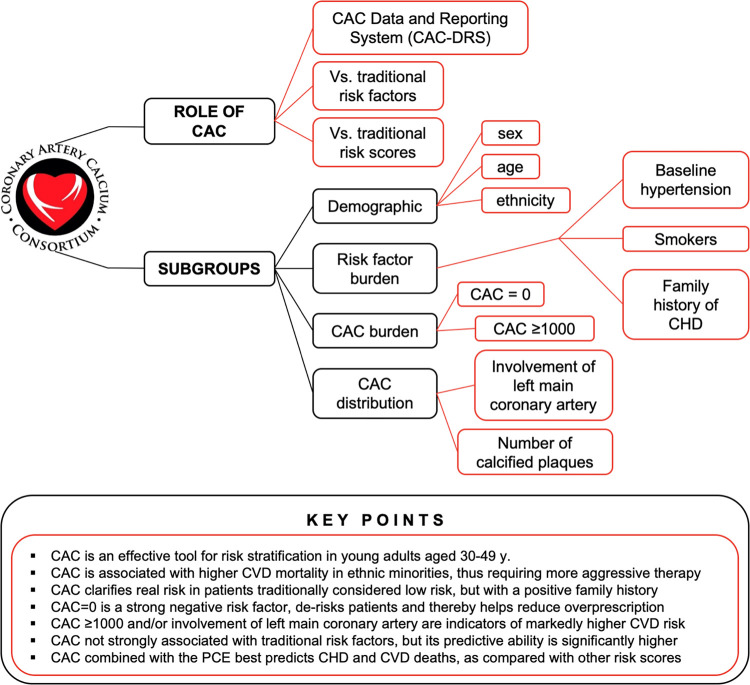
Insights gained and lessons learned from the CAC Consortium by role of CAC and subgroups evaluated. Across a wide spectrum of clinically relevant subgroups, CAC was confirmed as the most sensitive marker for subclinical atherosclerosis and can thus guide the decision-making process toward early intervention and reduction of long-term CHD, CVD, and all-cause mortality. CAC = coronary artery calcium, CHD = coronary heart disease, CVD = cardiovascular disease, PCE = Pooled Cohort Equation, y = years.
Figure 12:
Insights gained and lessons learned from the CAC Consortium by role of CAC and subgroups evaluated. Across a wide spectrum of clinically relevant subgroups, CAC was confirmed as the most sensitive marker for subclinical atherosclerosis and can thus guide the decision-making process toward early intervention and reduction of long-term CHD, CVD, and all-cause mortality. CAC = coronary artery calcium, CHD = coronary heart disease, CVD = cardiovascular disease, PCE = Pooled Cohort Equation, y = years.

References

    1. Agatston AS, Janowitz WR, Hildner FJ, Zusmer NR, Viamonte M Jr, Detrano R. Quantification of coronary artery calcium using ultrafast computed tomography. J Am Coll Cardiol 1990;15(4):827–832. - PubMed
    1. Bild DE, Bluemke DA, Burke GL, et al. Multi-Ethnic Study of Atherosclerosis: objectives and design. Am J Epidemiol 2002;156(9):871–881. - PubMed
    1. Schmermund A, Möhlenkamp S, Stang A, et al. Assessment of clinically silent atherosclerotic disease and established and novel risk factors for predicting myocardial infarction and cardiac death in healthy middle-aged subjects: rationale and design of the Heinz Nixdorf RECALL Study. Risk Factors, Evaluation of Coronary Calcium and Lifestyle. Am Heart J 2002;144(2):212–218. - PubMed
    1. Blaha MJ, Whelton SP, Al Rifai M, et al. Rationale and design of the coronary artery calcium consortium: A multicenter cohort study. J Cardiovasc Comput Tomogr 2017;11(1):54–61. - PMC - PubMed
    1. Miedema MD, Dardari ZA, Nasir K, et al. Association of Coronary Artery Calcium With Long-term, Cause-Specific Mortality Among Young Adults. JAMA Netw Open 2019;2(7):e197440. - PMC - PubMed

LinkOut - more resources