


Bidirectional association between COVID-19 and the environment: A systematic review
- PMID: 33385384
- PMCID: PMC7833965
- DOI: 10.1016/j.envres.2020.110692
Bidirectional association between COVID-19 and the environment: A systematic review
Abstract
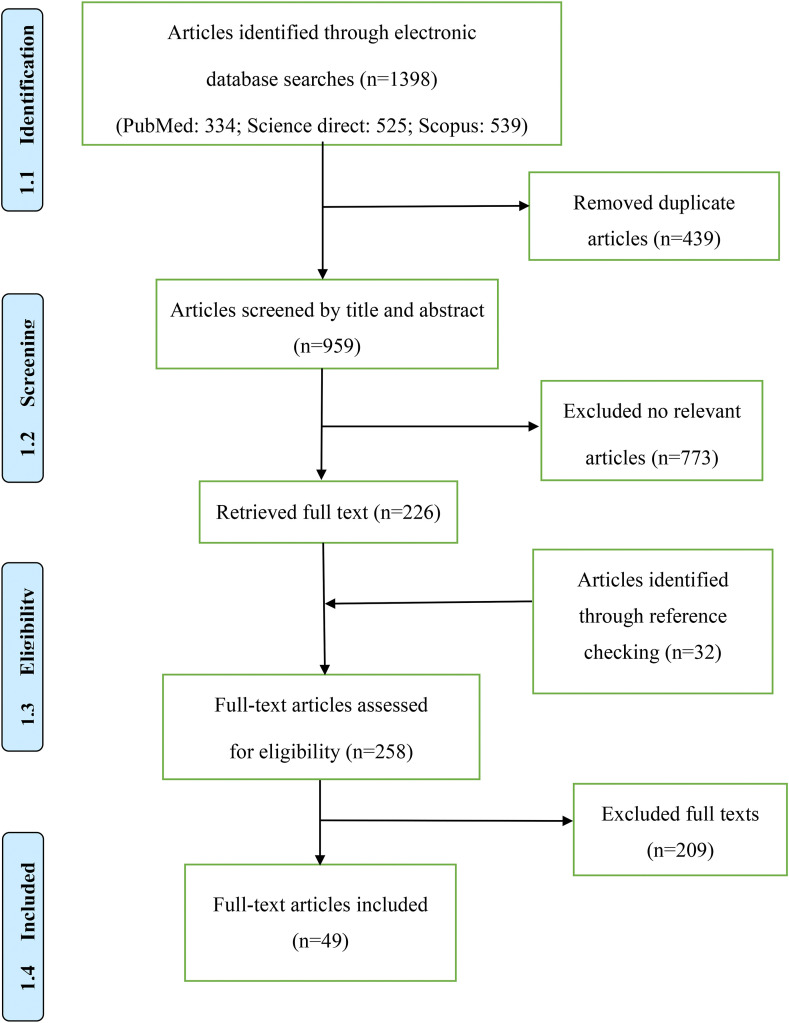
The global crisis caused by SARS-CoV-2 (COVID-19) affected economics, social affairs, and the environment, not to mention public health. It is estimated that near 82% of the SARS-CoV-2 genome is similar to the severe acute respiratory syndrome. The purpose of the review is to highlight how the virus is impacted by the environment and how the virus has impacted the environment. This review was based on an electronic search of the literature in the Scopus, Science Direct, and PubMed database published from December 2019 to July 2020 using combinations of the following keywords: SARS-CoV-2 transmission, COVID-19 transmission, coronavirus transmission, waterborne, wastewater, airborne, solid waste, fomites, and fecal-oral transmission. Studies suggest the thermal properties of ambient air, as well as relative humidity, may affect the transmissibility and viability of the virus. Samples taken from the wastewater collection network were detected contaminated with the novel coronavirus; consequently, there is a concern of its transmission via an urban sewer system. There are concerns about the efficacy of the wastewater treatment plant disinfection process as the last chance to inactivate the virus. Handling solid waste also requires an utmost caution as it may contain infectious masks, etc. Following the PRISMA approach, among all reviewed studies, more than 36% of them were directly or indirectly related to the indoor and outdoor environment, 16% to meteorological factors, 11% to wastewater, 14% to fomites, 8% to water, 9% to solid waste, and 6% to the secondary environment. The still growing body of literature on COVID-19 and air, suggests the importance of SARS-CoV-2 transmission via air and indoor air quality, especially during lockdown interventions. Environmental conditions are found to be a factor in transmitting the virus beyond geographical borders. Accordingly, countries need to pay extra attention to sustainable development themes and goals.
Keywords: Air pollution; Air quality; Air transmission; COVID-19; Fomites; SARS-CoV-2; Solid waste; Wastewater; Water.
Copyright © 2020 Elsevier Inc. All rights reserved.
Conflict of interest statement
The authors declare that they have no known competing financial interests or personal relationships that could have appeared to influence the work reported in this paper.
Figures
References
-
- Aali R., Baragh S., Asgari E., Fard R.F., Izanloo H., Hosseinpoor S., Olia J.B.H., Naseri R., Rabori M.M. Tracking of chloramphenicol, erythromycin, and sulfamethoxazole antibiotic-resistant bacteria from untreated wastewater effluents to receiving river. Environmental Health Engineering and Management Journal. 2019;6(2):89–96.
-
- Aali R., Nikaeen M., Khanahmad H., Hejazi Z., Kazemi M., Hassanzadeh A. Occurrence of tetracycline resistant bacteria and resistance gene (fetW) in hospital and municipal wastewaters. Fresenius Environ. Bull. 2014;23:2560–2566.
-
- Afshari R. Indoor air quality and severity of COVID-19: where communicable and non-communicable preventive measures meet. Asia Pacific Journal of Medical Toxicology. 2020;9:1–2.
-
- Ahmed W., Angel N., Edson J., Bibby K., Bivins A., O'brien J.W., Choi P.M., Kitajima M., Simpson S.L., Li J. Science of The Total Environment; 2020. First confirmed detection of SARS-CoV-2 in untreated wastewater in Australia: a proof of concept for the wastewater surveillance of COVID-19 in the community; p. 138764. - PMC - PubMed
Publication types
MeSH terms
LinkOut - more resources
Full Text Sources
Other Literature Sources
Medical
Miscellaneous
