


Role of inflammatory microenvironment: potential implications for improved breast cancer nano-targeted therapy
- PMID: 33386887
- PMCID: PMC11073202
- DOI: 10.1007/s00018-020-03696-4
Role of inflammatory microenvironment: potential implications for improved breast cancer nano-targeted therapy
Abstract
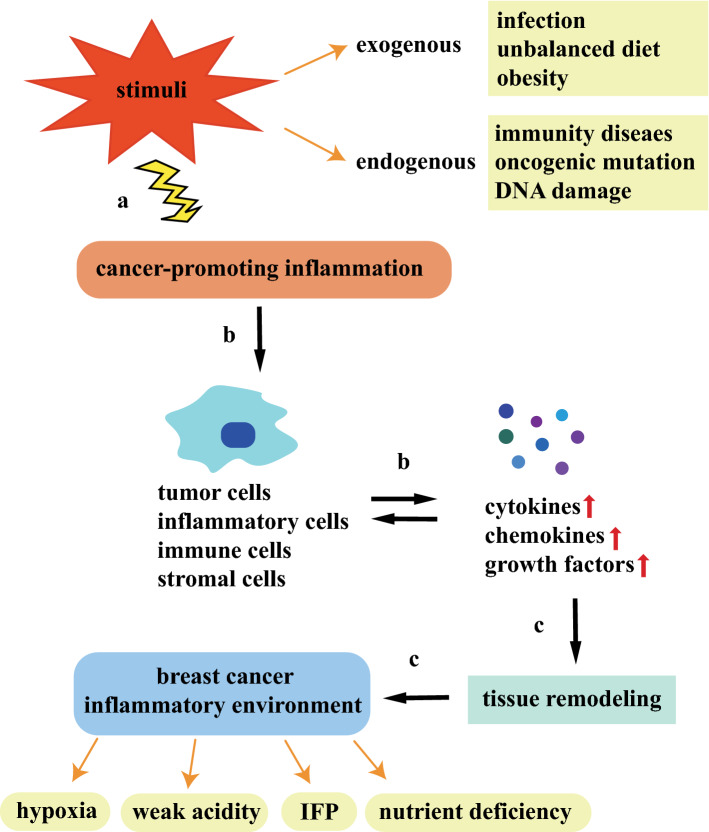
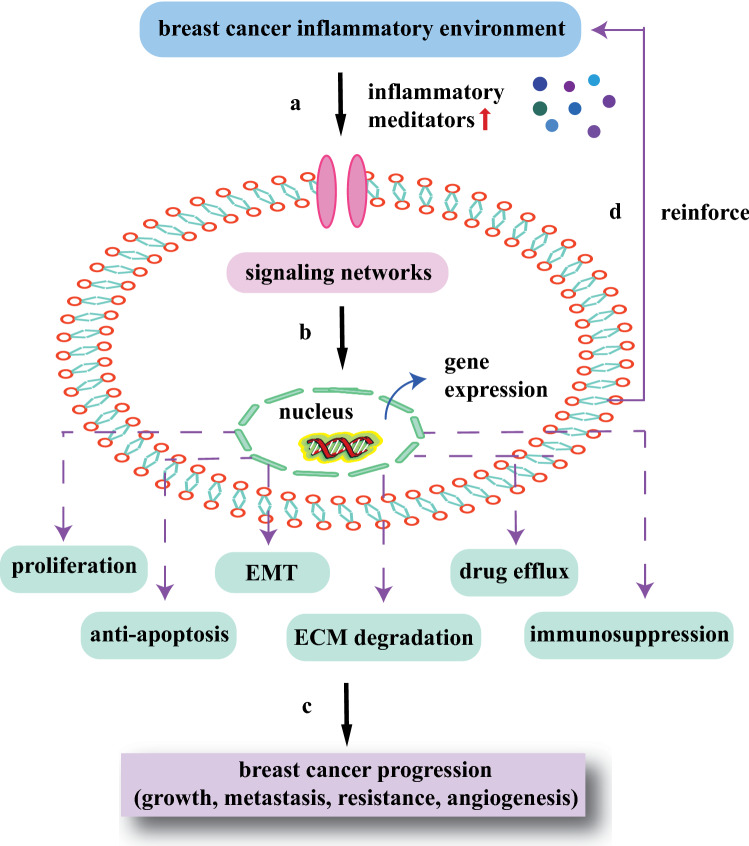
Tumor cells, inflammatory cells and chemical factors work together to mediate complex signaling networks, which forms inflammatory tumor microenvironment (TME). The development of breast cancer is closely related to the functional activities of TME. This review introduces the origins of cancer-related chronic inflammation and the main constituents of inflammatory microenvironment. Inflammatory microenvironment plays an important role in breast cancer growth, metastasis, drug resistance and angiogenesis through multifactorial mechanisms. It is suggested that inflammatory microenvironment contributes to providing possible mechanisms of drug action and modes of drug transport for anti-cancer treatment. Nano-drug delivery system (NDDS) becomes a popular topic for optimizing the design of tumor targeting drugs. It is seen that with the development of therapeutic approaches, NDDS can be used to achieve drug-targeted delivery well across the biological barriers and into cells, resulting in superior bioavailability, drug dose reduction as well as off-target side effect elimination. This paper focuses on the review of modulation mechanisms of inflammatory microenvironment and combination with nano-targeted therapeutic strategies, providing a comprehensive basis for further research on breast cancer prevention and control.
Keywords: Breast cancer; Chemotherapy; Drug targeting; Inflammation; Nanoparticle; Tumor microenvironment.
Conflict of interest statement
The authors have no conflict of interest to declare.
Figures
References
-
- Silva AL, Faria M, Matos P. Inflammatory microenvironment modulation of alternative splicing in cancer: a way to adapt. In: Serpa J, editor. Tumor microenvironment: the main driver of metabolic adaptation. Cham: Springer International Publishing; 2020.
Publication types
MeSH terms
Substances
Grants and funding
- 2019A1515011286/Natural Science Foundation of Guangdong
- 2019 Open Project-05/the Open Project funded by Key laboratory of Carcinogenesis and Translational Research, Ministry of Education/Beijing
- 81973839/the National Natural Science Foundation of China
- 82020108033/the Projects of International Cooperation and Exchanges of National Natural Science Foundation of China
LinkOut - more resources
Full Text Sources
Other Literature Sources
Medical
