


Neurovascular Unit: A critical role in ischemic stroke
- PMID: 33389780
- PMCID: PMC7804897
- DOI: 10.1111/cns.13561
Neurovascular Unit: A critical role in ischemic stroke
Abstract
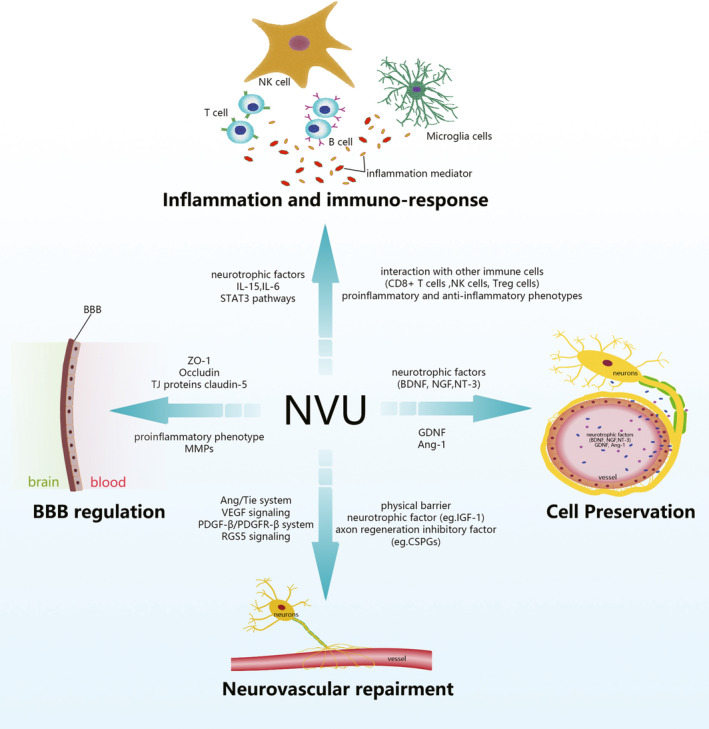
Ischemic stroke (IS), a common cerebrovascular disease, results from a sudden blockage of a blood vessel in the brain, thereby restricting blood supply to the area in question, and making a significantly negative impact on human health. Unfortunately, current treatments, that are mainly based on a recanalization of occluded blood vessels, are insufficient or inaccessible to many stroke patients. Recently, the profound influence of the neurovascular unit (NVU) on recanalization and the prognosis of IS have become better understood; in-depth studies of the NVU have also provided novel approaches for IS treatment. In this article, we review the intimate connections between the changes in the NVU and IS outcomes, and discuss possible new management strategies having practical significance to IS. We discuss the concept of the NVU, as well as its roles in IS blood-brain barrier regulation, cell preservation, inflammatory immune response, and neurovascular repair. Besides, we also summarize the influence of noncoding RNAs in NVU, and IS therapies targeting the NVU. We conclude that both the pathophysiological and neurovascular repair processes of IS are strongly associated with the homeostatic state of the NVU and that further research into therapies directed at the NVU could expand the range of treatments available for IS.
Keywords: Ischemia; MicroRNAs; Neurovascular unit; Stroke; Therapy.
© 2021 The Authors. CNS Neuroscience & Therapeutics Published by John Wiley & Sons Ltd.
Conflict of interest statement
The authors declare no conflict of interest.
Figures
References
-
- Smith M, Reddy U, Robba C, Sharma D, Citerio G. Acute ischaemic stroke: challenges for the intensivist. Intensive Care Med. 2019;45(9):1177‐1189. - PubMed
Publication types
MeSH terms
LinkOut - more resources
Full Text Sources
Other Literature Sources
Medical
