Post-mastectomy radiation therapy in breast reconstruction: a patterns of care study of the Korean Radiation Oncology Group
- PMID: 33389980
- PMCID: PMC7785842
- DOI: 10.3857/roj.2020.00738
Post-mastectomy radiation therapy in breast reconstruction: a patterns of care study of the Korean Radiation Oncology Group
Abstract
Purpose: The details of breast reconstruction and radiation therapy (RT) vary between institutions; therefore, we sought to investigate the practice patterns of radiation oncologists who specialize in breast cancer.
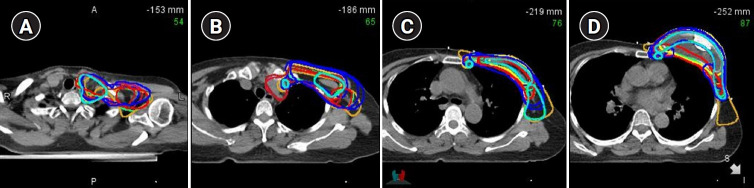
Materials and methods: We identified the practice patterns and inter-hospital variations from a multi-center cohort of women with breast cancer who underwent post-mastectomy RT (PMRT) to the reconstructed breast at 16 institutions between 2015 and 2016. The institutions were requested to contour the target volume and produce RT plans for one representative case with five different clinical scenarios and answer questionnaires which elicited infrastructural information. We assessed the inter-institutional variations in RT in terms of the target, normal organ delineation, and dose-volume histograms.
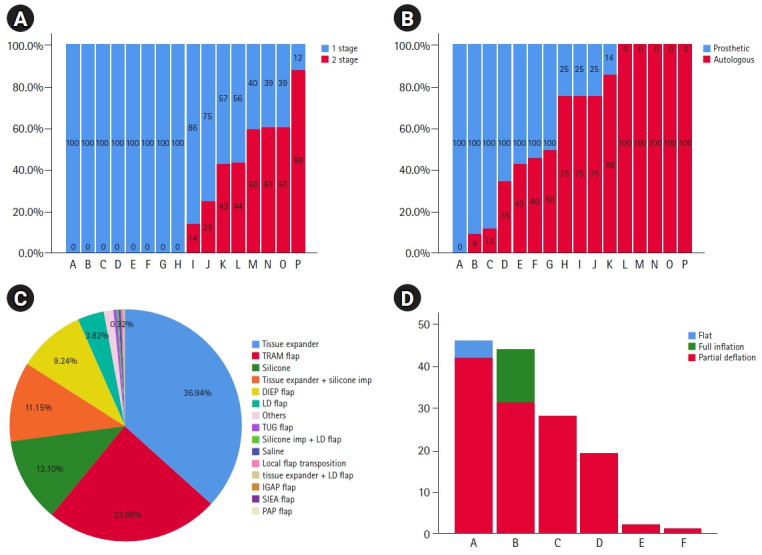
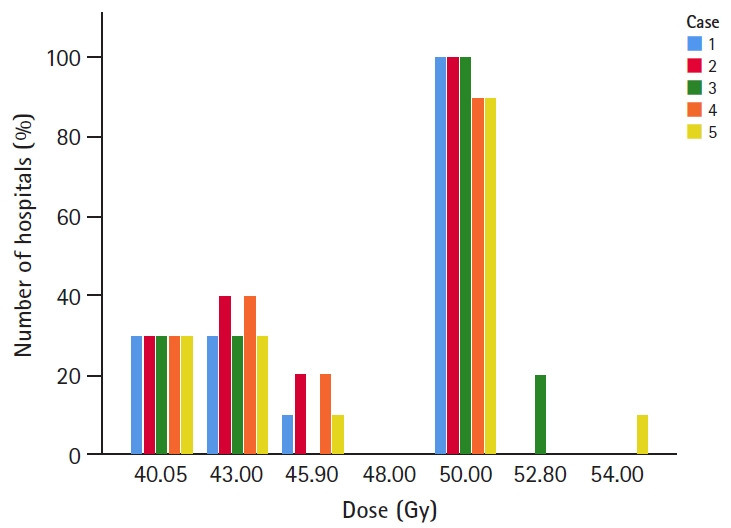
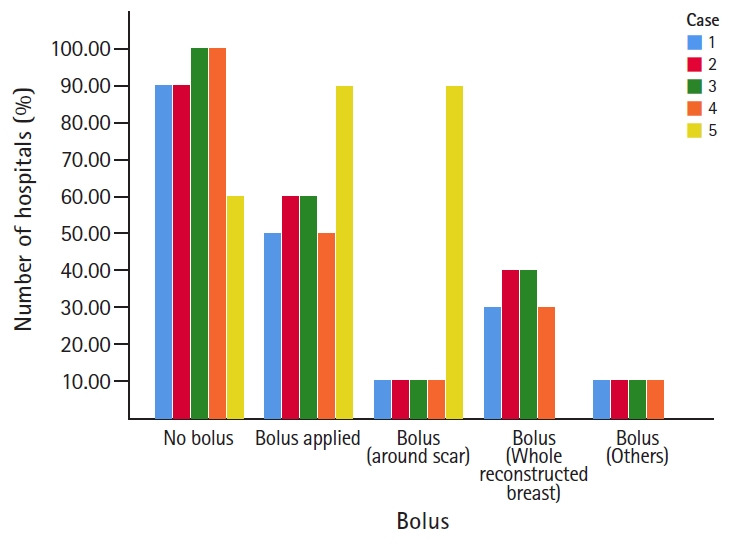
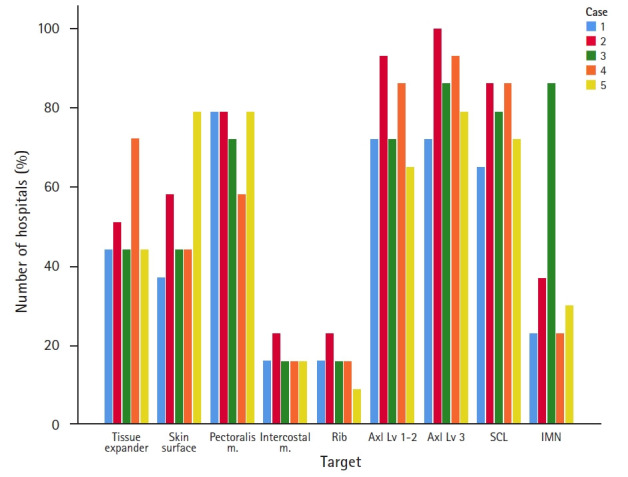
Results: Three hundred fourteen patients were included; 99% of them underwent immediate reconstruction. The most irradiated material was tissue expander (36.9%) followed by transverse rectus abdominis musculocutaneous flap (23.9%) and silicone implant (12.1%). In prosthetic-based reconstruction with tissue expander, most patients received PMRT following partial deflation. Conventional fractionation and hypofractionation RT were used in 66.6% and 33.4% patients, respectively (commonest: 40.05 Gy in 15 fractions [17.5%]). Furthermore, 15.6% of the patients received boost RT and 53.5% were treated with bolus. Overall, 15 physicians responded to the questionnaires and six submitted their contours and RT plans. There was a significant variability in target delineations and RT plans between physicians, and between clinical scenarios.
Conclusion: Adjuvant RT following post-mastectomy reconstruction has become a common practice in Korea. The details vary significantly between institutions, which highlights an urgent need for standard protocol in this clinical setting.
Keywords: Breast neoplasm; Mammaplasty; Radiotherapy.
Conflict of interest statement
No potential conflict of interest relevant to this article was reported.
Figures
References
-
- Nelson JA, Allen RJ Jr, Polanco T, et al. Long-term patient-reported outcomes following postmastectomy breast reconstruction: an 8-year examination of 3268 patients. Ann Surg. 2019;270:473–83. - PubMed
-
- Ho TB, Wood WC, Mspt PD. Breast reconstruction in the setting of postmastectomy radiotherapy: controversies and disparities. Oncology (Williston Park) 2019;33:688845. - PubMed
-
- Ho AY, Hu ZI, Mehrara BJ, Wilkins EG. Radiotherapy in the setting of breast reconstruction: types, techniques, and timing. Lancet Oncol. 2017;18:e742–e753. - PubMed
Grants and funding
LinkOut - more resources
Full Text Sources