


COVID-19 and neurocognitive disorders
- PMID: 33395101
- PMCID: PMC7924920
- DOI: 10.1097/YCO.0000000000000687
COVID-19 and neurocognitive disorders
Abstract
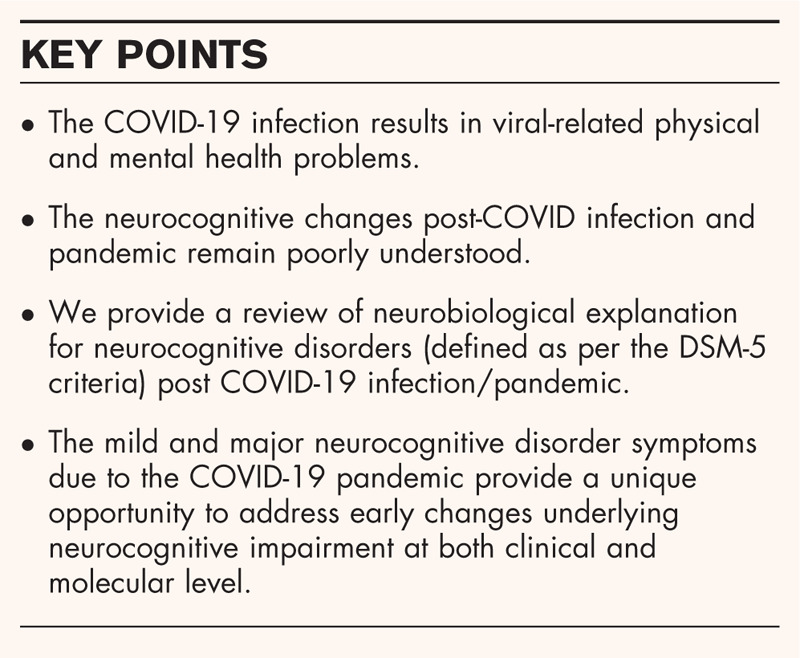
Purpose of review: The COVID-19 infection results in various viral-related physical and mental health problems, joined with the long-term psychological impact of the pandemic in general. However, the accompanying neurocognitive changes remain poorly understood.
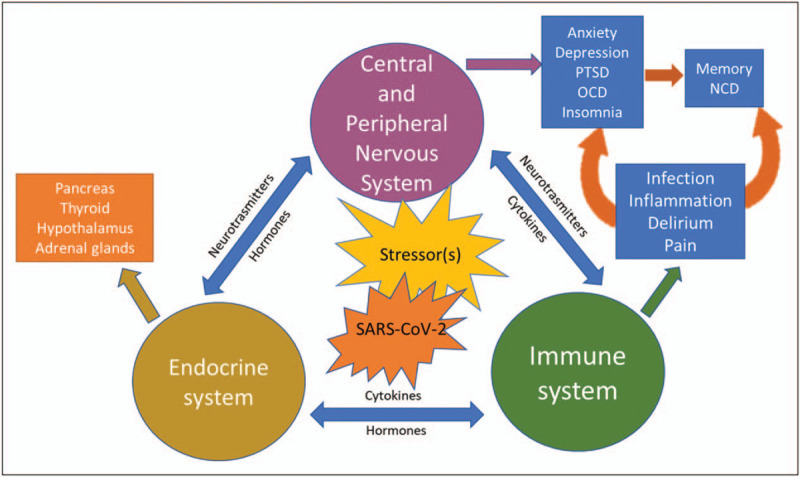
Recent findings: We synthetize the current knowledge of viral (SARS-CoV-2) induced inflammation, mechanisms to viral entry into the central nervous system and altered neurotransmitter systems to provide an informed neurobiological explanation for the rise of neurocognitive disorders (defined as per the DSM-5 criteria).
Summary: The mild and major neurocognitive disorder symptoms due to the COVID-19 pandemic provide a unique opportunity to address the early changes underlying neurocognitive impairment at both clinical and molecular level. We discuss the utilization of the available evidence for their management and future novel therapeutic opportunities.
Copyright © 2020 Wolters Kluwer Health, Inc. All rights reserved.
Conflict of interest statement
There are no conflicts of interest.
Figures
References
-
- Taquet M, Luciano S, Geddes JR, Harrison PJ. Bidirectional associations between COVID-19 and psychiatric disorder: retrospective cohort studies of 62 354 COVID-19 cases in the USA. Lancet Psychiatry 2020; S2215-0366:30462–30464. - PMC - PubMed
-
This study was based on TriNetX Analytics Network that contains anonymized data from electronic health records in 54 healthcare organizations in the USA, totalling 69.8 million patients. The analysis included 62,354 patients diagnosed with COVID-19 between 20 January and 1 August 2020. The authors present incidence and hazard ratios measures for psychiatric disorders, dementia and insomnia, during the first 14--90 days after a diagnosis of COVID-19.
-
- Mukaetova-Ladinska EB, Kronenberg G. Psychological and neuropsychiatric implications of COVID-19. Eur Arch Psychiatry Clin Neurosci 2020; 1–14. doi: 10.1007/s00406-020-01210-2. - PMC - PubMed
-
The review draws on evidence from previous coronavirus outbreaks (i.e. SARS, MERS) and emerging evidence from China, Europe, Asia and the USA to synthesize the current knowledge regarding the psychological and neuropsychiatric implications of the COVID-19 pandemic.
-
- Matias-Guiu JA, Jorge Matías-Guiu J. Death rate due to COVID-19 in Alzheimer's disease and frontotemporal dementia. J Alzheimers Dis 2020; 78:537–541. - PubMed
-
In this observational case series, 204 patients with Alzheimer's disease and frontotemporal dementia were enrolled and the frequency and mortality of COVID-19 determined. COVID-19 occurred in 7.3% of patients living at home and 72.0% of those living at care homes. Living in care facilities and diagnosis of Alzheimer's disease were independently associated with a higher probability of death.
-
- American Psychiatric Association. Diagnostic and statistical manual of mental disorders (5th ed.). Washington, DC: American Psychiatric Association; 2013.
-
- American Psychiatric Association. Diagnostic and statistical manual of mental disorders (4th ed.). Washington, DC: American Psychiatric Association; 1994.
Publication types
MeSH terms
LinkOut - more resources
Full Text Sources
Other Literature Sources
Medical
Research Materials
Miscellaneous
