


Monoclonal Antibody-Based Immunotherapy and Its Role in the Development of Cardiac Toxicity
- PMID: 33396766
- PMCID: PMC7795565
- DOI: 10.3390/cancers13010086
Monoclonal Antibody-Based Immunotherapy and Its Role in the Development of Cardiac Toxicity
Abstract
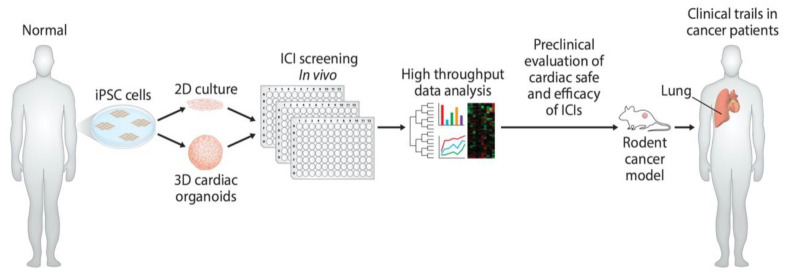
Immunotherapy is one of the most effective therapeutic options for cancer patients. Five specific classes of immunotherapies, which includes cell-based chimeric antigenic receptor T-cells, checkpoint inhibitors, cancer vaccines, antibody-based targeted therapies, and oncolytic viruses. Immunotherapies can improve survival rates among cancer patients. At the same time, however, they can cause inflammation and promote adverse cardiac immune modulation and cardiac failure among some cancer patients as late as five to ten years following immunotherapy. In this review, we discuss cardiotoxicity associated with immunotherapy. We also propose using human-induced pluripotent stem cell-derived cardiomyocytes/ cardiac-stromal progenitor cells and cardiac organoid cultures as innovative experimental model systems to (1) mimic clinical treatment, resulting in reproducible data, and (2) promote the identification of immunotherapy-induced biomarkers of both early and late cardiotoxicity. Finally, we introduce the integration of omics-derived high-volume data and cardiac biology as a pathway toward the discovery of new and efficient non-toxic immunotherapy.
Keywords: cardiomyocyte; cardiotoxicity; heart failure; heart failure with preserved ejection fraction (HFpEF); immune checkpoint inhibitors.
Conflict of interest statement
Becker serves on scientific advisory boards for Janssen and Basking Biosciences and DSMB Committees for Ionis Pharmaceuticals, Akcea Therapeutics and Novartis. Sadayappan provided consulting and collaborative research studies to the Leducq Foundation, Red Saree Inc., Greater Cincinnati Tamil Sangam, MyoKardia, Merck and Amgen, but such work is unrelated to the content of this article. No other disclosures are reported.
Figures
References
-
- Lenneman C.G., Kimmick G.G., Sawyer D.B. Epidemiology of Cardio-Oncology. In: Kimmick G.G., Lenihan D.J., Sawyer D.B., Mayer E.L., Hershman D.L., editors. Cardio-Oncology: The Clinical Overlap of Cancer and Heart Disease. Springer; Cham, Switzerland: 2017. pp. 1–14.
-
- Zarifa A., Lopez-Mattei J., Palaskas N., Iliescu C., Durand J.B., Kim P.Y. Immune Checkpoint Inhibitors (ICIs)-Related Cardiotoxicity. Adv. Exp. Med. Biol. 2020;1244:277–285. - PubMed
Publication types
Grants and funding
LinkOut - more resources
Full Text Sources
