


The impact of location and patency of the arteriovenous fistula on quality of life of kidney transplant recipients
- PMID: 33397180
- PMCID: PMC7801108
- DOI: 10.1080/0886022X.2020.1865171
The impact of location and patency of the arteriovenous fistula on quality of life of kidney transplant recipients
Abstract
Background: Arteriovenous fistulae (AVFs) may remain patent after kidney transplantation (KTx), contributing to maladaptive cardiac remodeling. The flow in AVFs is associated with the diameter of its vessels and thus with the AVF location. The main objective of this study is to assess the influence of AVF location and its patency on the self-reported quality of life (QOL) of kidney transplant recipients (KTRs) with past history of hemodialysis.
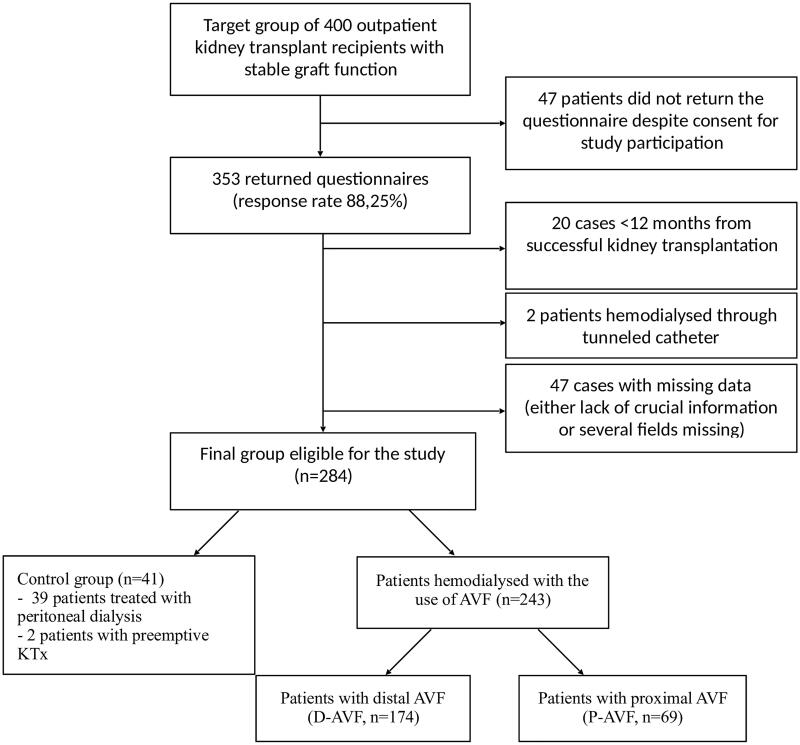
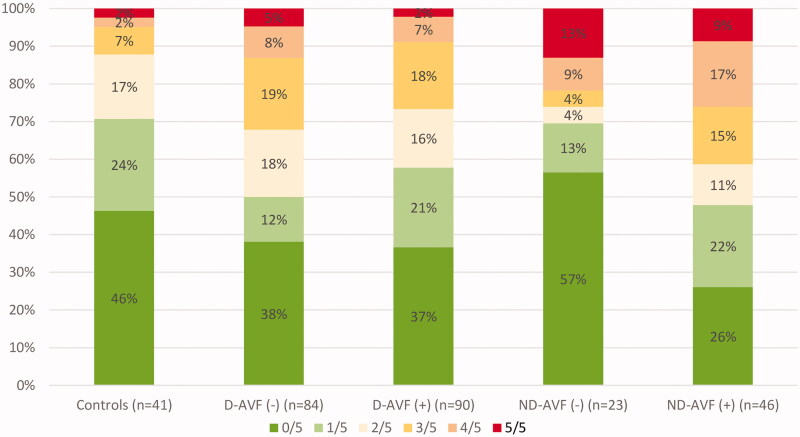
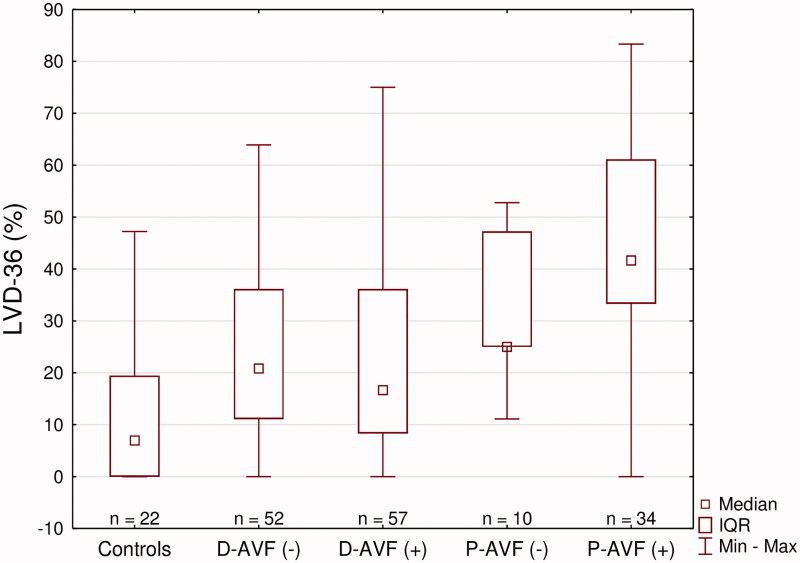
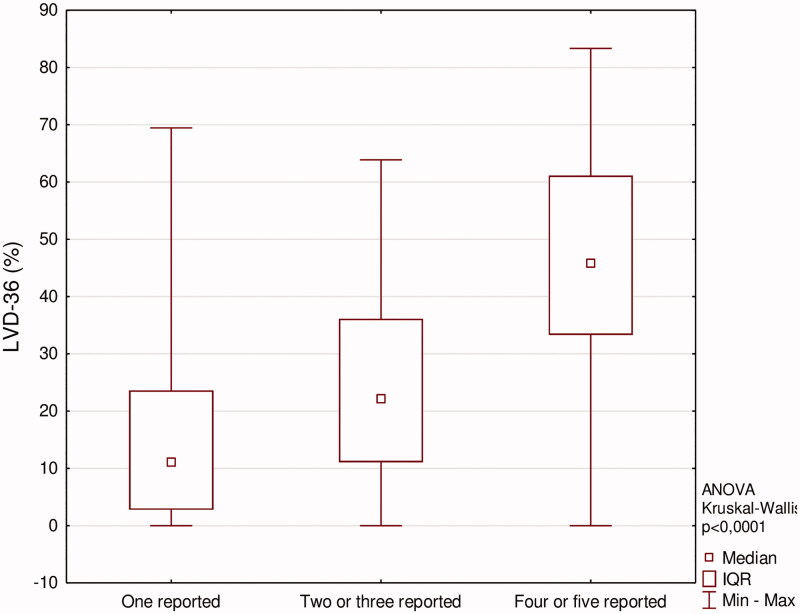
Methods: To gain clinical data, during a scheduled visit, 353 KTRs were asked to fill out an anonymous questionnaire. From this group, 284 respondents were found eligible for analysis. The outcome was defined as prevalence of symptoms and health status, measured with the Left Ventricular Dysfunction-36 (LVD-36) Questionnaire in symptomatic patients.
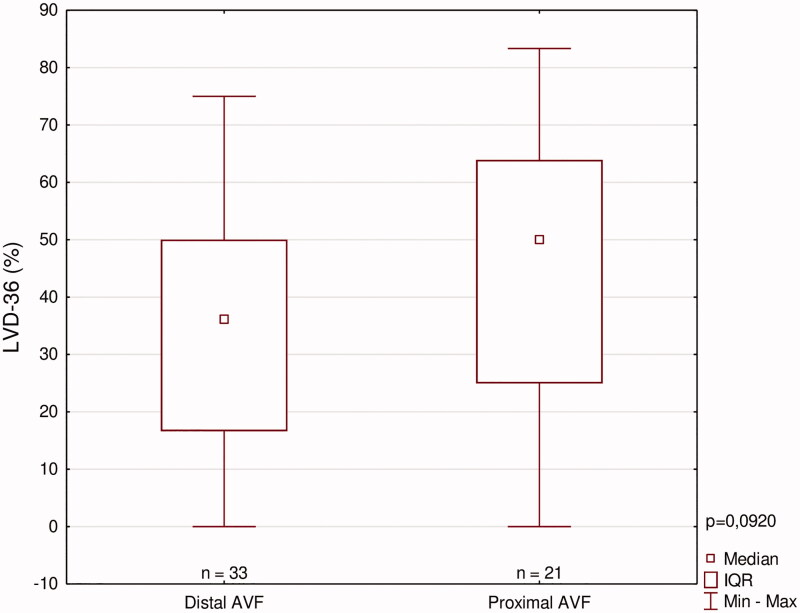
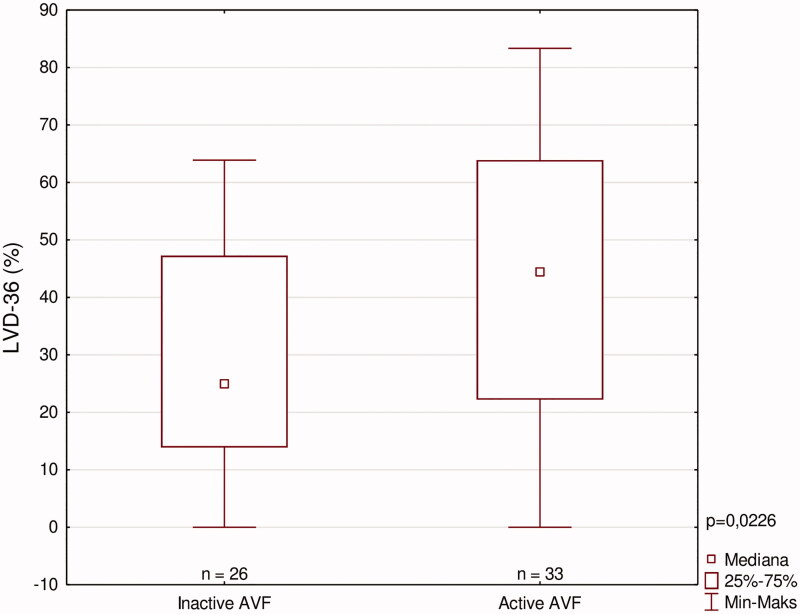
Results: The hemodialysis patients (n = 243) were divided into two groups according to AVF location, i.e., DAVF - distally located AVF - (n = 174) and PAVF - proximally located AVF - (n = 69). The proportion of patients with heart failure (HF) was higher in PAVF group (24% vs. 12%, p = 0.0482). In the multivariable regression, PAVF, serum creatinine levels, and the presence of HF or coronary artery disease (CAD) remained independent predictors of lower functional capacity. Among patients with heart disease, the presence of active AVF was independently associated with worse functional outcome (higher LVD-36 scores).
Conclusions: The influence of persistent PAVF in KTRs seems to be unfavorable, especially when coexisting with CAD or HF. Abbreviations: AVF arteriovenous fistula; BMI body mass index; CAD coronary artery disease; D-AVF distally-located arteriovenous fistula; EC exercise capacity; HD hemodialysis; HF heart failure; KTx kidney transplantation; KTR kidney transplant recipient; LVD-36 Left Ventricle Disfunction - 36; LVEF left ventricle ejection fraction; LVH left ventricle hypertrophy; NYHA New York Heart Association; P-AVF proximally located arteriovenous fistula; PD peritoneal dialysis; PRO patient-reported outcomes; QOL quality of life.
Keywords: Hemodialysis; arteriovenous fistula; kidney transplantation; quality of life.
Conflict of interest statement
All the authors of this manuscript have no conflicts of interest to declare.
Figures
References
-
- Foley RN. Clinical epidemiology of cardiovascular disease in chronic kidney disease. J Ren Care. 2010; 36:4–8. - PubMed
-
- Rangaswami J, Mathew RO, Parasuraman R, et al. . Cardiovascular disease in the kidney transplant recipient: epidemiology, diagnosis and management strategies. Nephrol Dial Transplant. 2019; 34:760–773. - PubMed
-
- Schnuelle P, Lorenz D, Trede M, et al. . Impact of renal cadaveric transplantation on survival in end-stage renal failure: evidence for reduced mortality risk compared with hemodialysis during long-term follow-up. J Am Soc Nephrol. 1998; 9:2135–2141. - PubMed
-
- Meier-Kriesche HU, Schold JD, Srinivas TR, et al. . Kidney transplantation halts cardiovascular disease progression in patients with end-stage renal disease. Am J Transplant. 2004; 4:1662–1668. - PubMed
MeSH terms
LinkOut - more resources
Full Text Sources
Other Literature Sources
Medical
Research Materials
Miscellaneous
