Review
doi: 10.1101/cshperspect.a040568.
Carbohydrate Metabolism
Affiliations
- PMID: 33397651
- PMCID: PMC7778149
- DOI: 10.1101/cshperspect.a040568
Item in Clipboard
Review
Carbohydrate Metabolism
Cold Spring Harb Perspect Biol.
.
No abstract available
Figures
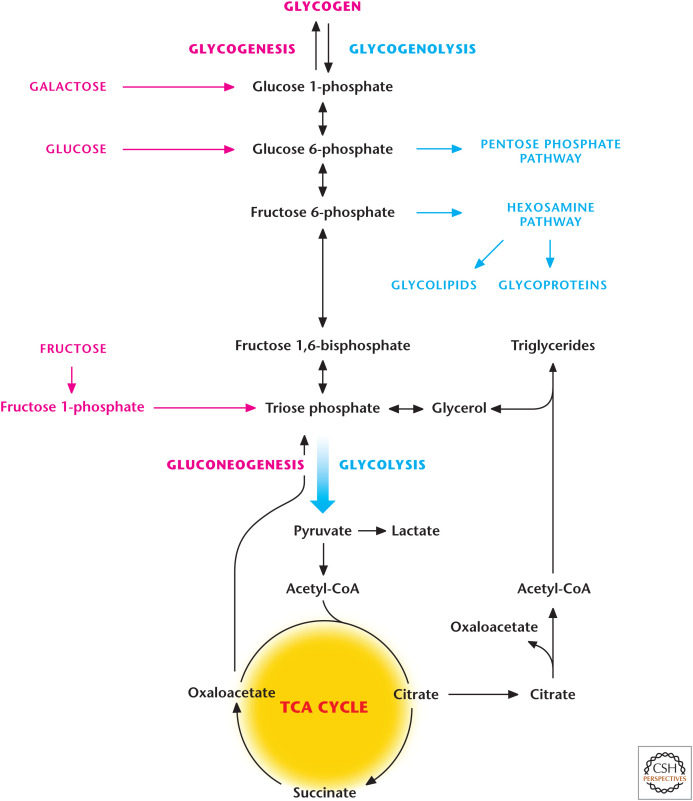
Overview of carbohydrate metabolism. Simple sugars, such as glucose, fructose, or galactose, have different points of entry into glycolysis. A process referred to as gluconeogenesis can also generate glucose. Complex carbohydrates such as glycogen can also enter glycolysis. The hexosamine pathway generates glycoproteins and glycolipids, which are modified forms of glucose covalently attached to either proteins (glycoproteins) or lipids (glycolipids), that participate in important functions in signaling and as components of cell membranes.
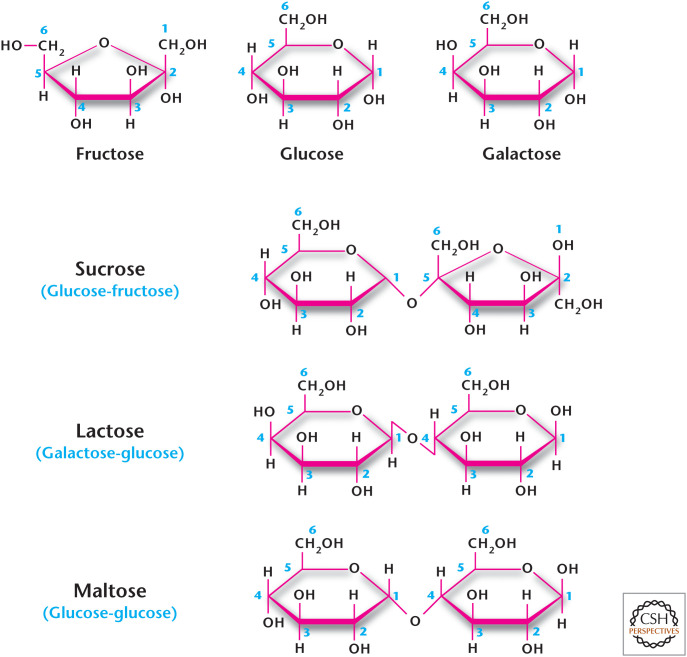
Monosaccharide and disaccharide structures.
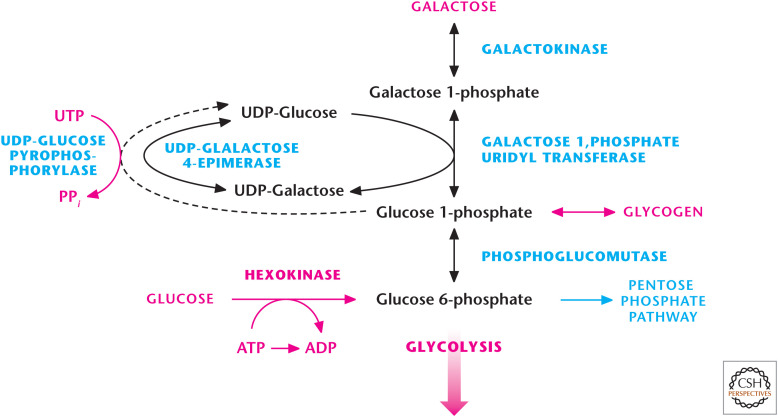
Galactose catabolism occurs through the Leloir pathway. The Argentine Luis Federico Leloir, who received the 1970 Nobel Prize in Chemistry, discovered galactose catabolism. Galactokinase converts galactose into galactose 1-phosphate, which subsequently becomes glucose 1-phosphate, which can either be stored as glycogen or enter glycolysis by being converted into glucose 6-phosphate.

Fructose metabolism. Fructokinase converts fructose into fructose 1-phosphate, which subsequently is converted into glyceraldehyde and dihydroxyacetone phosphate by aldolase B that enters glycolysis. A key feature of fructose metabolism is that it bypasses the major regulatory step in glycolysis, the PFK1-catalyzed reaction.
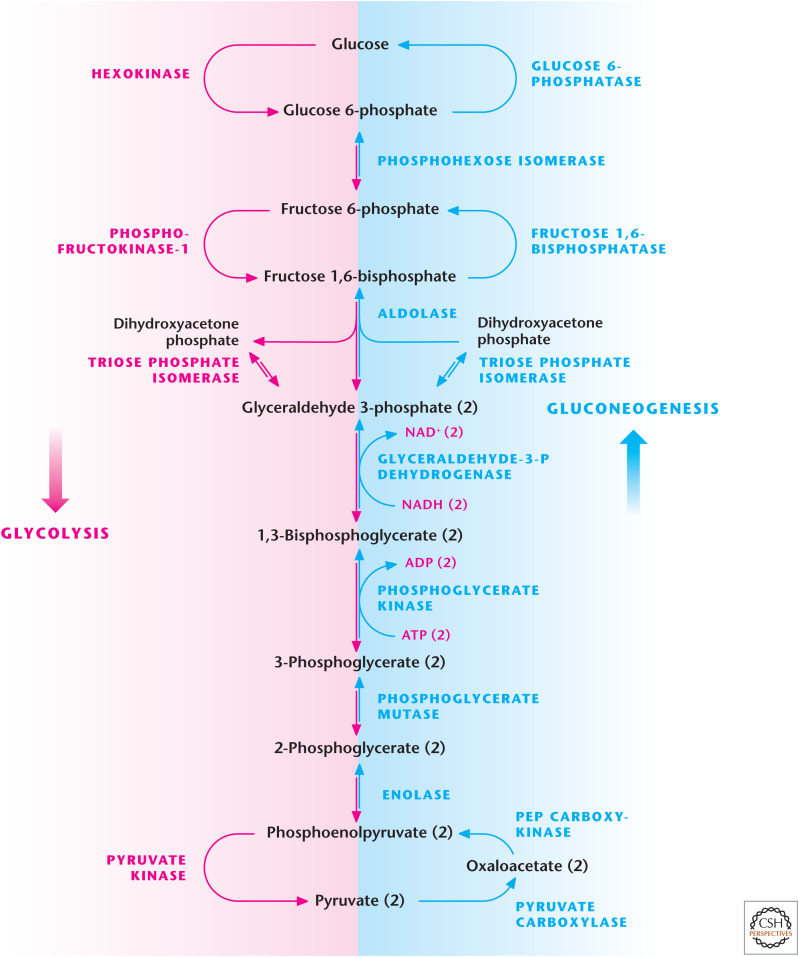
Gluconeogenesis. Glycolysis and gluconeogenesis share many enzymes; however, there are three irreversible reactions in glycolysis that have to be bypassed so that gluconeogenesis can ensue. The first reaction is the generation of PEP from pyruvate requiring pyruvate carboxylase and PEP carboxykinase. The second reaction is the conversion of fructose 1,6-bisphosphate to fructose 6-phosphate by F-1,6-BPase. The third reaction is the conversion of glucose 6-phosphate to glucose by glucose 6-phosphatase.
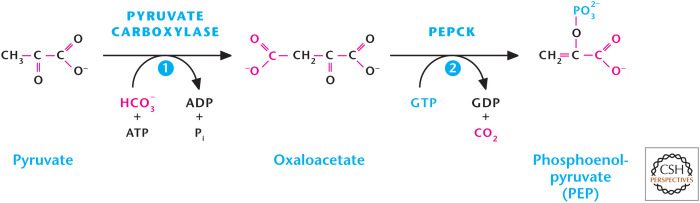
Pyruvate conversion into PEP.

Multiple substrates feed into gluconeogenesis. Alanine, lactate, glycerol, and glutamine can generate glucose. Glycerol enters gluconeogenesis through conversion into dihydroxyacetone phosphate (DHAP), a reaction catalyzed by glycerol 3-phosphate dehydrogenase. Alanine, lactate, and glutamine have to be converted into oxaloacetate, which enters gluconeogenesis through conversion into PEP by phosphoenolpyruvate carboxykinase.
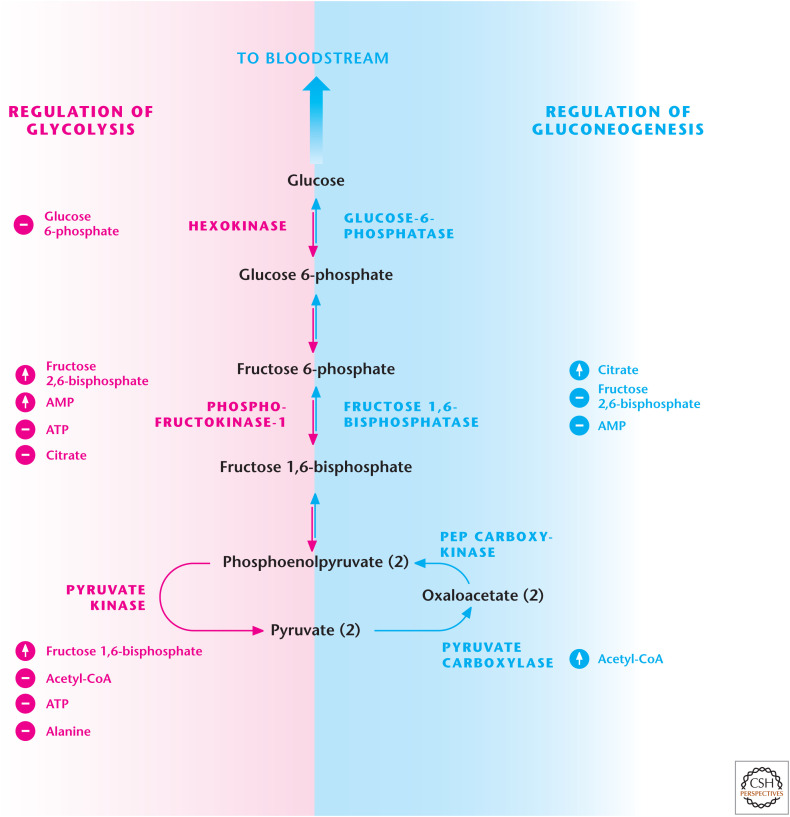
Reciprocal regulation of glycolysis and gluconeogenesis. PFK1 and fructose 1,6-bisphosphate (F-2,6-BPase) are key regulatory enzymes in glycolysis and gluconeogenesis, respectively. AMP and F-2,6-BP activate PFK1 and inhibit F-2,6-BPase.
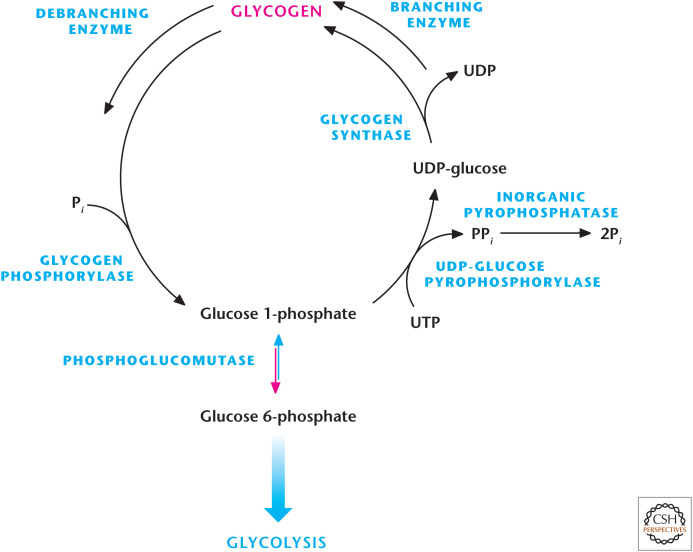
Glycogen metabolism. Glycogen phosphorylase breaks down glycogen into glucose 1-phosphate, whereas glycogen synthase synthesizes glucose 1-phosphate molecules into glycogen. Glucose 1-phosphate can be interconverted into glucose 6-phosphate by phosphoglucomutase.
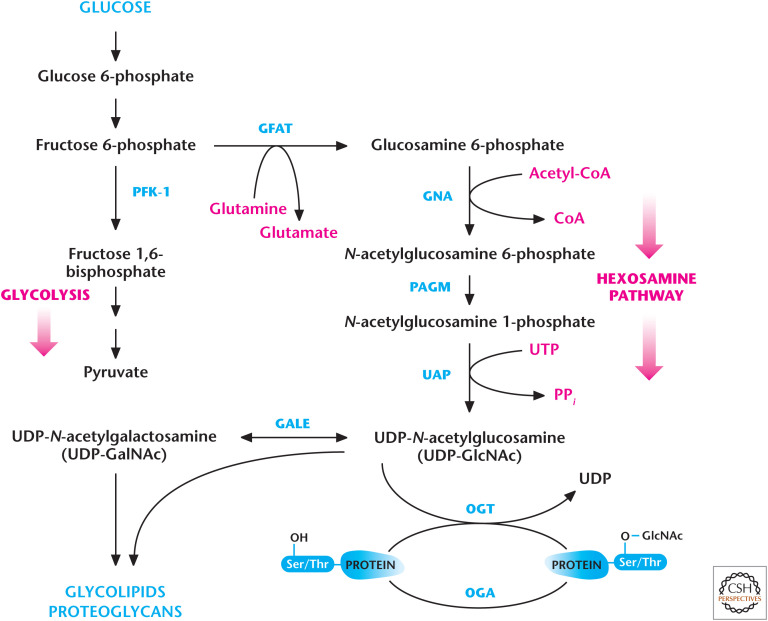
The hexosamine pathway generates glycoconjugates. Fructose 6-phosphate can be converted into glucosamine 6-phosphate by GFAT to initiate the hexosamine pathway, which, through a series of reactions, generates UDP-N-acetylglucosamine (UDP-GlcNAC) and N-acetylgalactosamine (UDP-GalNAC), which are used to generate glycolipids, proteoglycans, and glycoproteins. OGT uses UDP-GlcNAc to O-GlcNAcylate serine and threonine residues of proteins to modify their activity. These proteins can have their GlcNAc moiety removed by OGA.
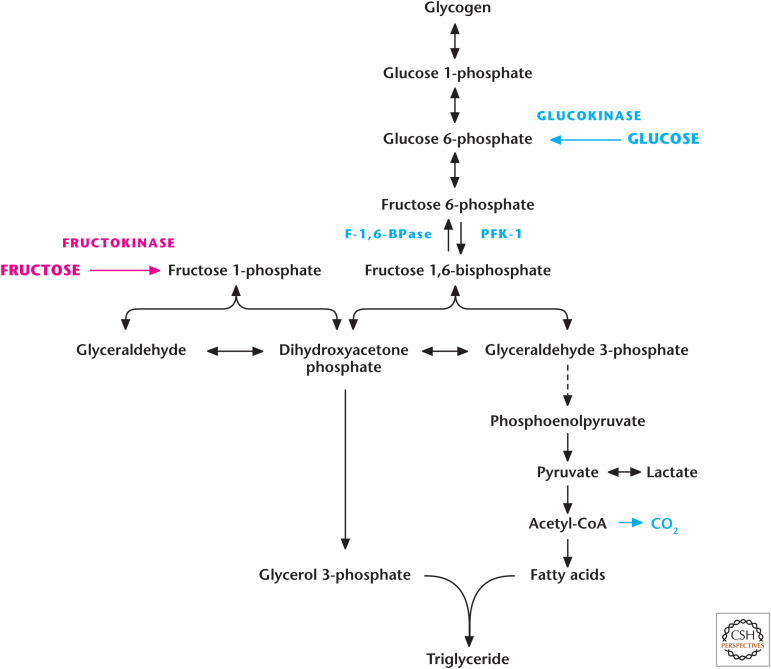
Fructose generates triglycerides in the liver. Fructose enters the glycolysis pathway through conversion into fructose 1-phosphate by fructokinase. Subsequently, Aldolase B converts fructose 1-phosphate into glyceraldehyde and dihydroxyacetone phosphate. A major regulatory step in glycolysis is PFK1, which is bypassed by fructose's entry into glycolysis. Thus, if the liver has met its energetic needs, it converts excess fructose into glyceraldehyde, which is converted into glycerol 3-phosphate, a precursor for triglycerides. Fructose also generates dihydroxyacetone phosphate, which can become glyceraldehyde 3-phosphate and, eventually, go through glycolysis and into the mitochondrial TCA cycle. The excess citrate generated is exported to cytosol to generate fatty acids, another precursor to triglycerides.
References
Publication types
MeSH terms
Substances
LinkOut - more resources
Full Text Sources
Other Literature Sources
Medical