


Study protocol for a randomised controlled feasibility trial of a virtual intervention (STRIDE) for symptom management, distress and adherence to adjuvant endocrine therapy after breast cancer
- PMID: 33397667
- PMCID: PMC7783524
- DOI: 10.1136/bmjopen-2020-041626
Study protocol for a randomised controlled feasibility trial of a virtual intervention (STRIDE) for symptom management, distress and adherence to adjuvant endocrine therapy after breast cancer
Abstract
Introduction: Patient adherence to adjuvant endocrine therapy (AET) after a diagnosis of hormone-sensitive breast cancer is poor. Previous interventions have failed to produce changes in adherence, address patient preferences or include theoretically informed and evidence-based components. Therefore, we iteratively developed a patient-centred, evidence-based, small-group, videoconference intervention to improve adherence and symptom management as well as reduce distress for patients taking AET after breast cancer (Symptom-Targeted Randomised Intervention for Distress and Adherence to Adjuvant Endocrine Therapy, STRIDE).
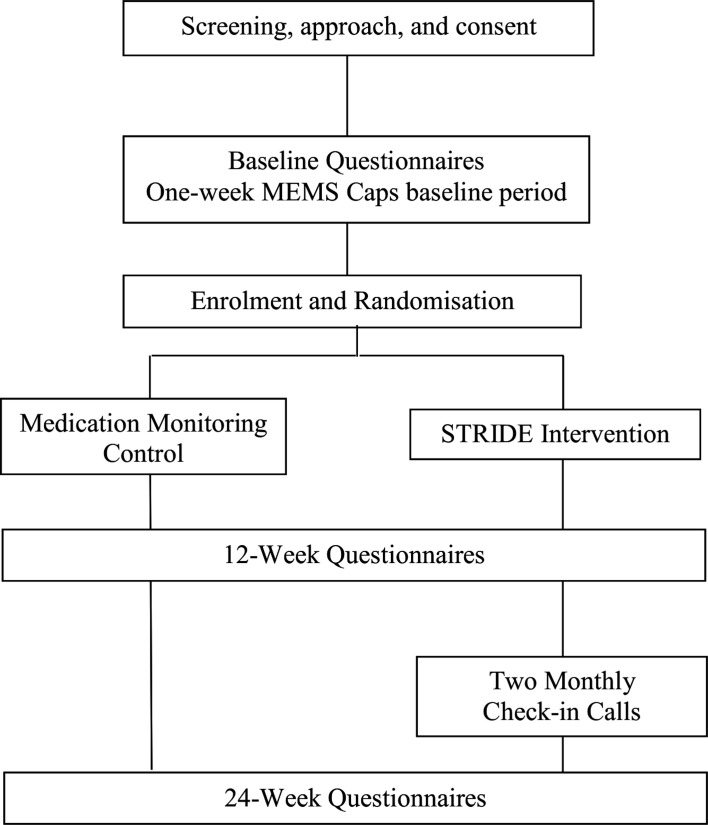
Methods and analysis: The current study is a non-blinded, randomised, controlled, feasibility trial of STRIDE compared with a medication monitoring control group. The primary objective is to examine the feasibility and acceptability of STRIDE, while secondary objectives are to assess changes in objective and subjective adherence, symptom distress and satisfaction with AET. Patients will be recruited from the Massachusetts General Hospital Cancer Center in Boston, Massachusetts. The total number of patients accrued will be 75, with ≥60 patients completing the study. All patients will store their AET in an electronic pill bottle for objective adherence monitoring. Patients randomly assigned to the STRIDE intervention will receive 6 weekly 1-hour sessions, in small groups of two, delivered via videoconferencing by a trained mental health professional. Patients assigned to the control group will store their medication in the electronic pill bottle and receive follow-up oncology care as usual. All participants will complete self-report psychosocial measures at baseline, 12 weeks and 24 weeks postbaseline.
Ethics and dissemination: The study is funded by the National Cancer Institute of the National Institutes of Health and is approved by the Dana-Farber/Harvard Cancer Center Institutional Review Board (Protocol #18-603, V.1.2, first approval date 1 February 2019). The study will be reported in accordance with the Consolidated Standards of Reporting Trials statement for non-pharmacological trials. Results will be published in peer-reviewed academic journals, presented at scientific meetings and disseminated to patient organisations and media outlets.Trial registration numberNCT03837496; Pre-results.
Keywords: Adult psychiatry; Breast tumours; MENTAL HEALTH; SOCIAL MEDICINE.
© Author(s) (or their employer(s)) 2021. Re-use permitted under CC BY-NC. No commercial re-use. See rights and permissions. Published by BMJ.
Conflict of interest statement
Competing interests: JJ is a paid consultant from Blue Note Therapeutics. JG receives royalties from Springer Humana Press, has research funding from Gaido Health/BCG Digital Ventures, and is a paid consultant from Concerto HealthAI and Blue Note Therapeutics. JP has received research funding from Pfizer, is a paid consultant for Athenex, and JP’s spouse is an employee of GlaxoSmithKline. All other authors declare that they have no conflicts of interest.
Figures
References
-
- , Davies C, Godwin J, et al. , Early Breast Cancer Trialists' Collaborative Group (EBCTCG) . Relevance of breast cancer hormone receptors and other factors to the efficacy of adjuvant tamoxifen: patient-level meta-analysis of randomised trials. Lancet 2011;378:771–84. 10.1016/S0140-6736(11)60993-8 - DOI - PMC - PubMed
Publication types
MeSH terms
Associated data
Grants and funding
LinkOut - more resources
Full Text Sources
Other Literature Sources
Medical
Miscellaneous
