


Kallikrein directly interacts with and activates Factor IX, resulting in thrombin generation and fibrin formation independent of Factor XI
- PMID: 33397811
- PMCID: PMC7826336
- DOI: 10.1073/pnas.2014810118
Kallikrein directly interacts with and activates Factor IX, resulting in thrombin generation and fibrin formation independent of Factor XI
Abstract
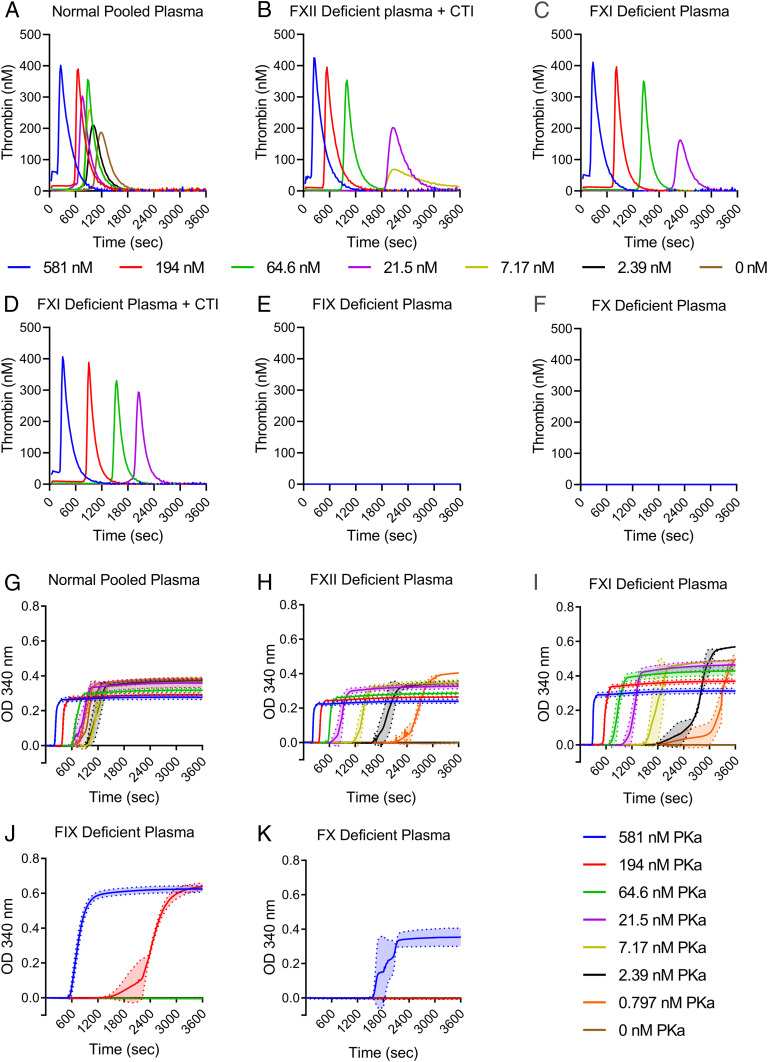
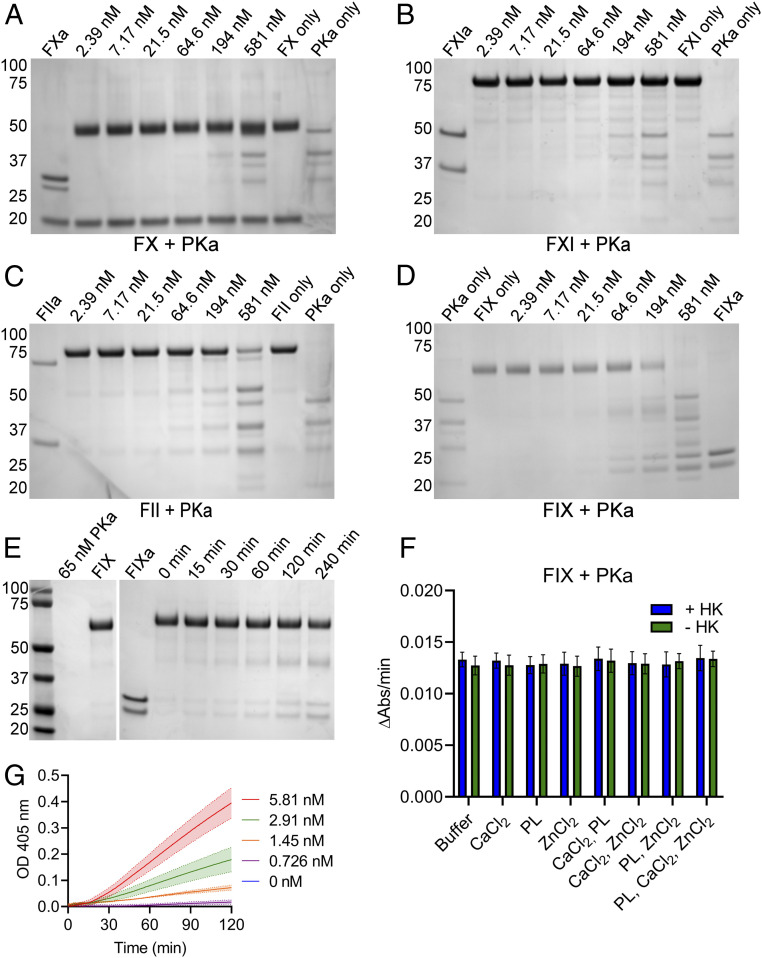
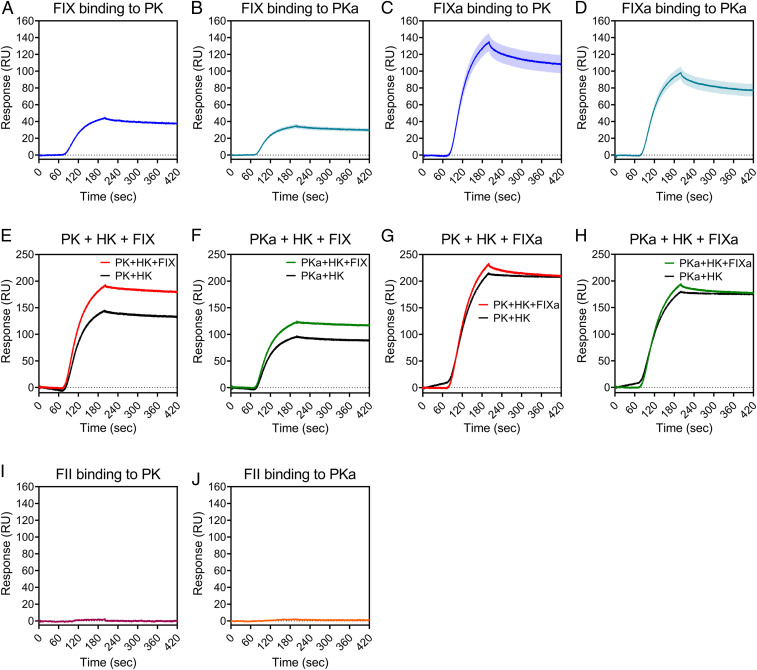
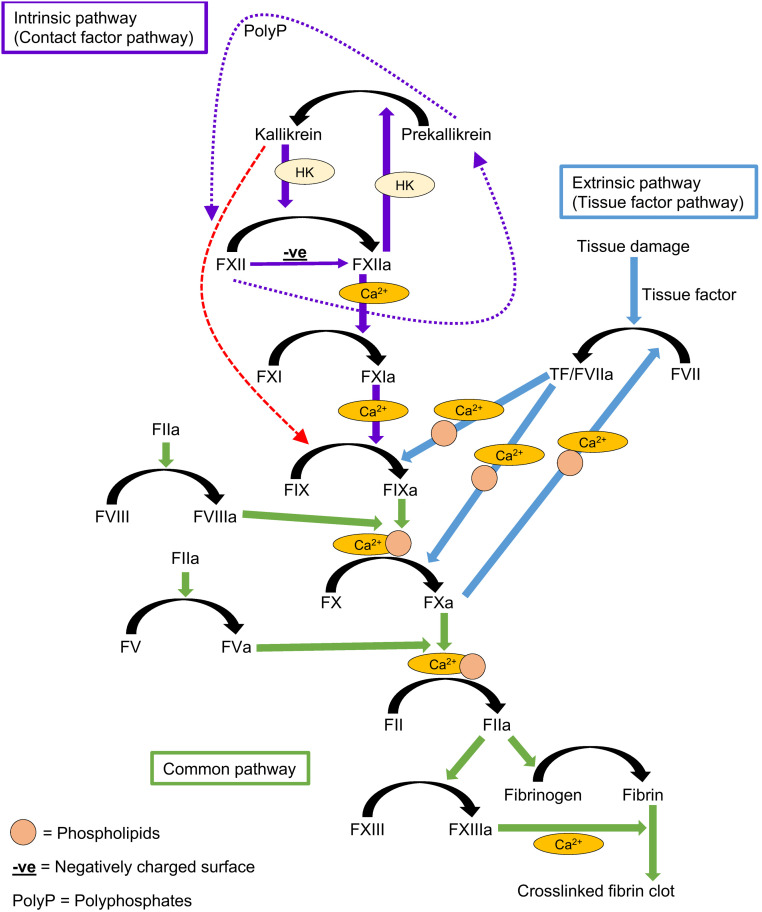
Kallikrein (PKa), generated by activation of its precursor prekallikrein (PK), plays a role in the contact activation phase of coagulation and functions in the kallikrein-kinin system to generate bradykinin. The general dogma has been that the contribution of PKa to the coagulation cascade is dependent on its action on FXII. Recently this dogma has been challenged by studies in human plasma showing thrombin generation due to PKa activity on FIX and also by murine studies showing formation of FIXa-antithrombin complexes in FXI deficient mice. In this study, we demonstrate high-affinity binding interactions between PK(a) and FIX(a) using surface plasmon resonance and show that these interactions are likely to occur under physiological conditions. Furthermore, we directly demonstrate dose- and time-dependent cleavage of FIX by PKa in a purified system by sodium dodecyl sulfate-polyacrylamide gel electrophoresis analysis and chromogenic assays. By using normal pooled plasma and a range of coagulation factor-deficient plasmas, we show that this action of PKa on FIX not only results in thrombin generation, but also promotes fibrin formation in the absence of FXII or FXI. Comparison of the kinetics of either FXIa- or PKa-induced activation of FIX suggest that PKa could be a significant physiological activator of FIX. Our data indicate that the coagulation cascade needs to be redefined to indicate that PKa can directly activate FIX. The circumstances that drive PKa substrate specificity remain to be determined.
Keywords: Factor IX; Factor XII; intrinsic pathway; plasma kallikrein; prekallikrein.
Copyright © 2021 the Author(s). Published by PNAS.
Conflict of interest statement
The authors declare no competing interest.
Figures
References
-
- Versteeg H. H., Heemskerk J. W., Levi M., Reitsma P. H., New fundamentals in hemostasis. Physiol. Rev. 93, 327–358 (2013). - PubMed
-
- MacFarlane R. G., An enzyme cascade in the blood clotting mechanism, and its function as a biochemical amplifier. Nature 202, 498–499 (1964). - PubMed
-
- Davie E. W., Ratnoff O. D., Waterfall sequence for intrinsic blood clotting. Science 145, 1310–1312 (1964). - PubMed
Publication types
MeSH terms
Substances
Grants and funding
LinkOut - more resources
Full Text Sources
Other Literature Sources
Molecular Biology Databases
