. 2020 Oct;9(10):719-728.
doi: 10.1302/2046-3758.910.BJR-2020-0031.R3.

Mesenchymal stem cells - a promising strategy for treating knee osteoarthritis

Affiliations

Mesenchymal stem cells - a promising strategy for treating knee osteoarthritis

Jiaqian Wang et al. Bone Joint Res. 2020 Oct.

Abstract

Aims: The purpose of our study was to determine whether mesenchymal stem cells (MSCs) are an effective and safe therapeutic agent for the treatment of knee osteoarthritis (OA), owing to their cartilage regeneration potential.

Methods: We searched PubMed, Embase, and the Cochrane Library, with keywords including "knee osteoarthritis" and "mesenchymal stem cells", up to June 2019. We selected randomized controlled trials (RCTs) that explored the use of MSCs to treat knee OA. The visual analogue scale (VAS), Western Ontario and McMaster University Osteoarthritis Index (WOMAC), adverse events, and the whole-organ MRI score (WORMS) were used as the primary evaluation tools in the studies. Our meta-analysis included a subgroup analysis of cell dose and cell source.

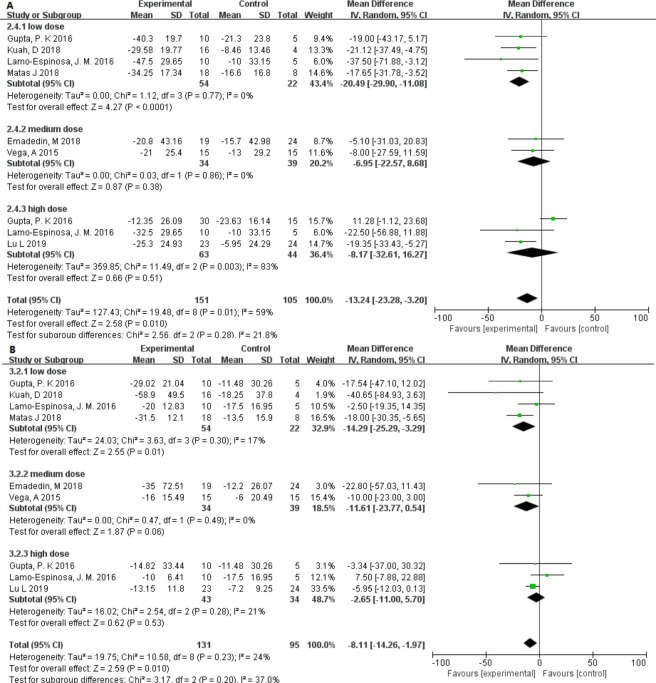
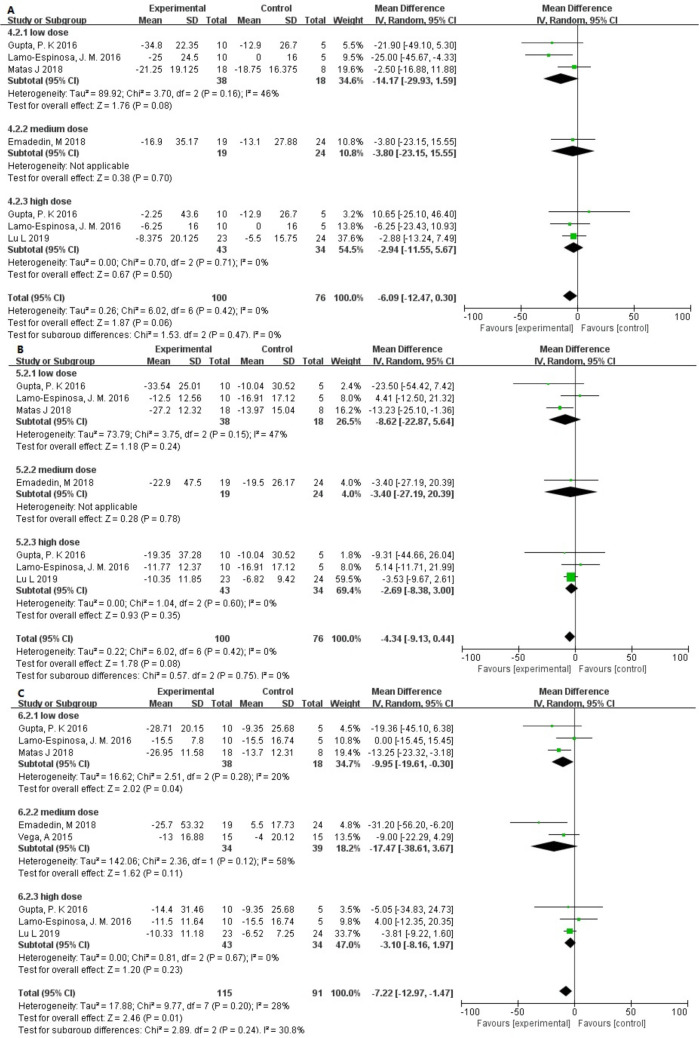
Results: Seven trials evaluating 256 patients were included in the meta-analysis. MSC treatment significantly improved the VAS (mean difference (MD), -13.24; 95% confidence intervals (CIs) -23.28 to -3.20, p = 0.010) and WOMAC (MD, -7.22; 95% CI -12.97 to -1.47, p = 0.010). The low-dose group with less than 30 million cells showed lower p-values for both the VAS and WOMAC. Adipose and umbilical cord-derived stem cells also had lower p-values for pain scores than those derived from bone marrow.

Conclusion: Overall, MSC-based cell therapy is a relatively safe treatment that holds great potential for OA, evidenced by a positive effect on pain and knee function. Using low-dose (25 million) and adipose-derived stem cells is likely to achieve better results, but further research is needed. Cite this article: Bone Joint Res 2020;9(10):719-728.

Keywords: Cell dose; Cell source; Knee osteoarthritis; Mesenchymal stem cells.


Figures
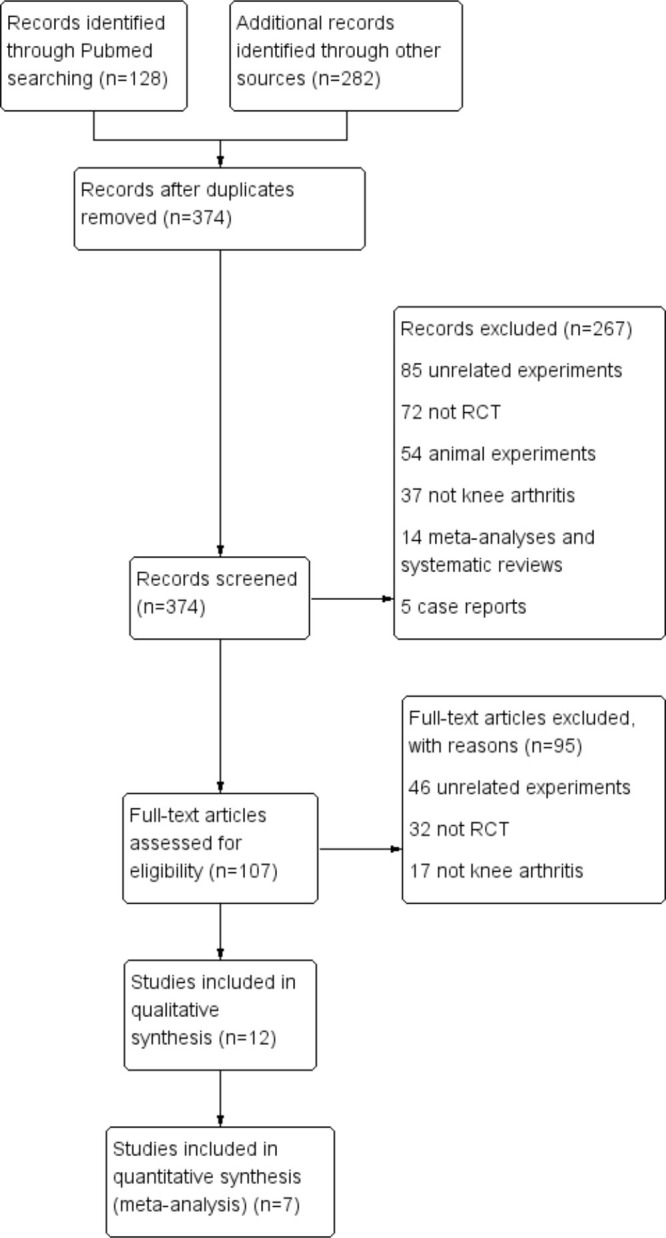
Fig. 1
Fig. 1
Flow diagram showing the process of inclusion and exclusion. RCT, randomized controlled trial.
Fig. 2
Fig. 2
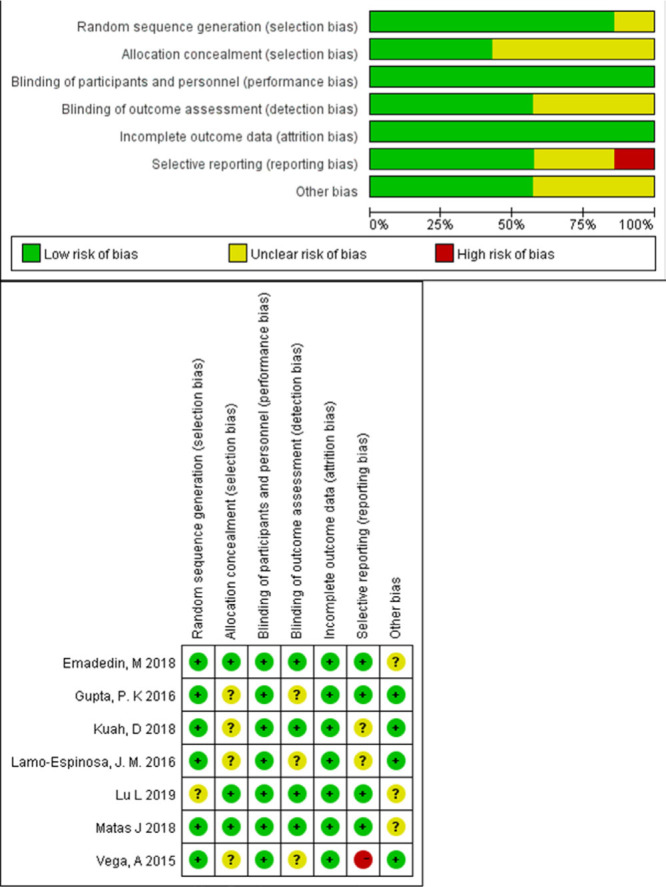
Quality assessment of included trials, risk of bias graph, and summary.
Fig. 3
Fig. 3
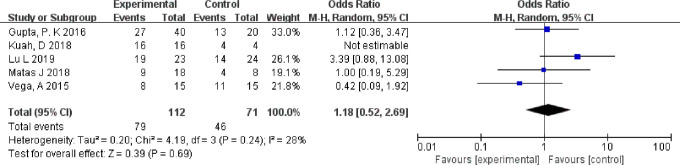
Forest plot of mesenchymal stem cell injection on adverse events. Random-effect models were used. CI, confidence interval; M-H, Mantel-Haenszel method.
Fig. 4
Fig. 4
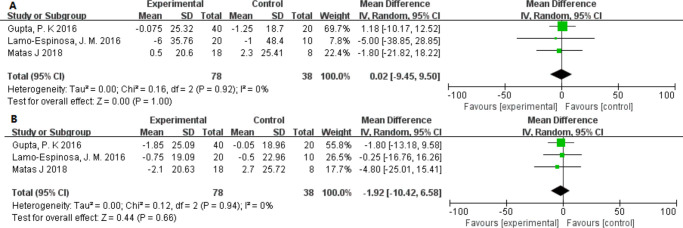
Forest plots of mean difference (MD) on pain according to dose groups. a) MDs of pain according to visual analogue scale and b) MDs of pain according to Western Ontario and McMaster Universities Osteoarthritis Index. CI, confidence interval; IV, inverse variance method.
Fig. 5
Fig. 5
Forest plots of mean difference (MD) on function according to dose groups: a) MDs of Western Ontario and McMaster Universities Osteoarthritis Index (WOMAC) stiffness, b) MDs of WOMAC physical function, and c) MDs of WOMAC total. CI, confidence interval; I, inverse variance method.
Fig. 6
Fig. 6
Forest plots of mean difference (MD) on cartilage: a) MDs of whole-organ MRI score (WORMS) at six months and b) MDs of WORMS at 12 months. CI, confidence interval; IV, inverse variance method.
Fig. 7
Fig. 7
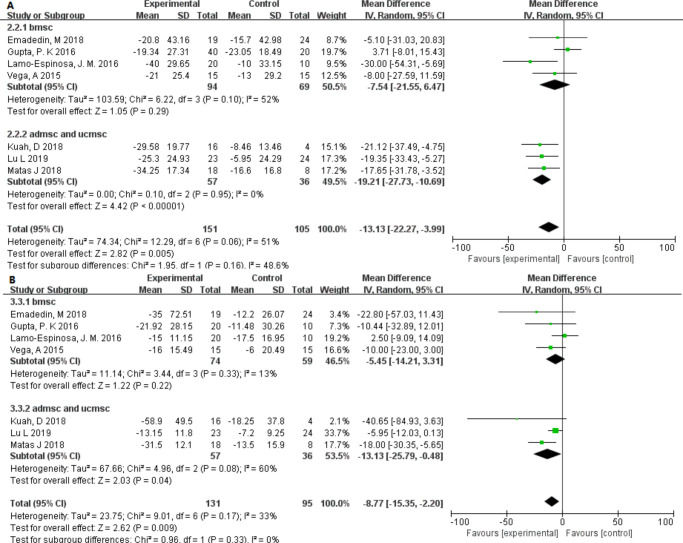
Forest plots of mean difference (MD) on pain according to cell source (bone marrow-, adipose-, or umbilical cord tissue-derived): a) MDs of pain according to visual analogue scale and b) MDs of pain according to Western Ontario and McMaster Universities Osteoarthritis Index. ADMSC, adipose-derived mesenchymal stem cell; BMSC, bone marrow-derived stem cell; CI, confidence interval; IV, inverse variance method; UCMSC, umbilical cord tissue-derived mesenchymal stem cell.
Fig. 8
Fig. 8
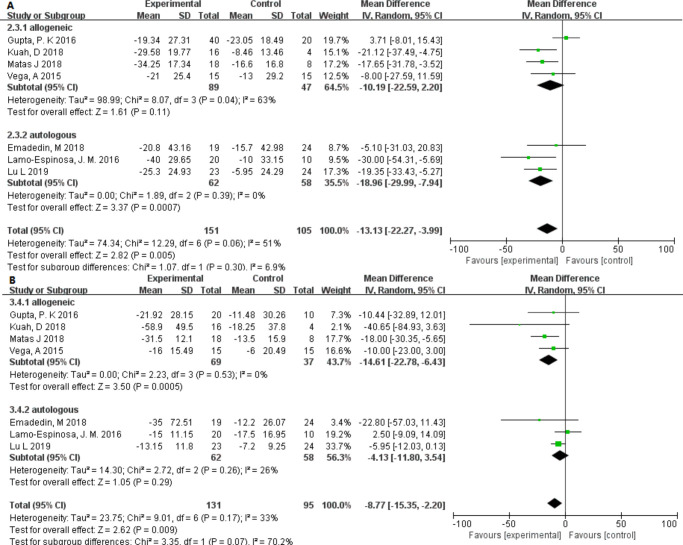
Forest plots of mean difference (MD) on pain according to cell source (allogeneic or autologous): a) MDs of pain according to visual analogue scale and b) MDs of pain according to Western Ontario and McMaster Universities Osteoarthritis Index pain. CI, confidence interval; IV, inverse variance method.

References

    1. Nyvang J, Hedström M, Gleissman SA. It's not just a knee, but a whole life: a qualitative descriptive study on patients' experiences of living with knee osteoarthritis and their expectations for knee arthroplasty. Int J Qual Stud Health Well-being. 2016;11:30193. - PMC - PubMed
    1. Glyn-Jones S, Palmer AJR, Agricola R, et al. Osteoarthritis. Lancet. 2015;386(9991):376–387. - PubMed
    1. Yubo M, Yanyan L, Li L, Tao S, Bo L, Lin C. Clinical efficacy and safety of mesenchymal stem cell transplantation for osteoarthritis treatment: a meta-analysis. PLoS One. 2017;12(4):e0175449. - PMC - PubMed
    1. Buttgereit F, Burmester G-R, Bijlsma JWJ. Non-surgical management of knee osteoarthritis: where are we now and where do we need to go? RMD Open. 2015;1(1):e000027. - PMC - PubMed
    1. Dusad A, Pedro S, Mikuls TR, et al. Impact of total knee arthroplasty as assessed using patient-reported pain and health-related quality of life indices: rheumatoid arthritis versus osteoarthritis. Arthritis Rheumatol. 2015;67(9):2503–2511. - PubMed