


Formaldehyde and Brain Disorders: A Meta-Analysis and Bioinformatics Approach
- PMID: 33400181
- PMCID: PMC8102312
- DOI: 10.1007/s12640-020-00320-y
Formaldehyde and Brain Disorders: A Meta-Analysis and Bioinformatics Approach
Abstract
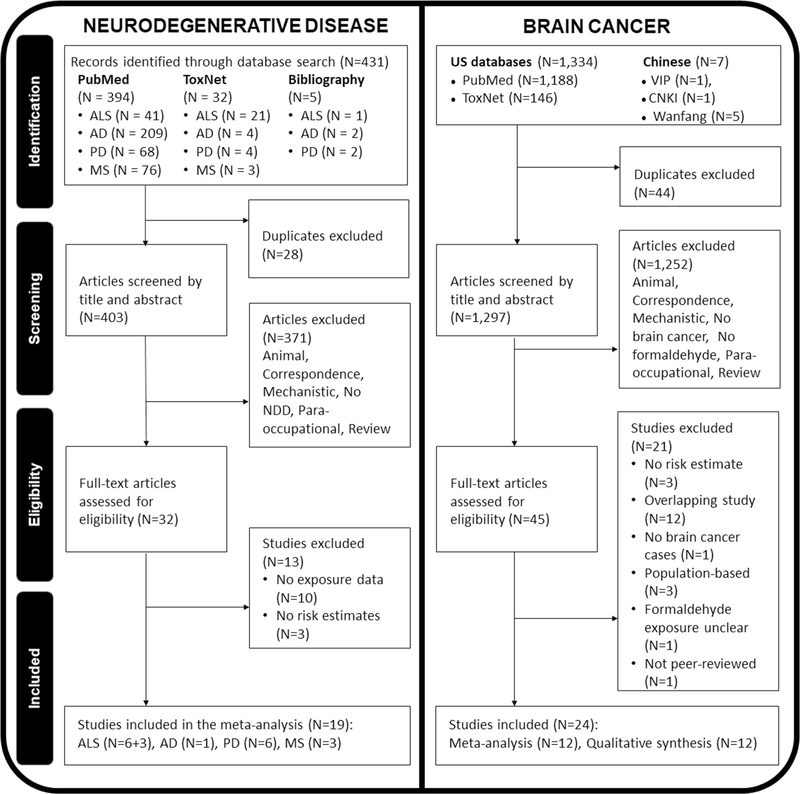
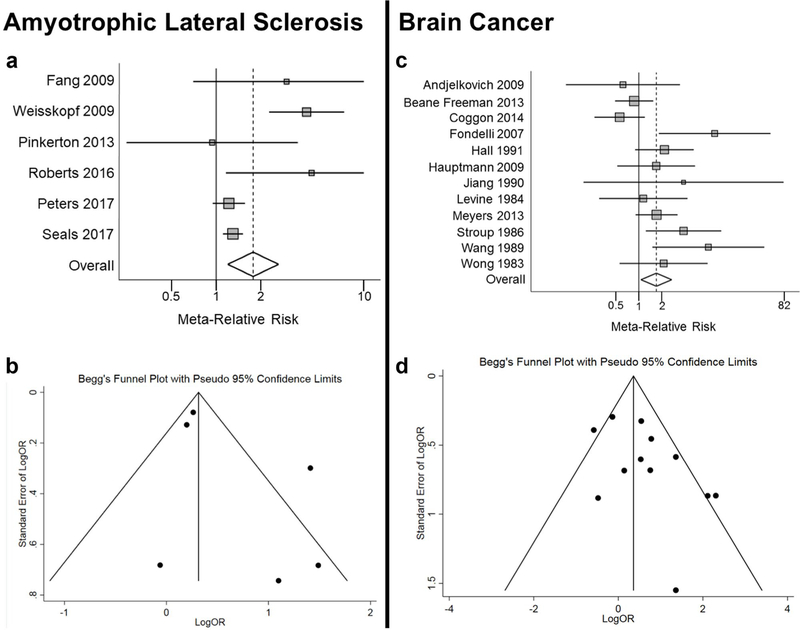
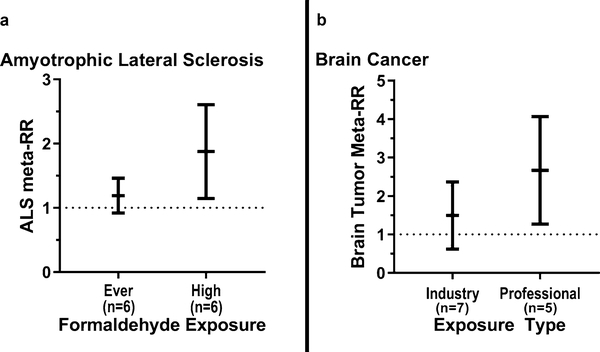
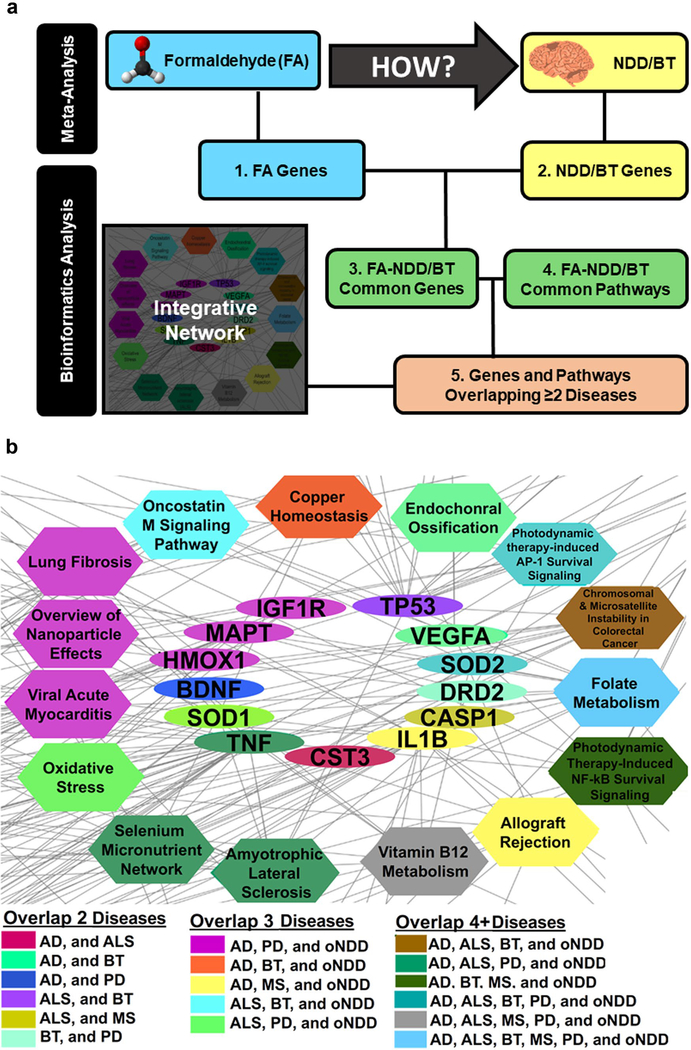
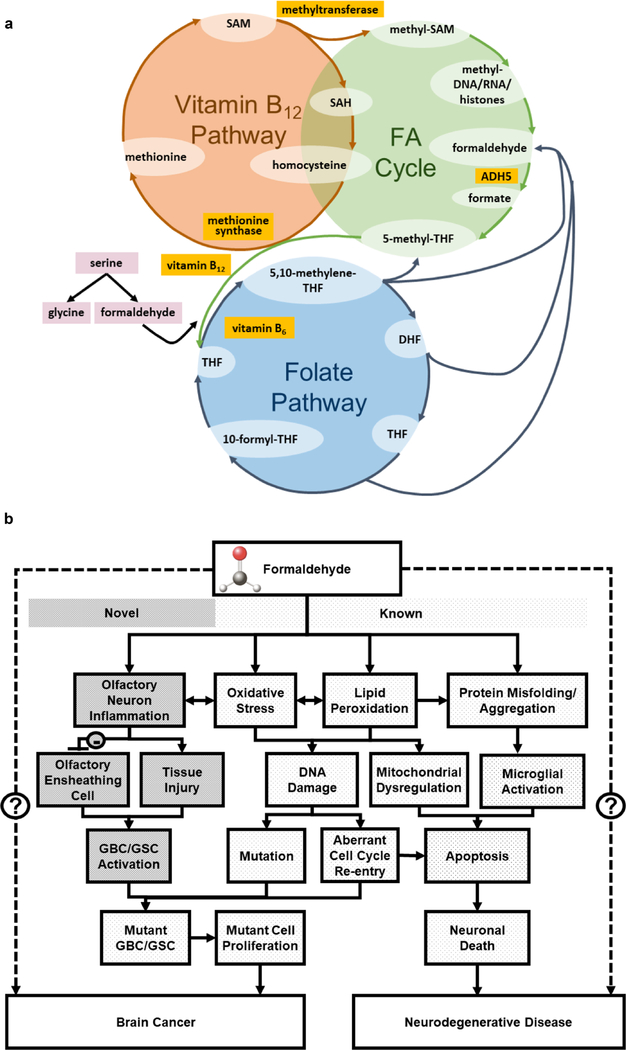
While there is significant investigation and investment in brain and neurodegenerative disease research, current understanding of the etiologies of illnesses like Alzheimer's disease (AD), Parkinson's disease (PD), amyotrophic lateral sclerosis (ALS), and brain cancer remains limited. Environmental exposure to the pollutant formaldehyde, an emerging neurotoxin widely used in industry, is suspected to play a critical role in mediating these disorders, although findings are limited and inconsistent. Focusing on highly exposed groups, we performed a meta-analysis of human epidemiological studies of formaldehyde and neurodegenerative disease (N = 19) or brain tumors (N = 12). To assess the biological plausibility of observed associations, we then conducted a bioinformatics analysis using WikiPathways and the Comparative Toxicogenomics Database and identified candidate genes and pathways that may be related to these interactions. We reported the meta-relative risk (meta-RR) of ALS following high exposures to formaldehyde was increased by 78% (meta-RR = 1.78, 95% confidence interval, CI 1.20-2.65). Similarly, the meta-RR for brain cancer was increased by 71% (meta-RR = 1.71; 95% CI 1.07-2.73) among highly exposed individuals. Multiple sensitivity analyses did not reveal sources of heterogeneity or bias. Our bioinformatics analysis revealed that the oxidative stress genes superoxide dismutase (SOD1, SOD2) and the pro-inflammatory marker tumor necrosis factor (TNF) were identified as the top relevant genes, and the folate metabolism, vitamin B12 metabolism, and the ALS pathways were highly affected by formaldehyde and related to the most brain diseases of interest. Further inquiry revealed the two metabolic pathways are also intimately tied with the formaldehyde cycle. Overall, our bioinformatics analysis supports the link of formaldehyde exposure to ALS or brain tumor reported from our meta-analysis. This new multifactorial approach enabled us to both interrogate the robustness of the epidemiological data and identify genes and pathways that may be involved in these interactions, ultimately lending strong evidence and potential biological plausibility for the association between formaldehyde exposure and brain disease.
Keywords: Amyotrophic lateral sclerosis; Brain tumor; Comparative toxicogenomics database; Human exposures; Neurodegenerative disease; WikiPathways.
Conflict of interest statement
Compliance with Ethical Standards
Figures
References
-
- Andjelkovich DA, Janszen DB, Brown MH, Richardson RB, Miller FJ (1995) Mortality of iron foundry workers: IV. Analysis of a subcohort exposed to formaldehyde. J Occup Environ Med 37(7):826–837 - PubMed
-
- Arnold SE, Smutzer GS, Trojanowski JQ, Moberg PJ (1998) Cellular and molecular neuropathology of the olfactory epithelium and central olfactory pathways in Alzheimer’s disease and schizophrenia. Ann N Y Acad Sci 855:762–775 - PubMed
-
- Aslan H, Songur A, Tunc AT, Ozen OA, Bas O, Yagmurca M, Turgut M, Sarsilmaz M, Kaplan S (2006) Effects of formaldehyde exposure on granule cell number and volume of dentate gyrus: a histopathological and stereological study. Brain Res 1122(1):191–200 - PubMed
-
- Bach B, Pedersen OF, Molhave L (1990) Human-performance during experimental formaldehyde exposure. Environ Int 16(2):105–113
Publication types
MeSH terms
Substances
Grants and funding
LinkOut - more resources
Full Text Sources
Other Literature Sources
Medical
Miscellaneous
