


3-Dimensional printing in rehabilitation: feasibility of printing an upper extremity gross motor function assessment tool
- PMID: 33402170
- PMCID: PMC7786477
- DOI: 10.1186/s12938-020-00839-3
3-Dimensional printing in rehabilitation: feasibility of printing an upper extremity gross motor function assessment tool
Abstract
Background: Use of standardized and scientifically sound outcome measures is encouraged in clinical practice and research. With the development of newer rehabilitation therapies, we need technology-supported upper extremity outcome measures that are easily accessible, reliable and valid. 3-Dimensional printing (3D-printing) has recently seen a meteoric rise in interest within medicine including the field of Physical Medicine and Rehabilitation. The primary objective of this study was to evaluate the feasibility of designing and constructing a 3D printed version of the Toronto Rehabilitation Institute-Hand Function Test (TRI-HFT). The TRI-HFT is an upper extremity gross motor function assessment tool that measures function at the intersection of the International Classification of Function's body structure and function, and activity domain. The secondary objective was to assess the preliminary psychometrics of this test in individuals with stroke.
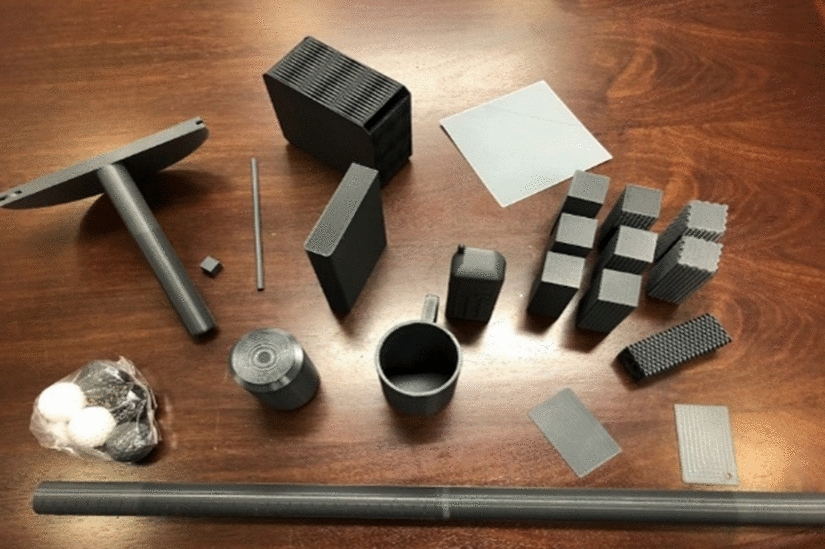
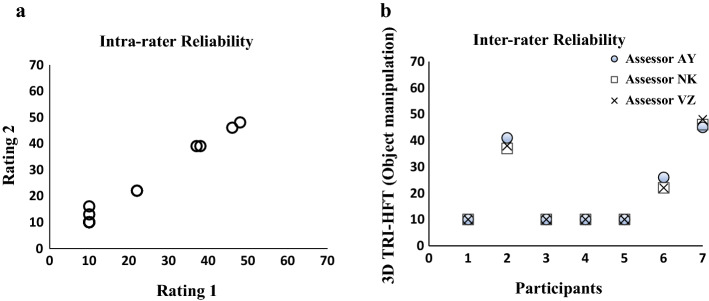
Results: 3D design files were created using the measurements of the original TRI-HFT objects. The 3D printed objects were then compared to the original test objects to ensure that the original dimensions were preserved. All objects were successfully printed except the sponge and paper which required some modification. The error margin for weight of the objects was within 10% of the original TRI-HFT for the rest of the objects. Nine participants underwent the following assessments: the Chedoke Arm and Hand Activity Inventory (CAHAI), Fugl Meyer Assessment-Hand (FMA-Hand), Chedoke McMaster stages of recovery of the arm (CMSA-Arm) and Chedoke McMaster stages of recovery of the hand (CMSA-Hand) and the 3D TRI-HFT for assessment of psychometric properties of the test. The video recorded assessment of the 3D TRI-HFT was used for reliability testing. Construct validity was assessed by comparing the scores on 3D TRI-HFT with the scores on CAHAI, CMSA-Arm, CMSA-Hand and FMA-Hand. The 3D TRI-HFT had high inter-rater reliability (Intra-Class Correlation Co-efficient (ICC) of 0.99; P < 0.000), high intra-rater reliability (ICC of 0.99; P < 0.000) and moderate-to-strong correlation with the CMSA-Arm, CMSA-Hand and FMA-Hand scores.
Conclusions: The TRI-HFT could be successfully 3D printed and initial testing indicates that the test is a reliable and valid measure of upper extremity motor function in individuals with stroke.
Keywords: 3D printing; Assessment; Outcome measure; Psychometric properties; Rehabilitation; Stroke; Upper extremity.
Conflict of interest statement
Dr. Milos R. Popovic is the Chief Technology Officer and Director of Myndtec, Inc. a company that manufactures transcutaneous functional electrical stimulators.
Figures
References
-
- Otterman N, Veerbeek J, Schiemanck S, van der Wees P, Nollet F, Kwakkel G. Selecting relevant and feasible measurement instruments for the revised Dutch clinical practice guideline for physical therapy in patients after stroke. DisabilRehabil. 2017;39(14):1449–1457. - PubMed
-
- Sullivan JE, Crowner BE, Kluding PM, Nichols D, Rose DK, Yoshida R, et al. Outcome measures for individuals with stroke: process and recommendations from the American Physical Therapy Association neurology section task force. PhysTher. 2013;93(10):1383–1396. - PubMed
-
- Fugl-Meyer AR, Jaasko L, Leyman I, Olsson S, Steglind S. The post-stroke hemiplegic patient. 1. A method for evaluation of physical performance. Scand J Rehabil Med. 1975;7(1):13–31. - PubMed
MeSH terms
LinkOut - more resources
Full Text Sources
Other Literature Sources
