


Early Experience With Methylprednisolone on SARS-CoV-2 Infection in the African American Population, a Retrospective Analysis
- PMID: 33402859
- PMCID: PMC7745550
- DOI: 10.1177/1179548420980699
Early Experience With Methylprednisolone on SARS-CoV-2 Infection in the African American Population, a Retrospective Analysis
Abstract
Background: Coronavirus disease-19 (COVID-19) is associated with acute kidney injury (AKI) and acute respiratory distress syndrome (ARDS) with high mortality rates. In African American (AA) populations, COVID-19 presentations and outcomes are more severe. NIH and Interim WHO guidelines had suggested against the use of corticosteroids unless in clinical trials until the recent publication of the RECOVERY trial. Here, we analyzed the treatment effect of methylprednisolone on patients with AKI and ARDS during the initial 2 months of COVID-19 and detail the learning effect within our institution.
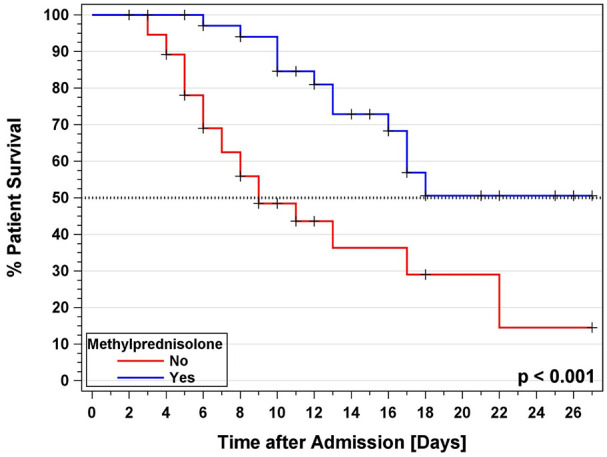
Methods: Between March 1 and April 30, 2020, 75 AA patients met our inclusion criteria for ARDS and AKI, of which 37 had received corticosteroids. Twenty-eight-day mortality, improvement in PaO2/FiO2 ratio, and renal function were analyzed. The impact of methylprednisolone treatment was assessed with multivariable methods.
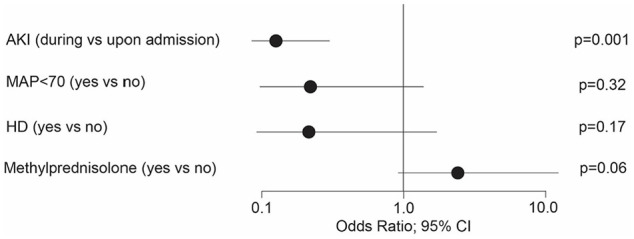
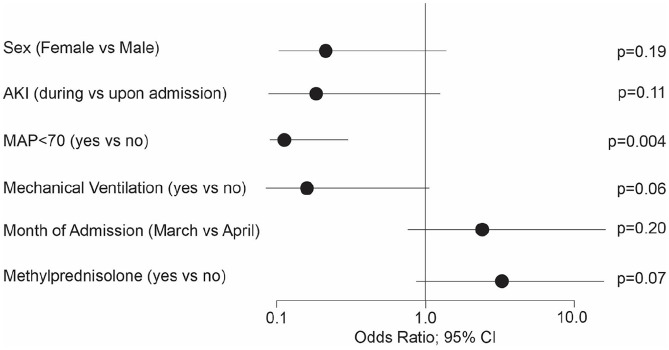
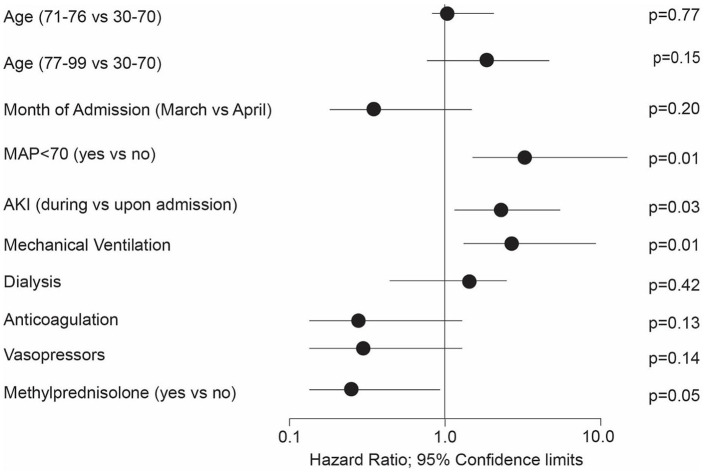
Results: Survival in the methylprednisolone group reached 51% at 21 days compared to 29% in the non-corticosteroid group (P < .001). Methylprednisolone improved the likelihood of renal function improvement. PaO2/FiO2 ratio in the methylprednisolone group improved by 73% compared to 45% in the non-corticosteroid group (P = .01). Age, gender, BMI, preexisting conditions, and other treatment factors did not show any impact on renal or PaO2/FiO2 ratio improvement. The use of anticoagulants, the month of treatment, and AKI during hospitalization also influenced outcomes.
Conclusion: In AA COVID-19 positive patients with ARDS and AKI, IV methylprednisolone lowered the incidence of mortality and improved the likelihood of renal and lung function recovery. Further investigation with a randomized control trial of corticosteroids is warranted.
Keywords: COVID-19; acute kidney injury; acute respiratory distress syndrome; methylprednisolone.
© The Author(s) 2020.
Conflict of interest statement
Declaration of conflicting interests:The author(s) declared no potential conflicts of interest with respect to the research, authorship, and/or publication of this article.
Figures
References
-
- National Center for Immunization and Respiratory Diseases (NCIRD) DoVD. Coronavirus disease 2019 (COVID-19). Cases in the U.S. 2020. https://www.cdc.gov/coronavirus/2019-ncov/cases-updates/cases-in-us.html. Accessed September 2, 2020.
-
- Hirsch JS, Ng JH, Ross DW, et al. Acute kidney injury in patients hospitalized with Covid-19. Kidney Int. Published online May 16, 2020. doi: 10.1016/j.kint.2020.05.006 - DOI
LinkOut - more resources
Full Text Sources
Miscellaneous
